
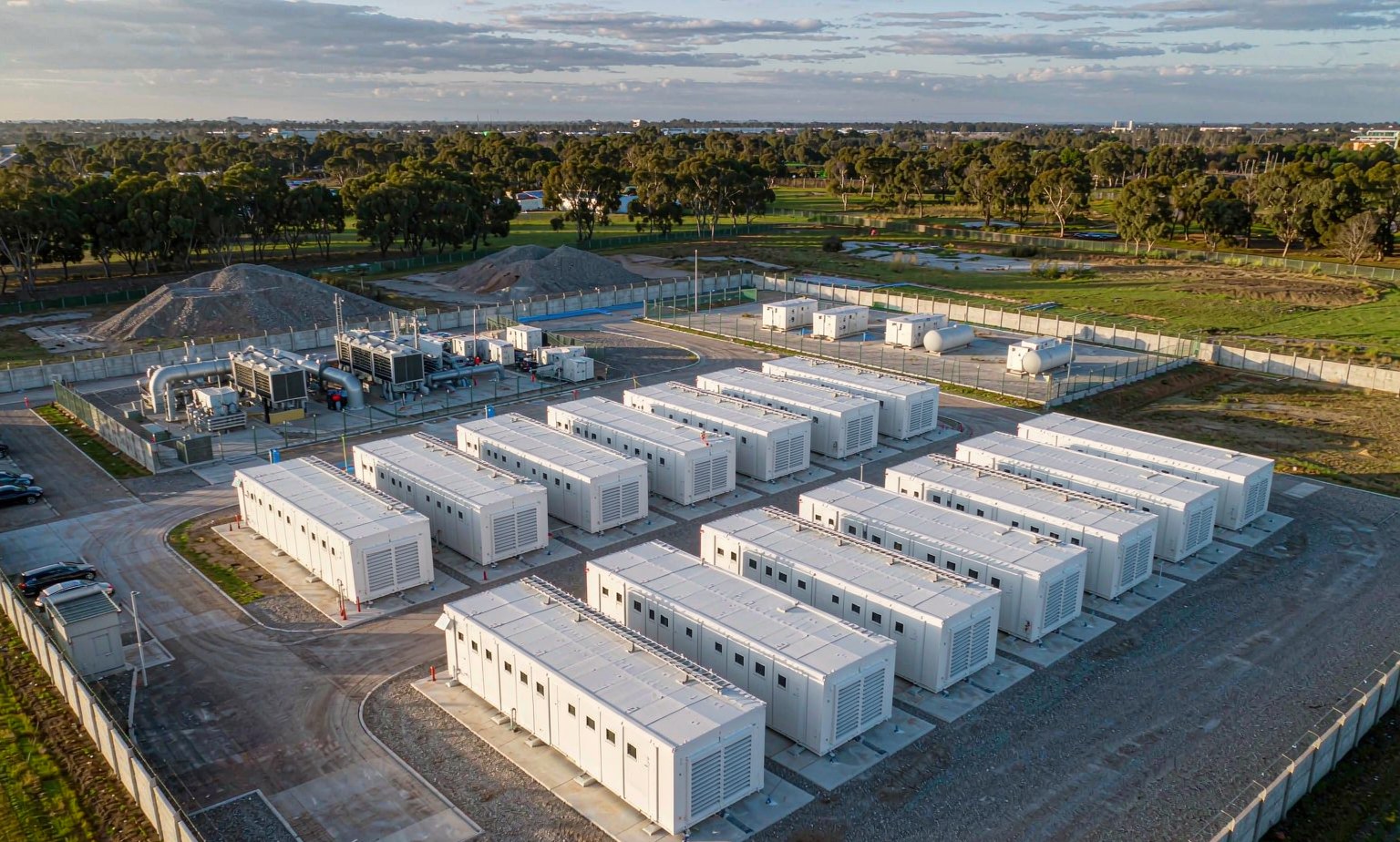
AIDC is data centre capacity that arrives as equipment. The shell, the power path, the cooling, the suppression and the monitoring, integrated and witness-tested before it ships. Single modules for a room you already have, complete halls for a site with nothing on it, and campuses assembled from both.
Every card below is a product with its own page — the drawing, the options we build, the parts that are quoted separately. Tier 01 is a whole site, tier 02 is one hall that ships complete, tier 03 is a single function in its own enclosure. Start at the top if you are planning a site, at the bottom if you are adding to one.
 ProductModular Data Centre Campus2–20 MW in 40–160 racks. Modules arrive finished; foundations and utility connection are all that is left for site.AIDC-CAMPUSView product →
 ProductPrefabricated Data Centre Cluster0.5–2 MW in six to sixteen modules around a yard. No building, no permit, energised in 8–10 weeks.AIDC-CLUSTERView product →
 Product20 ft Twin-Module Data CentreIT in one enclosure, power in the other, so battery risk and switchgear heat stay off the servers.AIDC-PAIR20View product →
 Product40 ft Containerised Data HallSeven racks, 14 servers, 400 kVA online UPS, fifteen minutes of battery — one hall that ships whole.AIDC-40View product →
 Product20 ft Edge Data CentreThree or four racks beside a mast, a plant or a shop. Unattended for most of the year.AIDC-20EView product →
 ProductIT Module (Rack Module)Racks, cold aisle and cable management only. Connect a busbar and a chilled-water pipe.AIDC-ITView product →
 ProductPower Module (UPS & Distribution)UPS, LV distribution and automatic transfer in one 200–800 kVA enclosure.AIDC-PWRView product →
 ProductBattery Module100–500 kWh of LFP in its own enclosure, with independent suppression and 15–30 minutes of autonomy.AIDC-BATView product →
 ProductCooling ModuleIndirect evaporative, chilled water or DX in an 80–400 kW enclosure, sized on your wet-bulb data.AIDC-COOLView product →
 ProductGenerator Module500–2000 kVA in a silenced container, on load in 10–15 seconds, N+1 paralleled.AIDC-GENView product →
 ProductFire Suppression & Auxiliary ModuleClean-agent cylinders, manifolds and the alarm panel in one box, covering up to 3000 m³ of IT modules.AIDC-FIREView product →
 ProductPrefabricated IT SkidFour to nine racks on a steel base with a cold aisle, lifted into a room you already own.AIDC-SKIDView product →
A containerised data centre is contracted as equipment, not as construction. That single fact changes what the buyer has to specify. There is no building permit to hide behind, no subcontractor to blame for the cable schedule, and no site labour to fix a mistake — because by the time the box is on the water, the mistake is already welded in.
So we quote it the way an electrical engineer reads it: the utility feed and the changeover, the UPS and its autonomy, the branch protection per server, the cooling and where the heat goes, the suppression, and the panel that tells an operator which of the servers in a hall has gone quiet. Each of those is a line with a number on it, and each one can be removed to hit a budget — as long as you know what you removed.
The fifth path is the box itself. A 40 ft high-cube with a CSC plate is freight. Without the plate it is an unclassified structure, and it will sit on a quay while somebody argues about it. We start from certified shells for exactly that reason.
The incoming supply lands in a 1000 × 800 mm changeover cabinet with an ATS, so a generator and a utility feed can both be connected and the transfer happens without a human. From there the load goes through a 400 kVA online double-conversion UPS — the load never sees the raw mains, which is the whole point.
Battery autonomy is quoted in minutes at full load, not in amp-hours, because that is the number the operator is judged on. Fifteen minutes is the standard we build: long enough to start a generator, shut a cluster down cleanly, or ride through a switching transient.
Distribution is deliberately narrow. Two PDUs per rack, branch protection per server, so one failed power supply trips one breaker instead of a hall. In a 2.4 m wide box there is no second chance at cable routing — it is drawn before the first gland plate is cut.
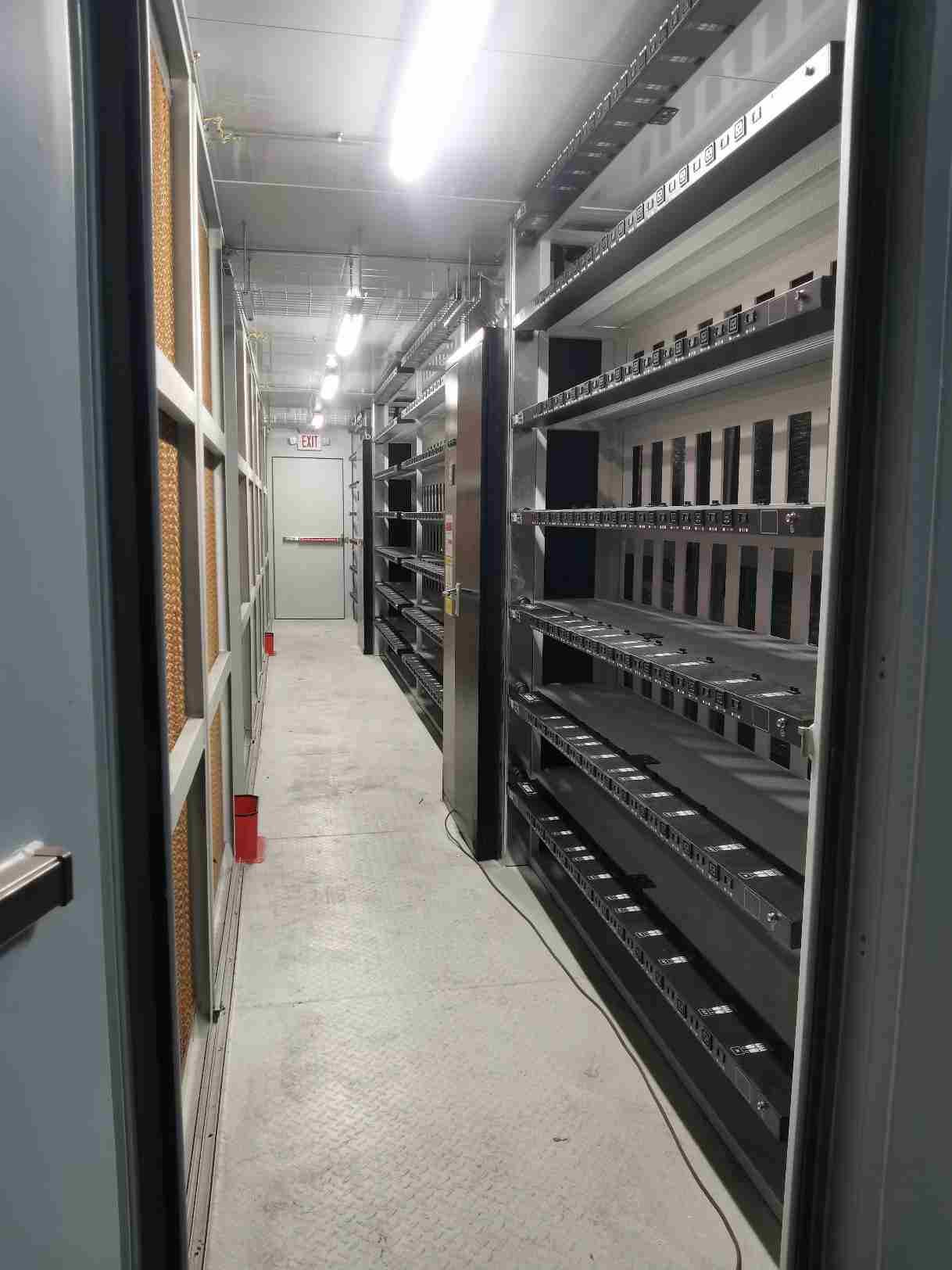
A 2.4 m wide container has no room for a raised floor and no height for room-level air mixing. Cooling goes where the heat is: an in-row precision unit between racks, pulling hot air out of the aisle and returning cold air at the rack face.
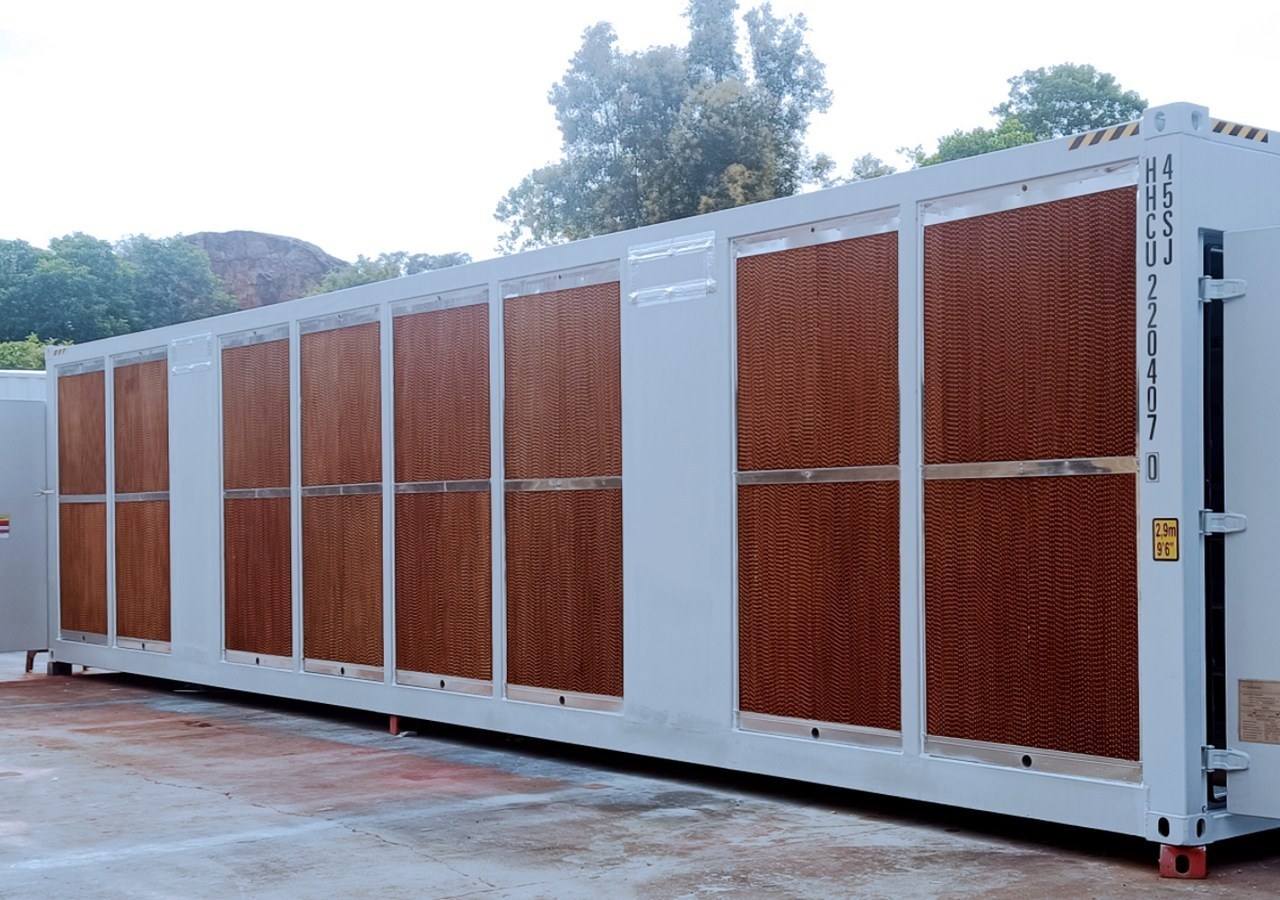
The condensing side is an outdoor chiller — a separate line, and often a separate supplier. If you already have chilled water on site, we quote the box without it and hand you the interface: pipe size, flow rate and the ΔT we designed for.
Everything is sized to a stated ambient. Ours is 35 °C as a default, and we write it on the drawing. A container sold at 25 °C and installed in Texas is not the same product, and the difference shows up in July, not in the quote.
Water is the wrong answer inside a box full of energised equipment. We fit NH-200 clean agent with detection, discharge and alarm, and we keep the cylinders where they can be weighed and replaced without dismantling the room.
The control cabinet monitors temperature, humidity, door state, leak, smoke and the state of every power path, and reports both to a local display and as dry contacts or Modbus to your BMS. If your operations team already runs a DCIM, this is an integration task, not a new system.
Alarms are tested in the yard with the box energised. A monitoring system that has only ever been simulated is a monitoring system that will fail on the day it matters.
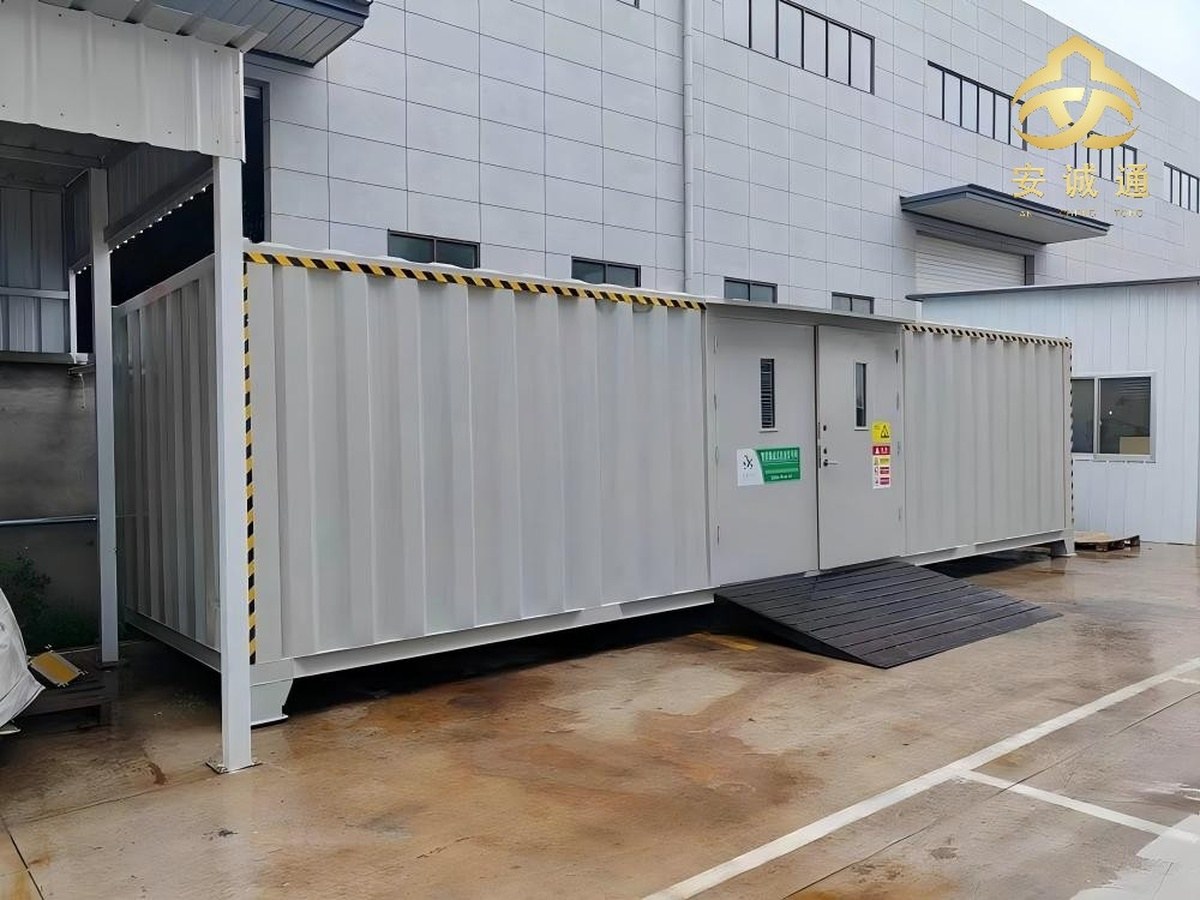
We start from a 40 ft high-cube: 12,192 × 2,438 × 2,896 mm. The shell keeps its CSC plate, which is what allows it to travel as a container rather than as an unclassified structure — and it is checked at the border, not at the drawing stage.
Inside, the box gets a thermal lining, a sealed floor, cable penetrations that are cut and glanded rather than drilled and foamed, and a paint system chosen for the destination. A unit going to a coastal substation gets C4; the same box going to a dry inland site does not need to pay for it.
Lifting points are load-tested, the centre of gravity is marked, and the transport configuration — with or without the chiller, with or without batteries — is a line on the packing list. Batteries travelling as dangerous goods is a conversation worth having before the booking, not after.
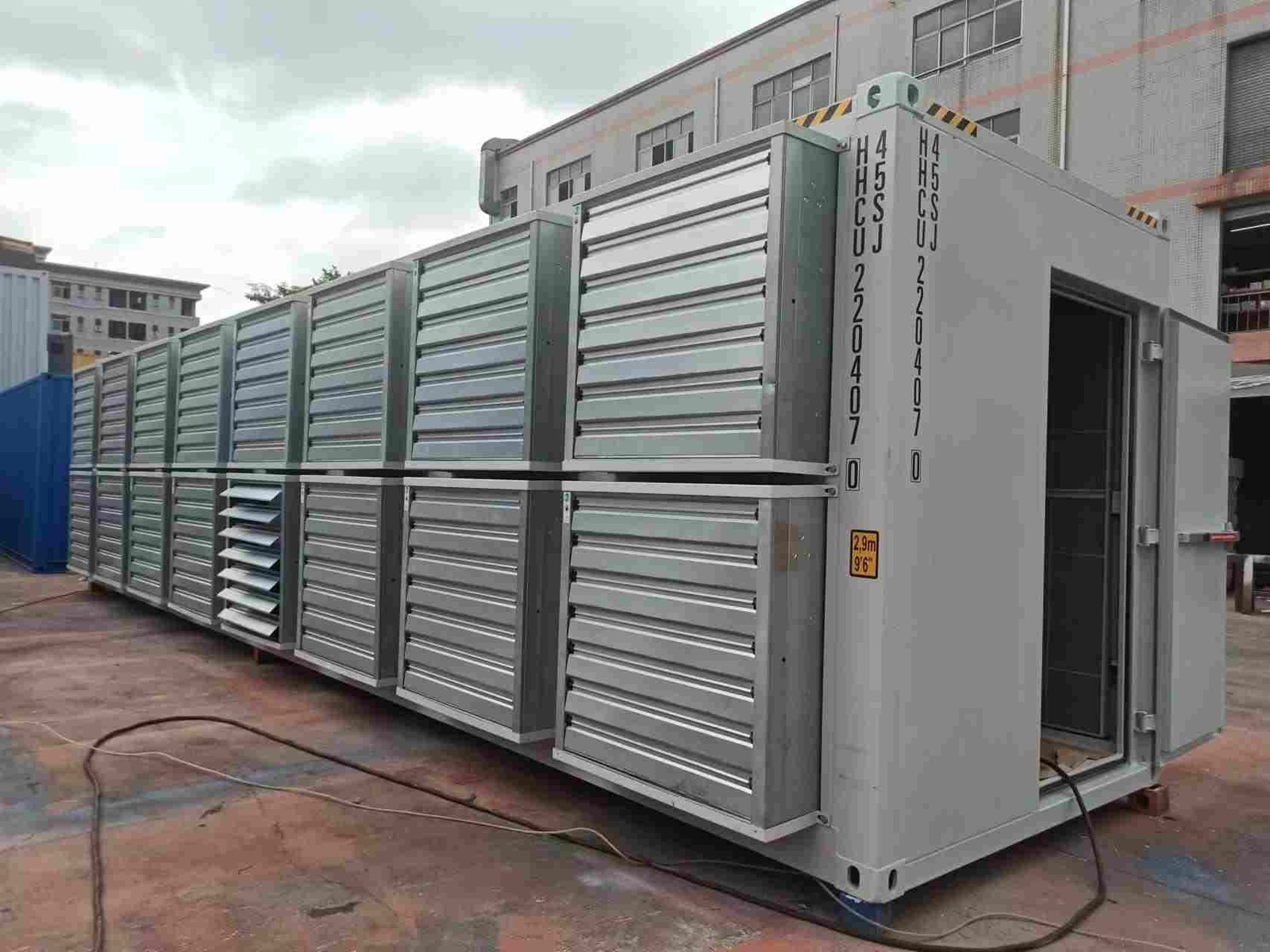
These are the configuration templates behind the products above, not a second product list. The same 40 ft shell becomes a different machine depending on how much power you push through it and how much redundancy you insist on. Two of the five — AI GPU and liquid-cooled — have no standard product page, because they are quoted against a rack schedule rather than a catalogue.
| Code | Configuration | Shell | What is inside | Best when |
|---|---|---|---|---|
| DC-CDC | Standard CDC | 40 ft HC 12,192 × 2,438 × 2,896 |
7 racks · 14 servers · 400 kVA online UPS · 15 min battery · ATS dual feed · 7 in-row units · NH-200 · integrated cabling | You need one turnkey hall that ships complete and connects at the fence |
| DC-GPU | AI GPU cluster | 40 ft HC | Power and cooling sized to the GPU node, not to a standard rack · liquid-ready | Training clusters where density matters more than N+1 on everything |
| DC-LIQ | Liquid-cooled CDC | 40 ft HC / 20 ft | Cold-plate loop · CDU · dry cooler, in place of in-row DX | Racks above roughly 20 kW, where air stops being a cooling medium |
| DC-EDGE | Edge node | 20 ft | 3–4 racks · single feed with optional UPS · one in-row unit · remote monitoring | Compute near the load, deployed in weeks, unmanned most of the year |
| DC-MICRO | Micro-module | Module(s) | Rack + power + cooling + monitoring as one repeatable module, added later | You want to buy phase one now and phase two when the load arrives |
Servers, switches and software licences are not in the scope. Every configuration above is quoted against a drawing, a load schedule and a destination.
The same 40-foot shell is a 400 kVA box or a 2N box. Until we know the load and the redundancy, any number we give you is a guess with a letterhead on it.
Quotation terms: quoted per project against a released drawing. Not valid as a public price list. Freight, duties, foundation, utility connection and on-site commissioning are excluded unless listed.
Tell us the kW of servers, the redundancy you need, the utility voltage and frequency, the design ambient, and whether the chiller and generator are yours. That is enough to draw a box and price it.