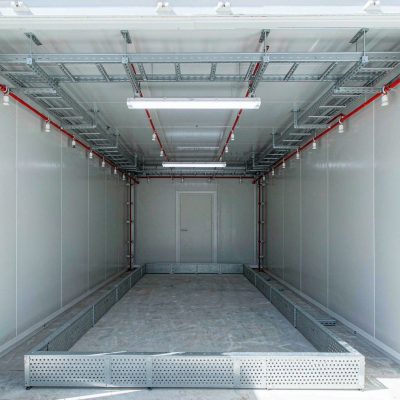


What it is for
A UPS stores nothing. How long it rides through an outage depends entirely on the battery.
Ten years ago every data centre used lead-acid. New build is almost all lithium iron phosphate, for a simple reason: for the same capacity, lithium takes a third of the space and a quarter of the weight, and cycles six to ten times longer.
The price is a higher safety requirement. Lithium cells can enter thermal runaway, and once it starts the temperature passes 800 °C and the fire can re-ignite. So the battery module must be independent: its own detection, its own suppression, its own pressure relief, and a fire wall between it and the IT modules.
We put cells, BMS, suppression and cooling in one enclosure and complete a charge-discharge test before dispatch. On site, connect the DC cable and it is ready.
Where it is typically used
Key specifications
| Chemistry | Lithium iron phosphate (LFP); NCM available but not recommended |
| Capacity | 100 / 200 / 300 / 500 kWh |
| DC voltage | 480 V / 512 V / 600 V to match the UPS |
| Autonomy | 15 / 30 minutes, set by load |
| Cycle life | 6000 cycles at 80% depth of discharge, 25 °C |
| BMS | Three levels: cell, module, string, with balancing and insulation monitoring |
| Fire | FK-5-1-12 plus optional water sprinkler, dual detection interlock |
| Temperature | Precision cooling at 18–27 °C, gradient within 5 °C |
| Protection | IP54 with independent pressure relief |
| Communication | CAN and Modbus TCP to monitoring and UPS |
Figures are for the standard configuration and change with the project. Values are design values; acceptance follows the contract technical agreement.
What goes in the box
Installed, wired and tested before dispatch. On site the work is placement and external connections.
Standard 19-inch racks, 4–8 modules each, copper busbar connection with fuse protection.
LFP cells with module-level BMS sampling temperature and voltage.
String-level management, SOC and SOH estimation, disconnection on fault.
Precision unit holding 18–27 °C, since heat accelerates capacity fade.
FK-5-1-12 cylinders, smoke and heat detection, explosion-proof relief, sounder beacons.
DC breakers, fuses, insulation monitoring and earth fault protection.
Which model to take
| Model | Capacity | Autonomy | Racks | Fire |
|---|---|---|---|---|
| AIDC-BAT100 | 100 kWh | 15 min at 400 kW | 2 racks | FK-5-1-12 |
| AIDC-BAT200 | 200 kWh | 30 min at 400 kW | 3 racks | FK-5-1-12 + water |
| AIDC-BAT500 | 500 kWh | 30 min at 1000 kW | 6 racks | FK-5-1-12 + water |
Standard models are listed. Other capacities are built to order, with two to three weeks added to the standard lead time.
Lithium or lead-acid, and how thermal runaway is actually contained
Start with the arithmetic
For 200 kWh of usable capacity, lead-acid is sized at 50% depth of discharge, so 400 kWh installed: about 20 m² of floor and 12 tonnes. LFP at 90% depth of discharge needs 220 kWh: about 7 m² and 2.5 tonnes.
Lead-acid is cheaper up front, roughly 55%–65% of the lithium price. But it lasts 300–500 cycles, so four or five years and it is replaced, while lithium at 6000 cycles lasts over a decade at one cycle a day.
Add replacement, floor area and structural strengthening into a ten-year total cost of ownership and lithium usually lands at 60%–70% of lead-acid. For new build there is not much to debate.
What thermal runaway is
An internal short heats the cell locally, the electrolyte decomposes and vents gas, temperature climbs, and neighbouring cells ignite. Once that sequence starts, external suppression struggles to stop it. You cool, you isolate, and you wait for it to finish.
LFP decomposes at 250–300 °C; NCM at 150–200 °C. That is why data centres use LFP and not NCM: NCM stores more energy per kilogram but is thermally less stable.
The trigger is usually mechanical damage, electrical abuse such as overcharge or an external short, or local overheating. So protection is layered: impact protection in the structure, overcharge protection in the BMS, and local temperature control in the cooling system.
What makes suppression effective
First, early detection. Smoke, heat and gas detection (CO and H2) together give three to five minutes more warning than smoke alone, and those minutes decide whether the fault can be isolated before runaway.
Second, disconnection. On detection the BMS opens the affected string and the panel shuts the DC path, stops cooling and starts extract.
Third, suppression. FK-5-1-12 works by absorbing heat and chemically interrupting the flame, discharging in about ten seconds with a ten-minute hold. Against lithium re-ignition it is not enough on its own, so a water sprinkler is normally added for sustained cooling. That is why large battery modules get a water system.
Fourth, pressure relief. The enclosure must have a relief vent sized to code and aimed away from walkways. In a deflagration the pressure needs somewhere to go, or the enclosure deforms and the door leaves the frame.
One thing that gets overlooked
Temperature. Lithium fades slowest at 25 °C, loses roughly half its life above 35 °C, and above 45 °C ages faster with a safety penalty attached. So the battery module needs its own cooling, and cannot share with the IT module: IT runs at 22 °C, batteries at 25 °C, and the requirements differ.
Humidity matters too. Too high causes tracking, too low causes static. 40%–60% is the workable band.
When to use it, when not to
These come from projects rather than general advice. Match your case against them; it is more useful than reading the specification table.
LFP is the only sensible choice.
Lead-acid still works, but accept replacement every four or five years.
A dedicated enclosure is essential, with water sprinkler and gas suppression.
Lithium life halves. Fix the temperature before discussing capacity.
From contract to energisation
Capacity, autonomy, DC voltage, water sprinkler or not.
Rack layout, DC routing, fire pipework.
Enclosure, fire, cooling, battery integration.
Charge-discharge test, BMS integration, fire interlock.
Placement, DC cable connection, communication commissioning.
On site and in detail
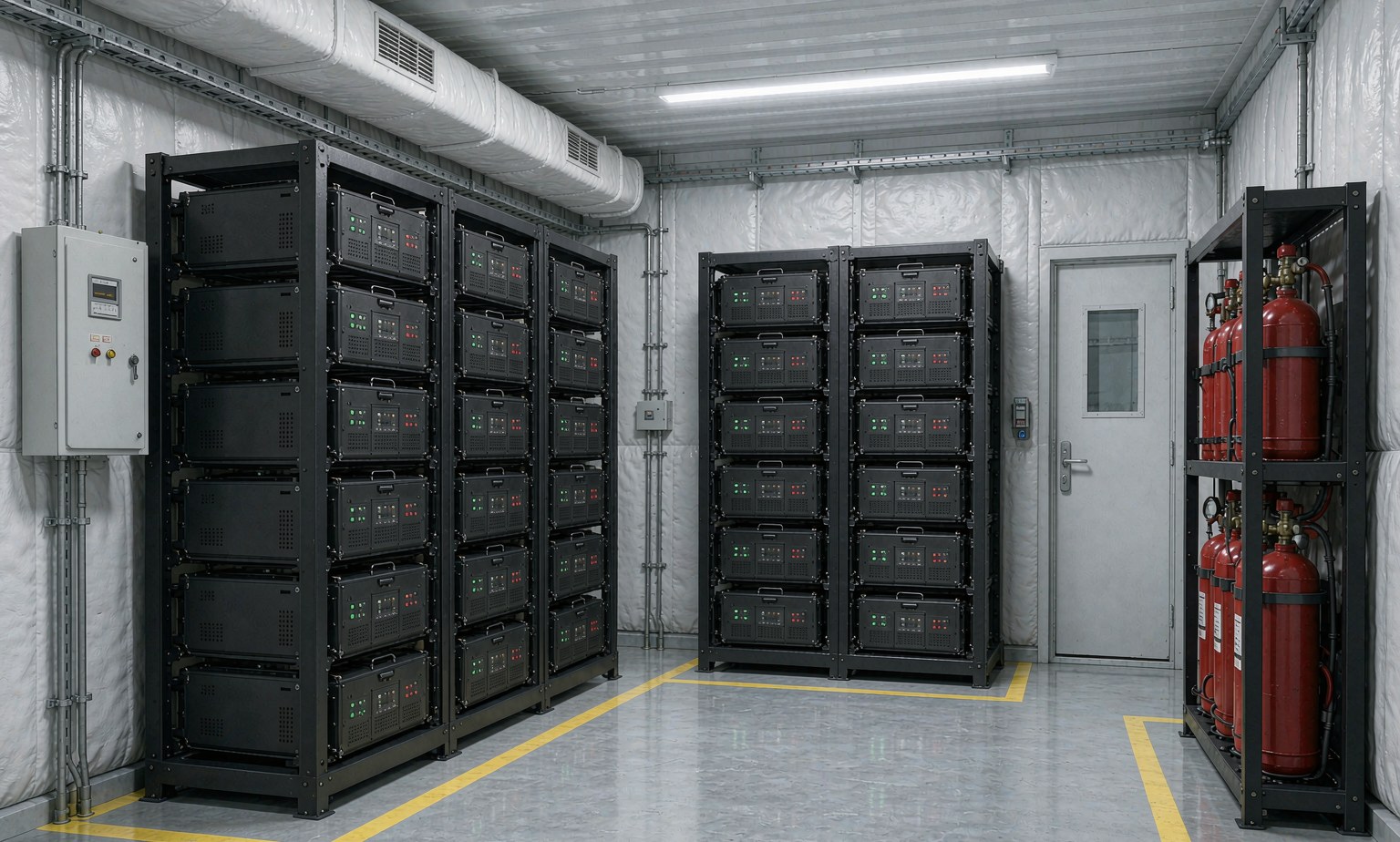
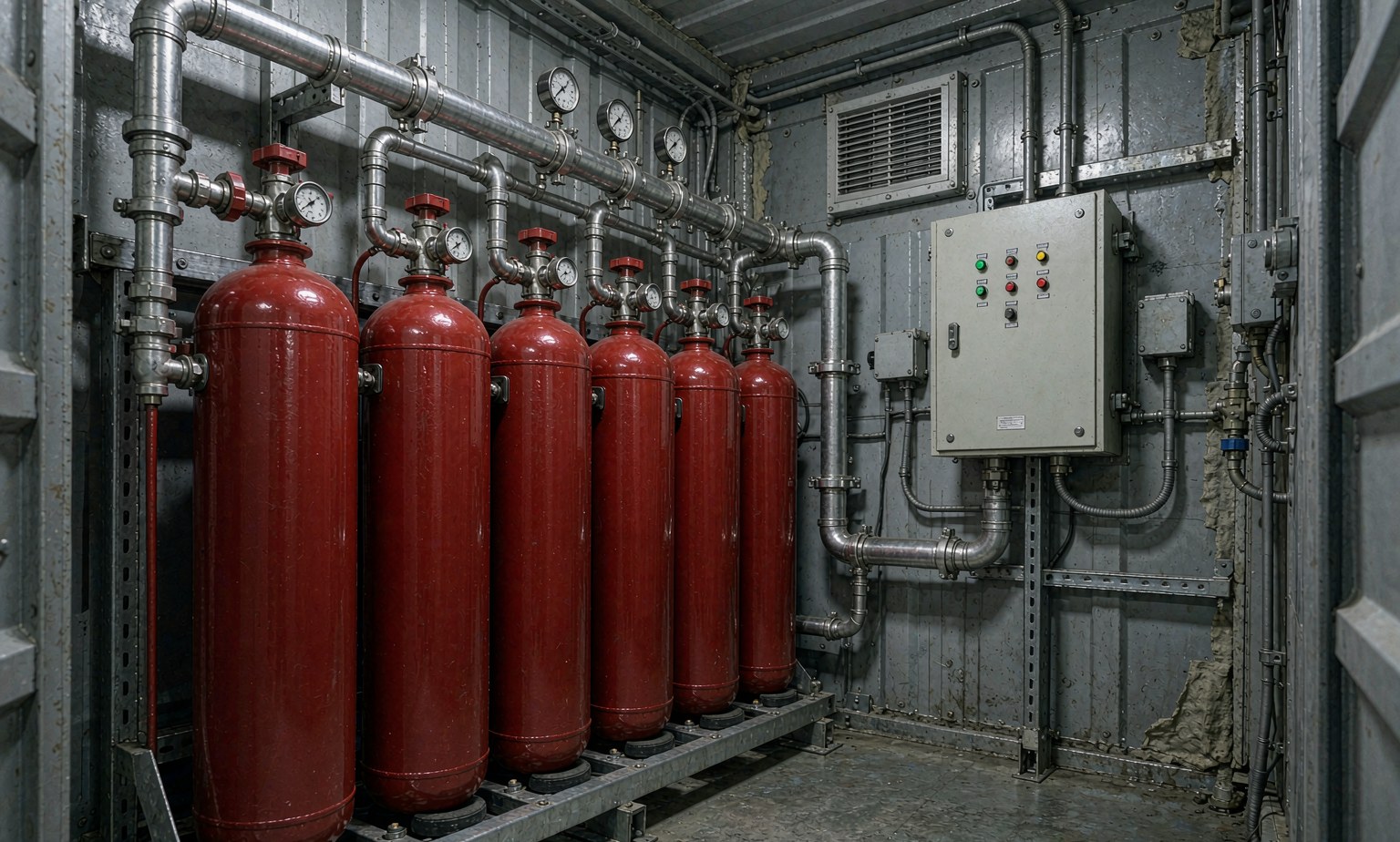
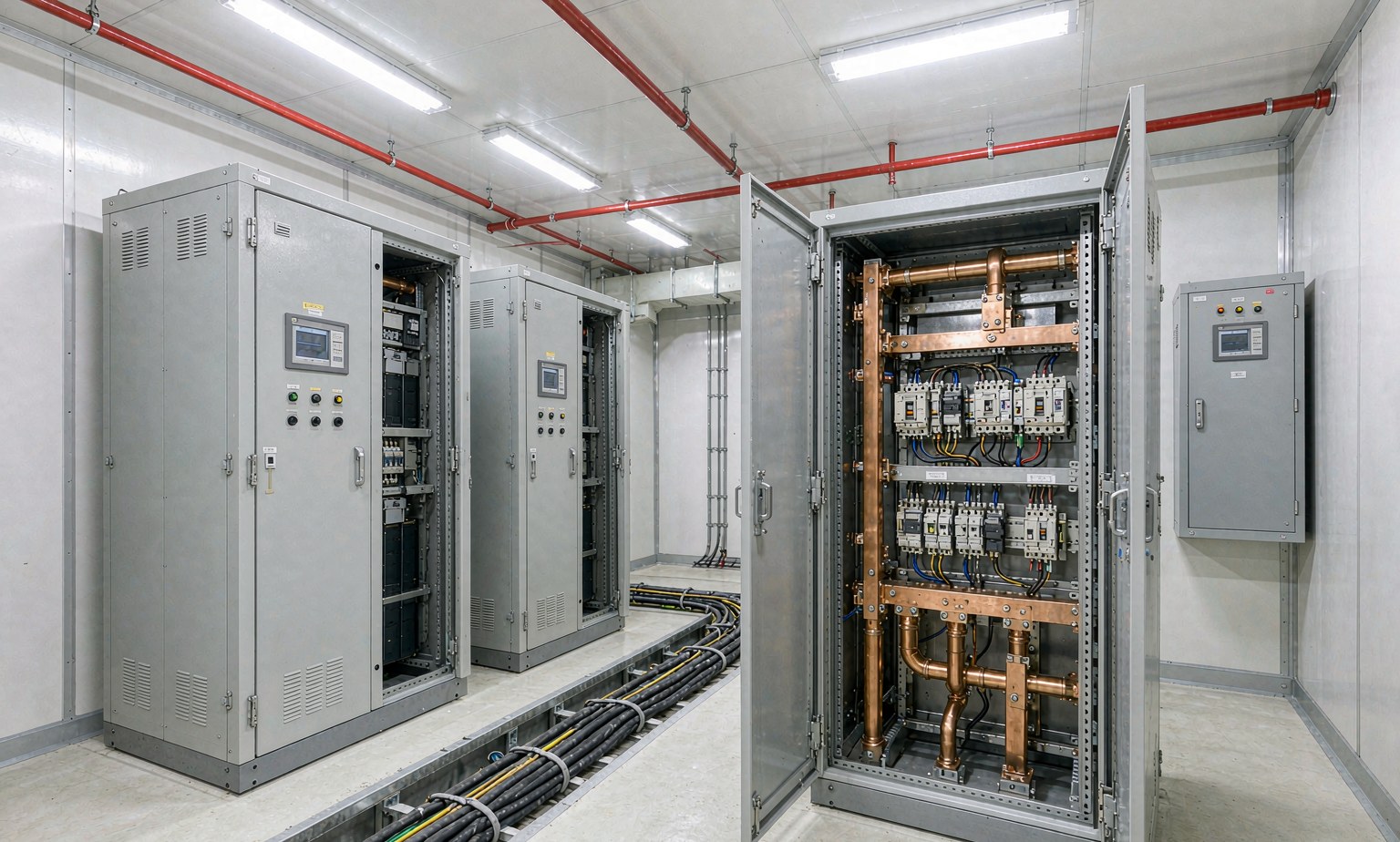
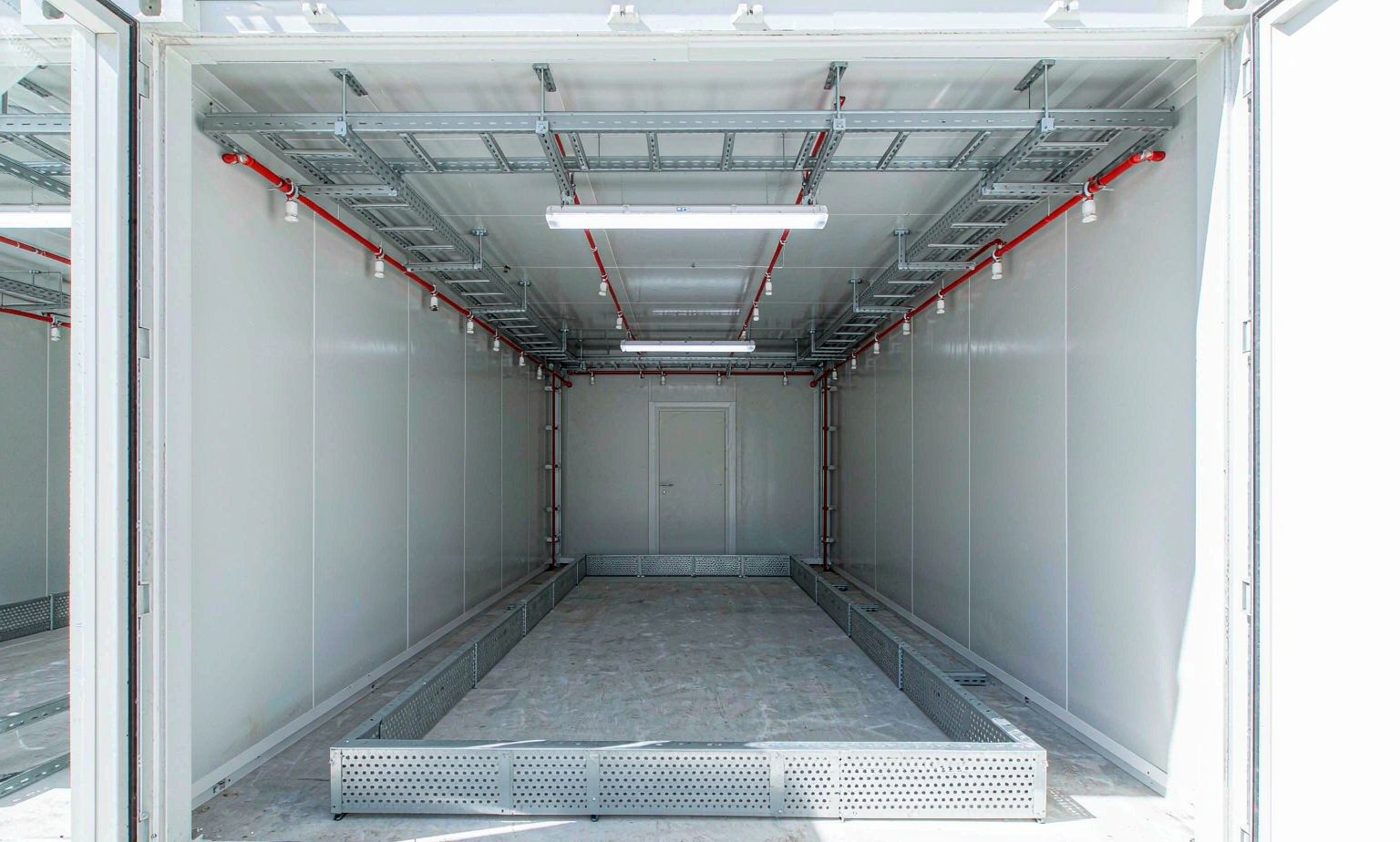
Some images are scheme illustrations and renders showing structure and layout. Final delivery follows the contract drawings.
What customers ask most
Can the battery module go indoors?
Yes, subject to fire compartmentation and pressure relief. Most projects put it outside on its own foundation, at least 3 m from other modules.
When do the batteries need replacing?
At 6000 cycles and one cycle a day, 12–15 years. In practice you replace when SOH reaches 80%, which means evaluating around year ten.
Can second-life cells be used?
Technically yes, but not where reliability matters. Consistency and remaining life are unknown and the BMS becomes difficult to tune.
How long does the factory test take?
One full charge-discharge cycle, about 6–8 hours, recording capacity, internal resistance and temperature rise. Customers may witness.
What does fire acceptance check?
Detection interlocks, a discharge test using nitrogen, relief vent area, fire separation and escape routes. Requirements vary by jurisdiction.
Ask for a scheme for your site
Send the capacity, rack count, site conditions and local climate. You get a layout, a single-line diagram and a price, at no charge, revised until it works.