

What it is for
An edge site is not chosen by people, it is chosen by the service. The radio needs to be at the mast, the line needs to be at the workshop, the till needs to be at the counter. None of those places has a data room, and often not a decent building either.
A 20 ft enclosure occupies 6 m² of ground. It can be set beside a verge, in the corner of a workshop or on a roof deck. Connect 380 V three-phase and one fibre and it is live the same day.
Inside are three or four racks carrying switches, servers, storage and inference cards. A 150 kVA UPS rides through ten minutes, long enough to start a generator or shut the service down cleanly.
These sites are empty almost all the time, so the design goal is not ease of maintenance, it is no maintenance: out-of-band management, auto-restart on power return, environmental alarms, and access granted remotely.
Where it is typically used
Key specifications
| Enclosure size | 5.90 × 2.35 × 2.39 m (20 ft standard) |
| Racks | 3 standard / 4 in the compact layout |
| Power per rack | 8–25 kW |
| Total IT load | 100–150 kW |
| UPS | 150 kVA modular, 10 minutes autonomy |
| Cooling | 1 × 25 kW precision unit plus standby, or 2 × 12.5 kW |
| Air distribution | Front supply, rear return, separated paths |
| Fire | 2 × 40 L HFC-227ea, dual detection interlock |
| Protection | IP55, roof snow load 1.5 kN/m² |
| Ambient temperature | −25 °C to +50 °C, cold-weather package optional |
| Monitoring | Environmental, out-of-band management, 4G/5G backhaul |
| Unattended operation | Remote power cycling, remote KVM, remote door release |
Figures are for the standard configuration and change with the project. Values are design values; acceptance follows the contract technical agreement.
What goes in the box
Installed, wired and tested before dispatch. On site the work is placement and external connections.
2.0 mm corrugated skin, 100 mm rock wool, steel base with fork pockets and lifting lugs.
Three 42U racks, perforated doors, dual PDU per rack, top cable trunking.
150 kVA UPS, incoming distribution, surge protection and metering at one end.
25 kW precision unit with remote condenser, condensate pumped out.
Two 40 L HFC-227ea cylinders, pre-action valve, smoke and heat detection, pressure relief.
Temperature, humidity, leak, door contact, smoke and UPS status, all over one 4G link.
Which model to take
| Model | Racks | IT load | UPS | Cooling | Type |
|---|---|---|---|---|---|
| AIDC-20E3 | 3 | 150 kW | 150 kVA | 25 kW | Standard |
| AIDC-20E4 | 4 | 150 kW | 150 kVA | 2 × 12.5 kW | Compact |
| AIDC-20EC | 3 | 100 kW | 100 kVA | 12.5 kW | Cold region, trace heated |
Standard models are listed. Other capacities are built to order, with two to three weeks added to the standard lead time.
The latency arithmetic at the edge, and what unattended really means
Where the latency actually goes
Light travels through fibre at about 5 microseconds per kilometre, so 10 microseconds round trip. A data centre 100 km away costs 1 ms on the glass. That does not sound like much.
But the glass is not the whole path. Data crosses switches at 5–20 microseconds per hop, a firewall at 50–200 microseconds, a load balancer, and then the server processes it. A cross-city round trip of 2–5 ms is normal; cross-province reaches 20–40 ms.
Why does industrial control care? A PLC scan cycle is 10–20 ms and closed-loop control works in milliseconds. A 5 ms round trip to the cloud has already eaten a quarter of the budget, and jitter makes the loop unstable. Compute running the line has to sit next to the line.
Video analytics is the same argument. One 4K stream is 8 Mbps, ten of them are 80 Mbps, and sending all of that back costs bandwidth and storage. Sampling frames locally, inferring locally and returning only results is the standard edge pattern.
Unattended is designed, not announced
The first layer is out-of-band management. If the operating system hangs but the BMC is alive, you can power cycle, enter the BIOS and mount a virtual disk to reinstall. Without that layer, someone has to drive there.
The second layer is environmental self-recovery. When utility power returns, the UPS restarts, the cooling restarts, and servers power up in sequence so they do not all surge at once. Plenty of halls skip sequenced start and trip the breaker on the first recovery.
The third layer is alarm severity. Two degrees above setpoint and ten degrees above setpoint should not send the same message. Ours defaults to three levels: information, logged; warning, emailed; critical, phoned. Too many messages is the same as none.
The fourth layer is physical access. Grant a single door opening remotely, valid once, then expired. Considerably safer than a key held by a regional manager.
Where the real risk sits
Not in equipment failing, but in nobody knowing it failed. A central hall has 24/7 cover; an edge node may go three months without anyone looking at it.
So the monitoring path has to be independent. If the service network is down, monitoring still has to report, which means its own 4G link rather than sharing the service fibre. This is the line most often cut, and it is exactly the line you need when something goes wrong.
Then there is the environment. An outdoor enclosure sees sun, standing water, animals and dust that a machine room never does. IP55 is the floor, cable entries must be sealed, and the base needs a rodent plate.
When to use it, when not to
These come from projects rather than general advice. Match your case against them; it is more useful than reading the specification table.
A 20 ft footprint and lifting weight suit these sites, and it is live in a day.
A 20 ft enclosure will not take them. Move to 40 ft or a twin-module pair.
Out-of-band management, graded alarms and remote access cover the gap until someone arrives.
Air cooling cannot cope and there is no room for liquid pipework. Use the liquid-cooled AIDC-IT.
From contract to energisation
Rack count, power per rack, backhaul method, cold and heat requirements.
Layout, single-line diagram, foundation and interface drawings.
Enclosure conversion, assembly, wiring, pressure testing.
Load test, fire interlock, remote management integration.
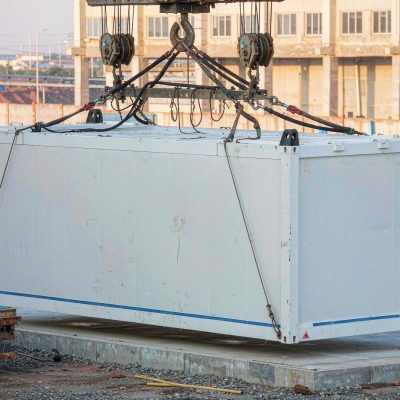
Standard flatbed, positioned by forklift or an 8 t crane.
On site and in detail
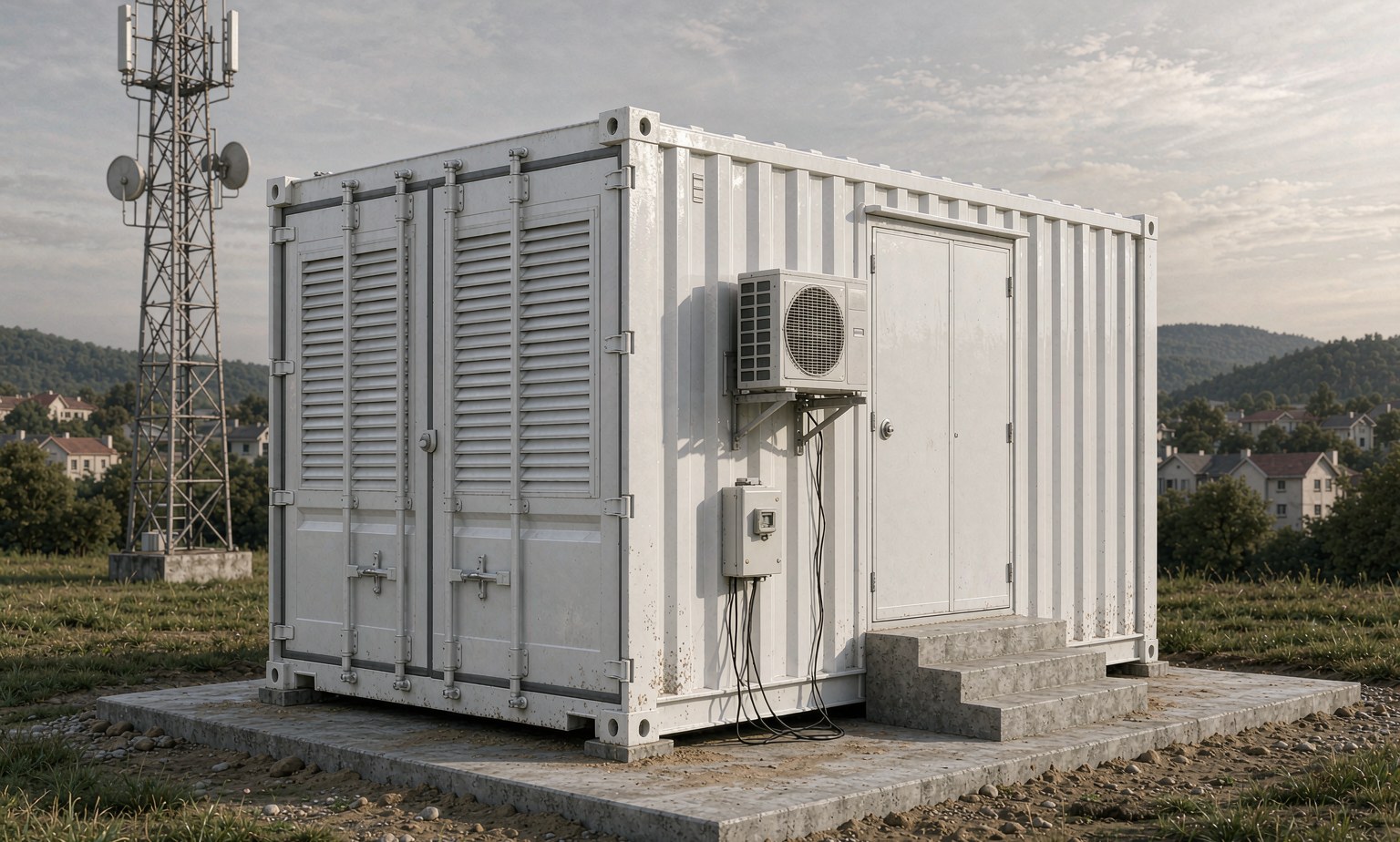
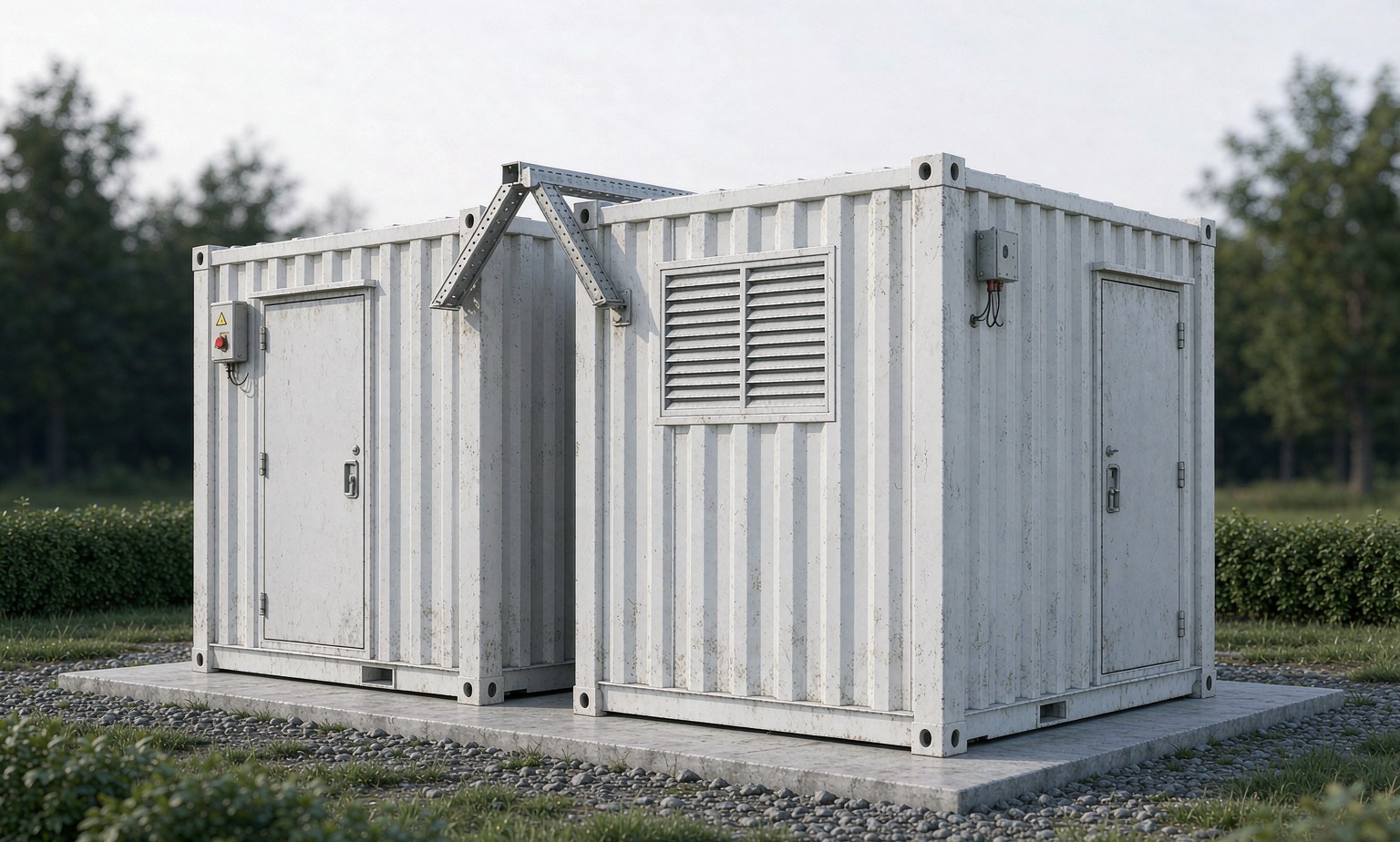
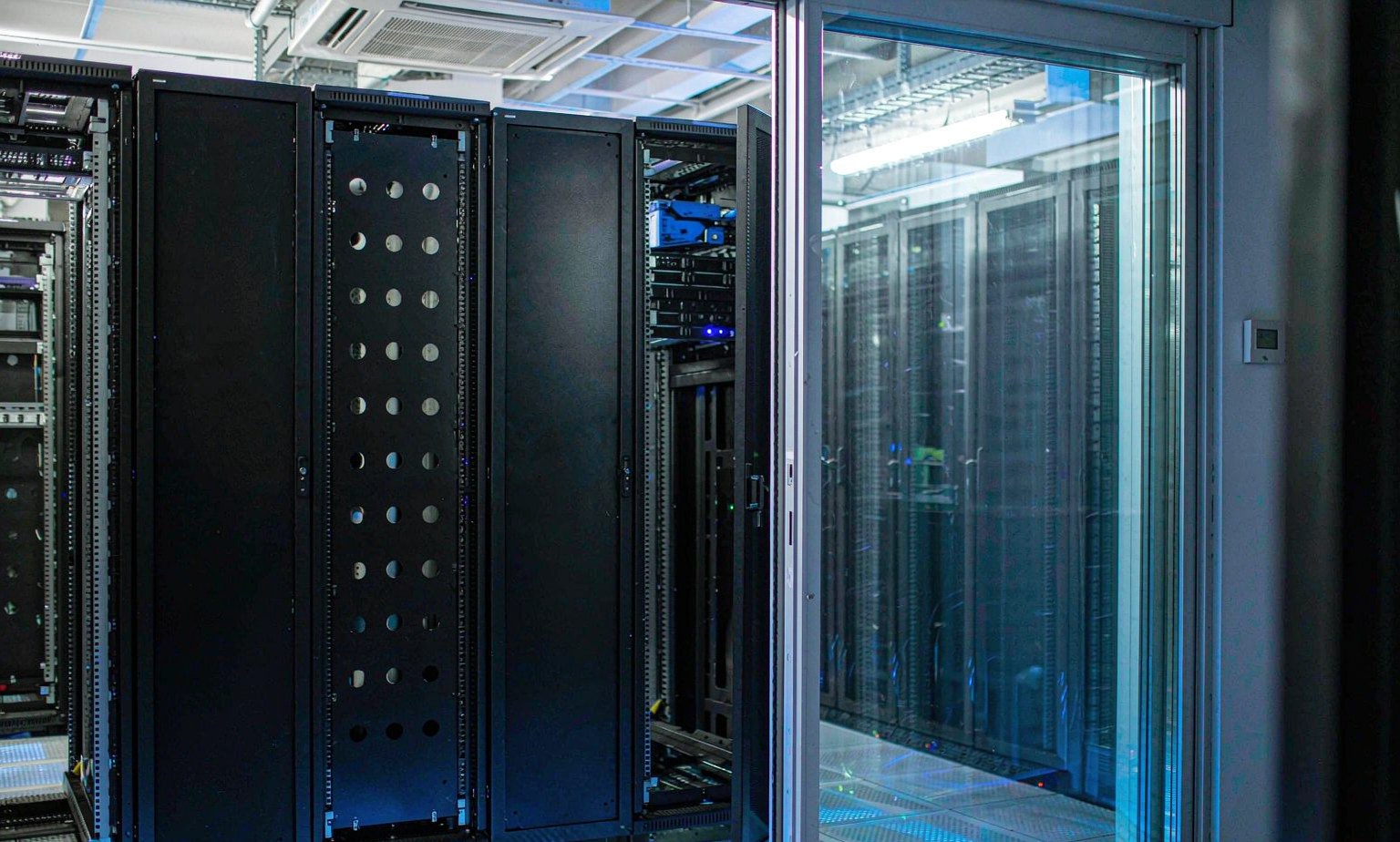
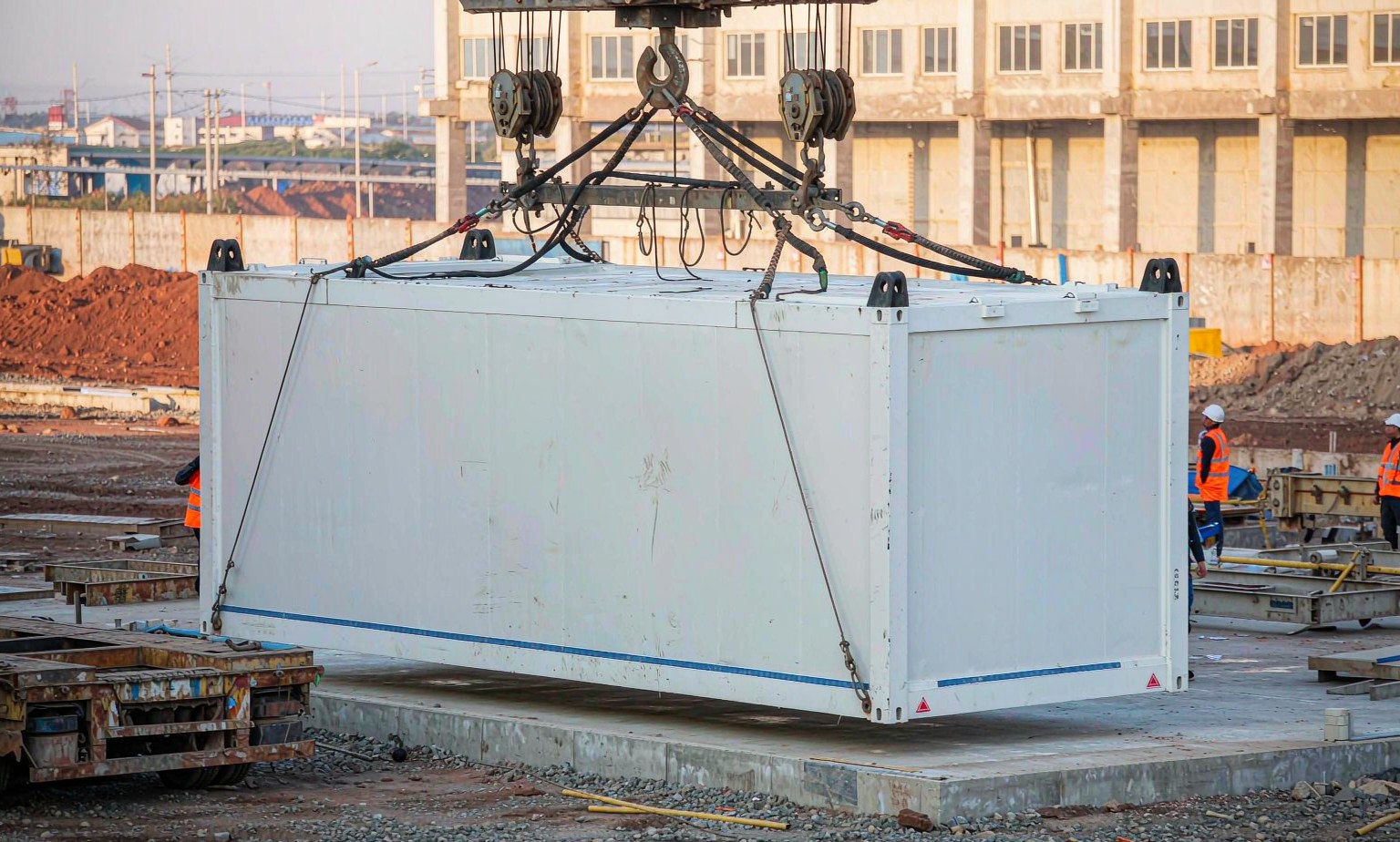
Some images are scheme illustrations and renders showing structure and layout. Final delivery follows the contract drawings.
What customers ask most
How much ground does it need?
The enclosure is 14 m². Allow 30 m² with service clearance and the condenser. A hardstanding or a 150 mm concrete slab is enough.
What supply does it need?
150 kW of IT load plus cooling comes to about 200 kVA, so a 250 kVA transformer. Two feeds are better, one works.
Can I leave out the generator?
Yes. Edge nodes are usually specified as utility plus 10 minutes of UPS, with the service degrading or migrating elsewhere. Whether you need a generator depends on whether the service can accept an outage.
Will it freeze in winter?
The standard build is rated to −25 °C. Colder needs a cold-weather package: trace heating on pipework, battery heating, crankcase heaters. Priced separately.
How is remote management connected?
A dedicated 4G router inside the enclosure links to the monitoring controller and the server BMCs. The customer side needs a VPN or a port forward. No public IP required.
What happens when something fails?
The design is modular: UPS power modules, cooling units and PDUs are all field replaceable. Keep a spares kit inside the enclosure; there is a cabinet for it.
Ask for a scheme for your site
Send the capacity, rack count, site conditions and local climate. You get a layout, a single-line diagram and a price, at no charge, revised until it works.