

What it is for
Fire in a data centre involves energised equipment of high value, and it rules out conductive agents. Water shorts it, powder contaminates it, foam is worse. What is left is clean agent: no residue, non-conductive, and it does not damage the equipment.
The fire module gathers the cylinders, valve manifolds and alarm panel into one enclosure, with pipework distributed to each IT module.
A 6 MW campus can need several dozen cylinders. Distributed across every IT module, that consumes space, complicates inspection and makes unified management difficult. One dedicated enclosure is more practical.
The enclosure itself needs fire compartmentation, independent ventilation, and warning signage with an emergency abort button at the door.
Where it is typically used
Key specifications
| Protected volume | By total IT module volume, up to 3000 m³ per system |
| Agent | HFC-227ea / FK-5-1-12 / IG-541 |
| Design concentration | 7%–8% HFC-227ea, 4.5%–5.5% FK-5-1-12, 40% IG-541 |
| Discharge time | 10 seconds or less |
| Hold time | 10 minutes or more |
| Detection | Smoke and heat, with discharge only on dual alarm |
| Actuation | Automatic, manual and mechanical emergency, three levels |
| Cylinders | 40 L / 70 L / 80 L, sized to volume |
| Protection | Independent compartment, 60-minute fire rating |
Figures are for the standard configuration and change with the project. Values are design values; acceptance follows the contract technical agreement.
What goes in the box
Installed, wired and tested before dispatch. On site the work is placement and external connections.
Cylinders, racks, head valves and safety relief devices.
High-pressure hoses, check valves, manifold and selector valves.
Galvanised steel or stainless, run to the nozzles in each IT module.
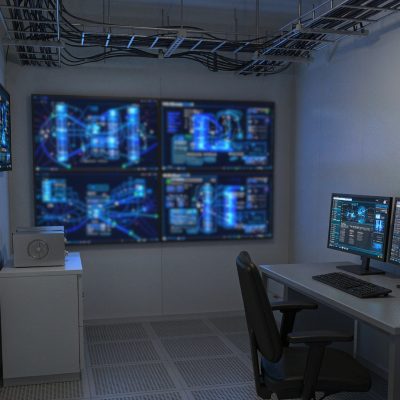
Dual-loop detection, sounder beacons, interlock control, event log.
Solenoid actuation, manual pull ring, mechanical emergency.
Area to code, positioned away from walkways.
Which model to take
| Model | Agent | Protected volume | Cylinders | Notes |
|---|---|---|---|---|
| AIDC-FIRE-H7 | HFC-227ea | 1500 m³ | 8 | Best value |
| AIDC-FIRE-N5 | FK-5-1-12 | 2000 m³ | 10 | Low GWP, export default |
| AIDC-FIRE-IG | IG-541 | 3000 m³ | 24 | Large volume, no GWP |
Standard models are listed. Other capacities are built to order, with two to three weeks added to the standard lead time.
Three agents, and how to choose without getting caught out
HFC-227ea (FM-200)
The most widely used, fast, discharging in about ten seconds at a design concentration of 7%–8%. Few cylinders, small footprint, moderate cost.
The problem is a global warming potential of 3220, nearly 3000 times that of CO2. The EU F-gas regulation already restricts new installations, and several US states are following.
So for European delivery it is effectively unavailable. China has no nationwide ban yet, but more owners exclude it in tender documents every year.
FK-5-1-12 (Novec 1230)
GWP of 1 and an atmospheric lifetime of five days, which makes it the most environmentally acceptable chemical agent available. Design concentration 4.5%–5.5%, lower than HFC-227ea, so fewer cylinders again.
It costs more, roughly 1.3–1.5 times HFC-227ea. In exchange there is almost no residue after discharge, which suits precision equipment.
For Europe, North America and Australia, specify this from the start and avoid a retrofit later.
IG-541 (Inergen)
A blend of 52% nitrogen, 40% argon and 8% CO2, extinguishing by bringing oxygen down to about 12.5%, a level people can still breathe.
No global warming potential, no decomposition products, and refillable. The drawback is 200–300 bar storage, so roughly three times as many cylinders, a larger footprint and high-pressure pipework.
It suits large volumes and projects with the strictest environmental requirements. Containerised data centres rarely use it because the cylinders will not fit.
The double interlock
Codes require two independent detectors to alarm before discharge, known as double interlock, to prevent accidental release.
Anyone who has commissioned a project knows the accidental releases are mostly not detector faults but construction and commissioning: dust from building work triggering smoke detection, welding triggering heat detection, and someone forgetting to switch to manual during testing.
So switch to manual during commissioning and run a nitrogen discharge test before handover. A single accidental HFC-227ea discharge costs tens of thousands, and the industry manages it every year.
When to use it, when not to
These come from projects rather than general advice. Match your case against them; it is more useful than reading the specification table.
Specify FK-5-1-12: compliant, and no retrofit later.
HFC-227ea still works, but confirm there is no local restriction.
IG-541 suits this better; more cylinders, but stable pressure per unit.
IG-541 cylinders will not fit. Use HFC-227ea or FK-5-1-12.
From contract to energisation
Net volume, opening compensation, design concentration.
Cylinder count, pipework, nozzle layout, relief vent.
Enclosure, racks, prefabricated pipework, alarm system.
Pipework pressure test, interlock logic, simulated discharge.
Pipework connection, nozzle installation, integrated commissioning.
On site and in detail
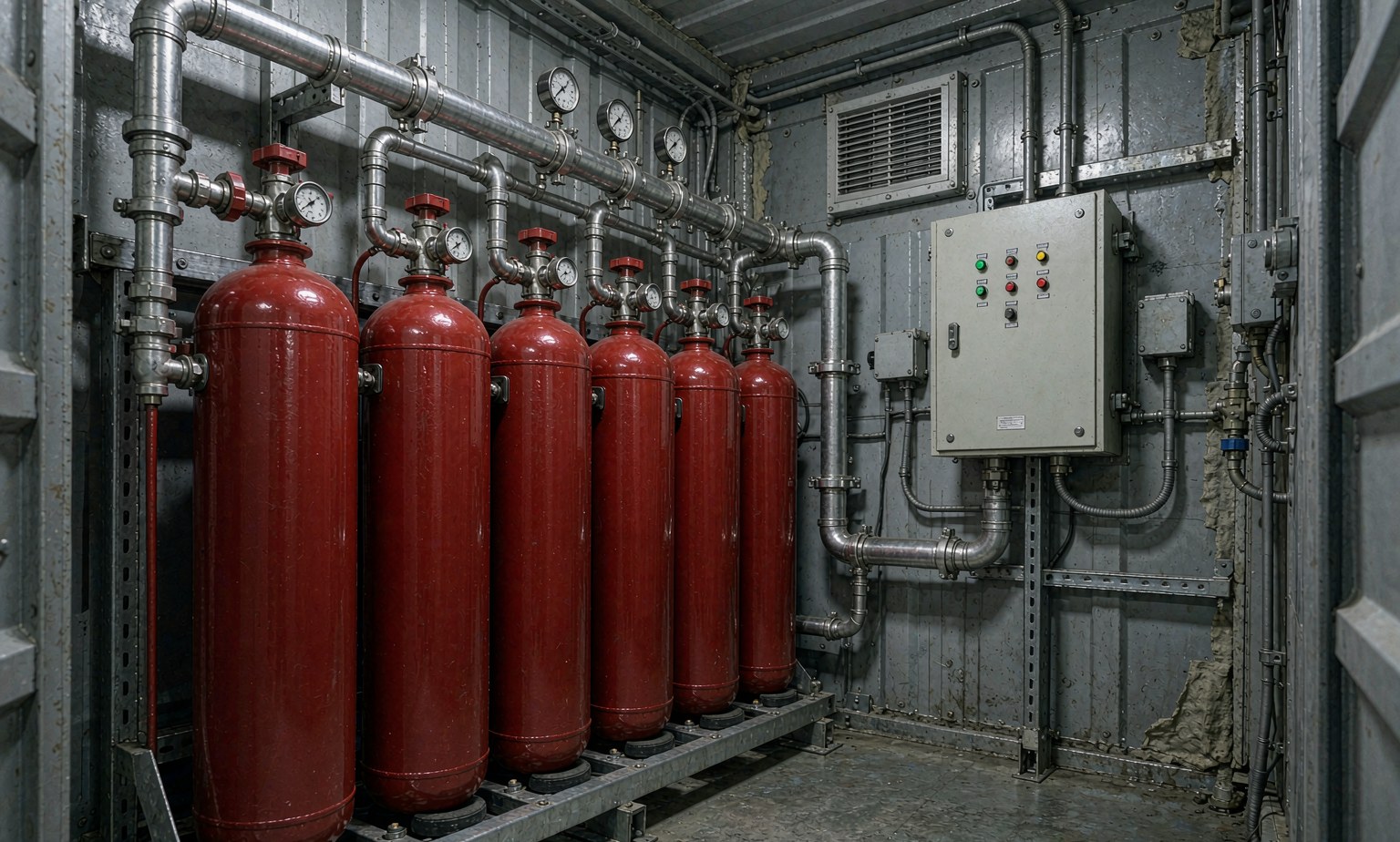
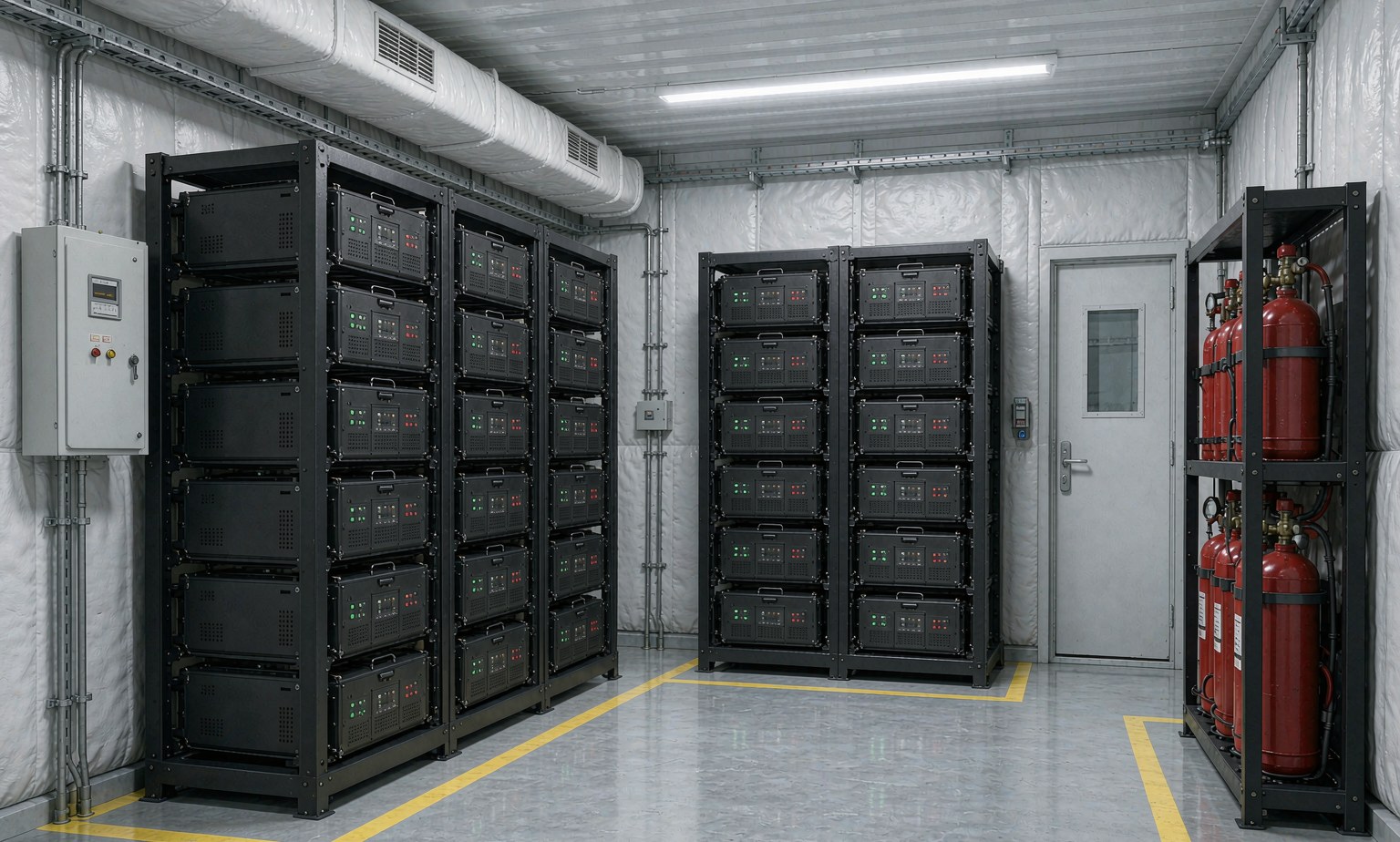
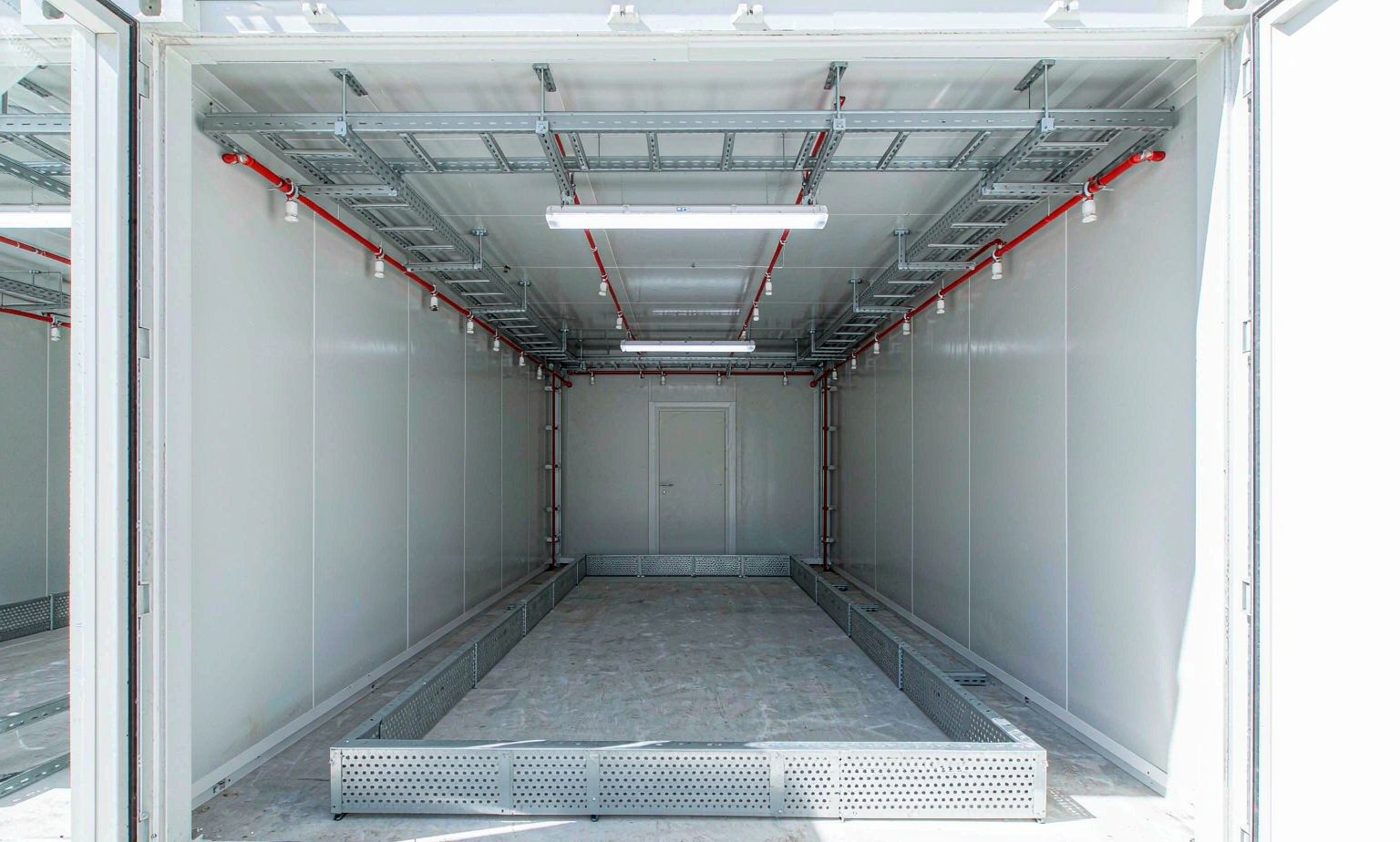
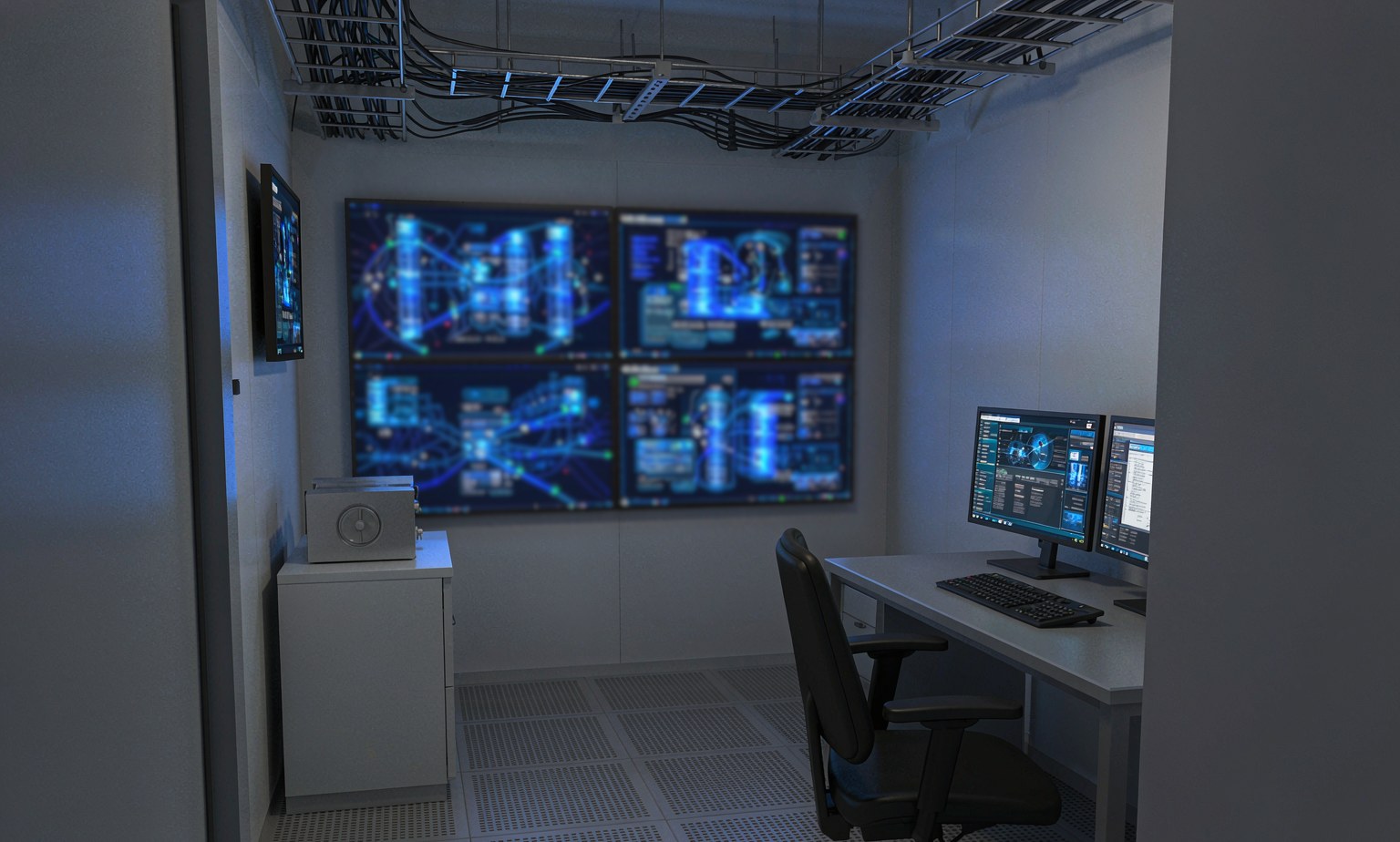
Some images are scheme illustrations and renders showing structure and layout. Final delivery follows the contract drawings.
What customers ask most
How many IT modules can one system cover?
By total volume rather than module count, up to 3000 m³ per system. Above that, split into separate systems. Each IT module needs its own selector valve so it can discharge independently.
How soon can you enter after discharge?
HFC-227ea and FK-5-1-12 need 10–15 minutes of ventilation to fall below the safe concentration. IG-541 is made of atmospheric gases, so ventilation is quicker.
Do cylinders need annual inspection?
Yes. Check pressure and weight annually, and hydrostatic test every five years, ten in some codes. A weight loss above 5% means top-up or replacement.
Can it share a panel with the sprinkler system?
Yes, but on a separate loop. Gas suppression and sprinkler interlocks work on completely different logic, and combining them invites spurious operation.
What does acceptance check?
The concentration calculation, cylinder certificates, pipework pressure test records, interlock test records and relief vent area. Miss one and it will not pass.
Ask for a scheme for your site
Send the capacity, rack count, site conditions and local climate. You get a layout, a single-line diagram and a price, at no charge, revised until it works.