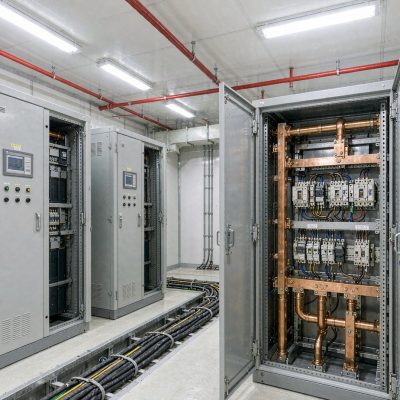


What it is for
Half a megawatt to two megawatts is an awkward band. Built as a building it carries a high unit cost and the same approval process as a much larger hall. Built as a single container it does not fit. Yet this is exactly what most industrial customers need: the own-use hall of a mid-sized factory, a university supercomputing centre, a regional bank’s data back office.
CLUSTER is built for that band. Six to sixteen modules around a yard, with IT, power, battery and cooling each in its own row and service walkways between them. Module count follows capacity, not floor area.
The difference from CAMPUS is scale only. A campus is dozens of modules with its own 110 kV or 35 kV substation. A cluster usually takes two 10 kV feeds, uses generators for backup and covers the whole site with one fire system.
Delivery is 8–10 weeks, roughly eight months faster than building the same capacity. For a customer racing a service launch, that gap is usually worth more than the money saved.
Where it is typically used
Key specifications
| Total IT capacity | 500 kW / 1 MW / 2 MW |
| Module count | 6 / 10 / 16 |
| Power per module | IT module 250–350 kW, power module 400–800 kVA |
| Total racks | 24–80 |
| Power supply | Two 10 kV feeds, N+1 or N+N |
| UPS | 400 / 600 kVA modular, 15 minutes autonomy |
| Cooling | Indirect evaporative as standard, DX for small capacities |
| Design PUE | 1.22 in the north to 1.32 in the south |
| Footprint | About 1200–2600 m² including walkways and generator yard |
| Generators | 1 × 800 kW or 2 × 1000 kW, N+1 |
| Fire | Clean agent, one panel covering all IT modules |
| Delivery | 8–10 weeks |
Figures are for the standard configuration and change with the project. Values are design values; acceptance follows the contract technical agreement.
What goes in the box
Installed, wired and tested before dispatch. On site the work is placement and external connections.
40 ft each, 7 racks, sealed cold aisle. Count follows capacity, not room size.
UPS and LV distribution, dual incoming supply with ATS, outgoing to each IT module.
15 minutes autonomy, sited apart from IT with its own suppression.
Sized against IT module count, one cooling module to two IT modules, N+1.
Separate compound, 8-hour day tank, bunded slab beneath.
Cylinders, alarm panel, environmental monitoring, access control and CCTV in one enclosure.
Which model to take
| Model | Capacity | Racks | Modules | Design PUE | Cooling |
|---|---|---|---|---|---|
| CLUSTER-500 | 500 kW | 24 | 6 | 1.30 | IDEC |
| CLUSTER-1000 | 1 MW | 48 | 10 | 1.26 | IDEC / DX |
| CLUSTER-2000 | 2 MW | 80 | 16 | 1.22 | IDEC / chilled water |
Standard models are listed. Other capacities are built to order, with two to three weeks added to the standard lead time.
N+1 and 2N: where the money goes, and what risk it removes
Start with the power path
Utility supply comes in through the ATS, the UPS, the rack PDU and the rack itself. Break any link and the load drops. Redundancy means putting a parallel set on that path.
N+1 means one spare set. Total demand is N, you install N+1, all of them carry load in normal operation and a failed unit hands over to the spare. The awkward part is that the failed unit cannot be serviced at the same time, because once you isolate it there is only N left and no margin.
2N means two complete sets. Path A and path B each carry half the load, and either can take all of it. The price is double the plant, and the two paths must be physically separate: different trays, different risers, different rooms. Otherwise one fire, or one digger, takes out both.
Three details that get skipped
First, dual paths have to be genuinely dual. We have seen A and B cables sharing one tray. That is not 2N, it is N reliability bought at 2N prices.
Second, redundancy has to reach the rack. If the rack has one PDU, everything upstream is wasted. The standard is A and B PDUs per rack, fed from different UPS systems.
Third, transfer times. A UPS transfers in milliseconds, an ATS in seconds, a generator in 10–15 seconds. IT equipment rides through on the UPS, which is why autonomy cannot be trimmed. Fifteen minutes is really the time to start the generators, confirm, and synchronise.
How to choose
If an hour of downtime costs less than the duplicate plant, take N+1. Most factory halls and corporate back offices fall here.
If downtime means safety risk, failed financial transactions or regulatory penalty, take 2N. Financial services, healthcare, government and carrier core sites fall here.
In between, N+1 with dual utility feeds and dual generators narrows the single point of failure down to human error. Beyond that it is an operating discipline problem, not an equipment problem.
When to use it, when not to
These come from projects rather than general advice. Match your case against them; it is more useful than reading the specification table.
This is the band where a cluster has the lowest unit cost, and it can be energised in eight weeks.
Module count passes a hundred, and site planning and fire compartmentation change completely. Use the campus approach.
Modularity allows block-by-block servicing, so the team does not have to learn the whole system at once.
Modules need service spacing and fire access. Pack them tighter and acceptance fails. Consider a twin or single module instead.
From contract to energisation
Capacity, rack count, power per rack, whether 2N is needed.
General layout, single-line diagram, water, fire compartmentation.
Modules produced in parallel, full-load tested before dispatch.
Mobile crane placement, busbar and water connections.
Individual, integrated, load transfer and fire interlock testing.
On site and in detail
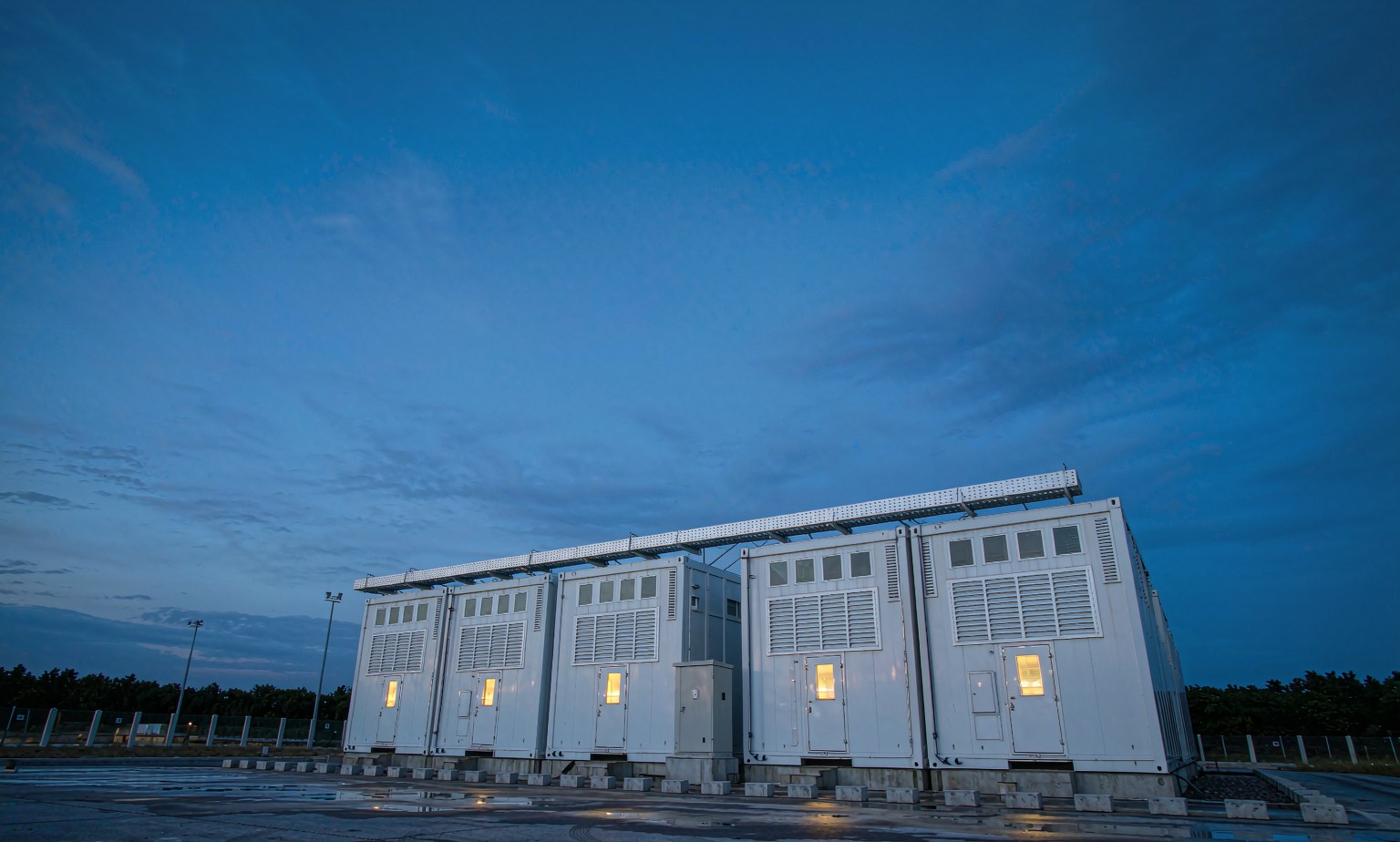
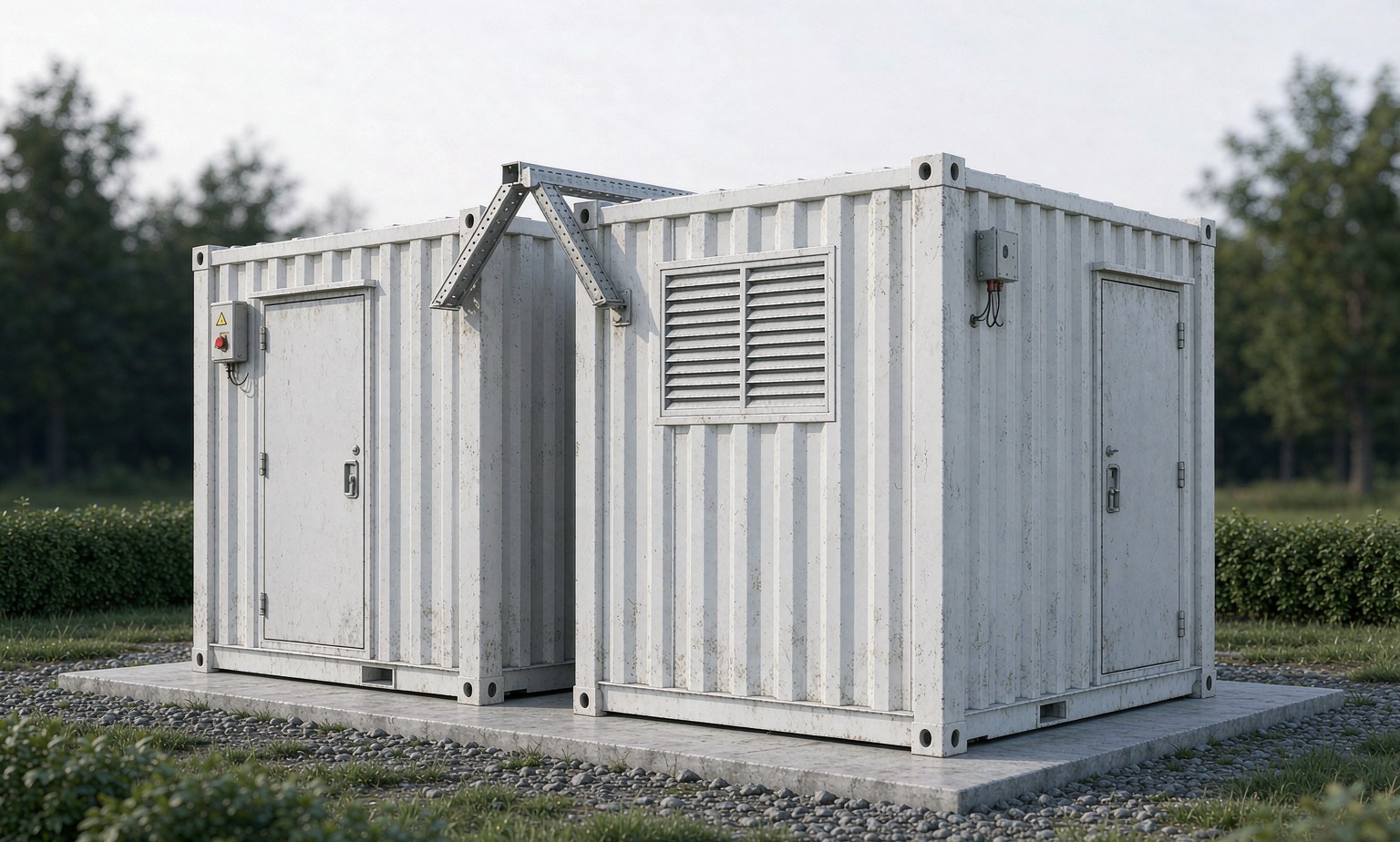
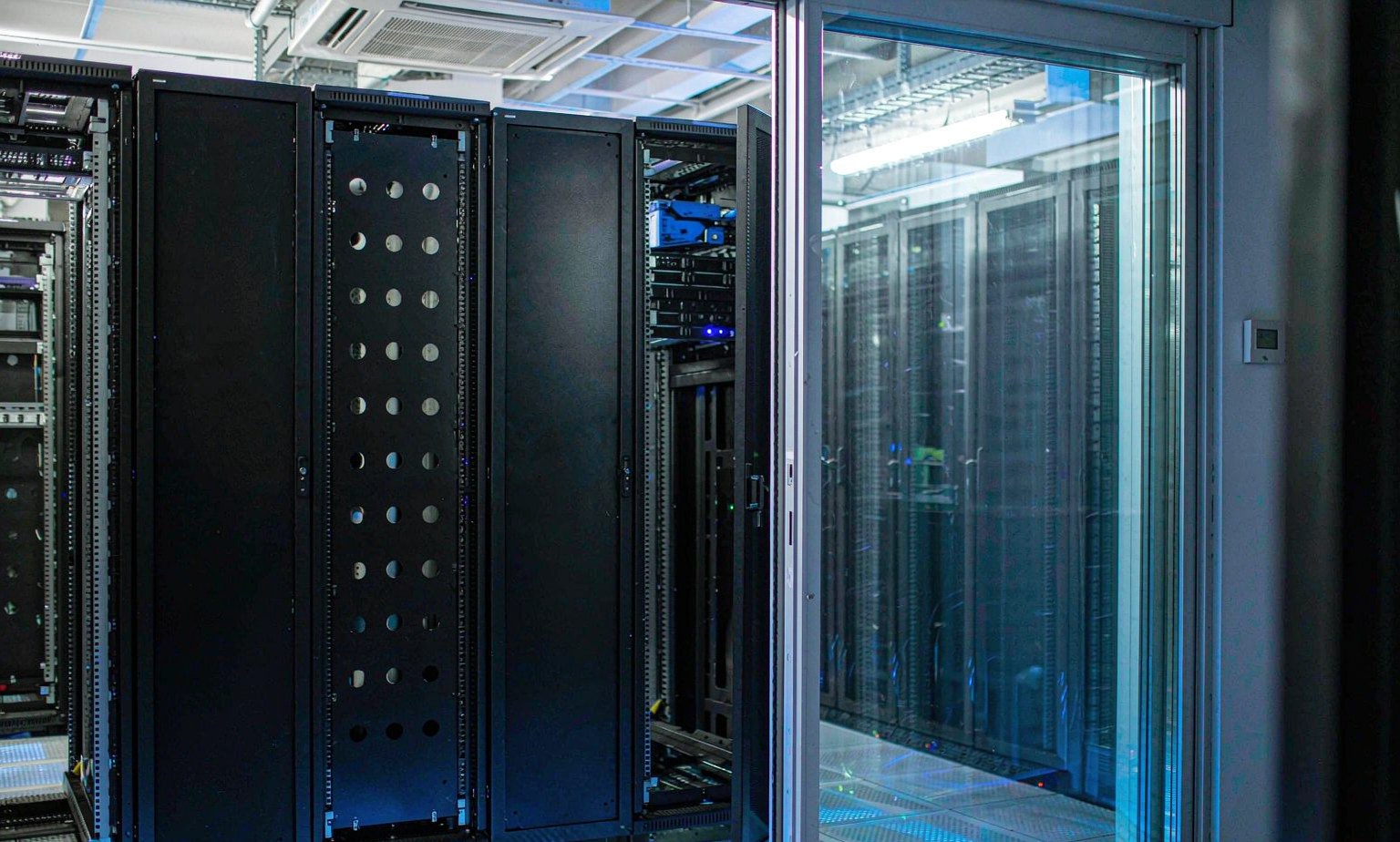
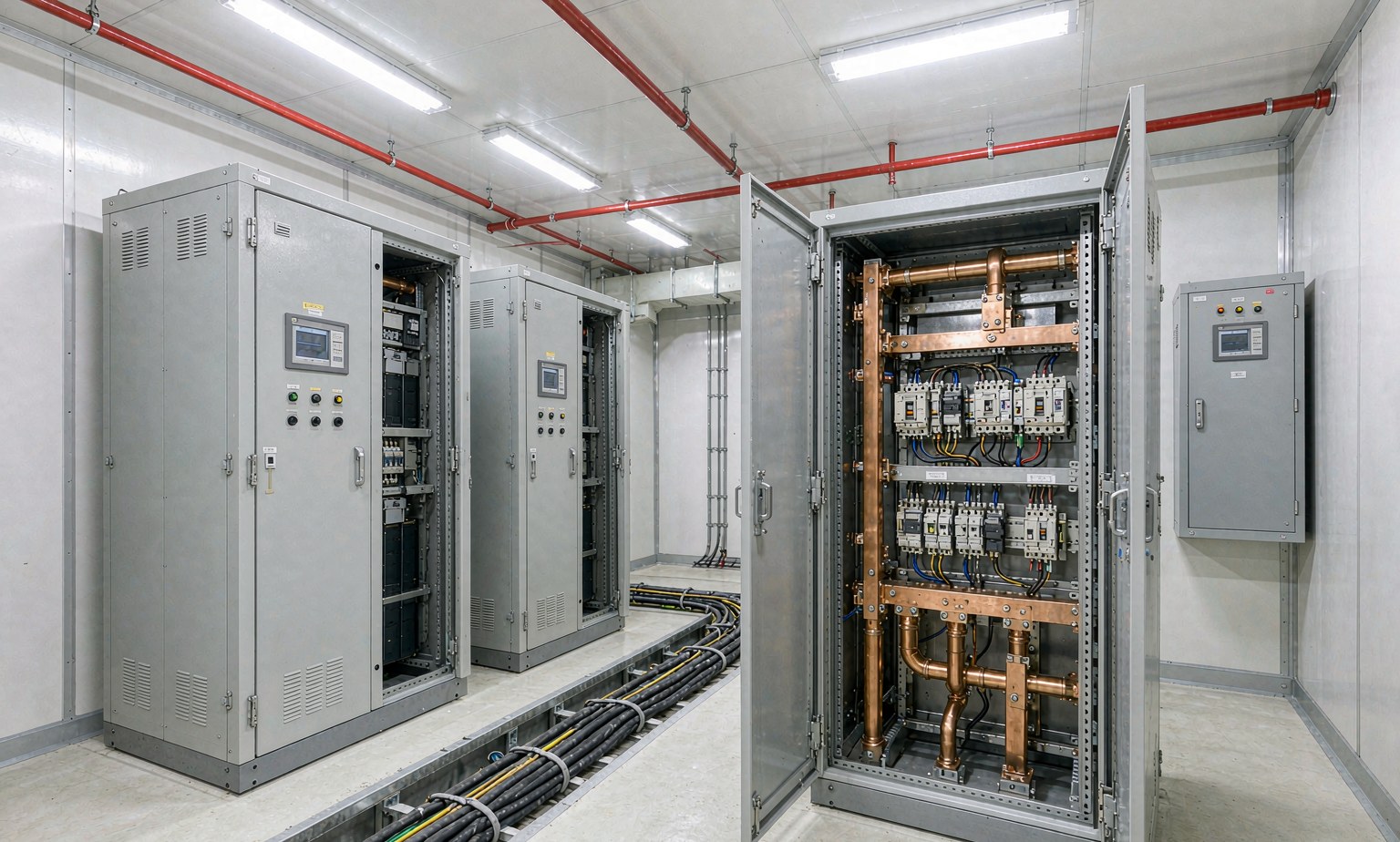
Some images are scheme illustrations and renders showing structure and layout. Final delivery follows the contract drawings.
What customers ask most
Can I buy only the IT modules and handle power myself?
Yes. IT, power and cooling modules all use standard interfaces, so partial supply is normal. Align the interface parameters in advance, particularly voltage level, busbar rating and water connection position.
How thick does the slab need to be?
200 mm of C30 concrete with reinforcement both ways is our recommendation for module foundations. Poor ground needs isolated footings or piles, sized from the geotechnical report.
How is the fire system approved?
Under local code, normally as a data centre machine room, which requires a suppression calculation, cylinder room layout and vent area. We issue drawings and calculations; the permit application is handled by the owner or their designer.
How many people to operate it?
One person per shift for routine rounds, two shifts. We provide three days of on-site training and an operating manual covering round sheets, fault procedures and spares.
Who repairs it?
We do, within warranty, on site inside 48 hours domestically and per contract overseas. Out of warranty you can take an annual service agreement or remote support only.
Ask for a scheme for your site
Send the capacity, rack count, site conditions and local climate. You get a layout, a single-line diagram and a price, at no charge, revised until it works.