

What it is for
A water-cooled container is only as good as the cooler behind it. Size the cooler at the load and the loop runs hot on the hottest week; size it for the ambient you actually get and it runs at design all year.
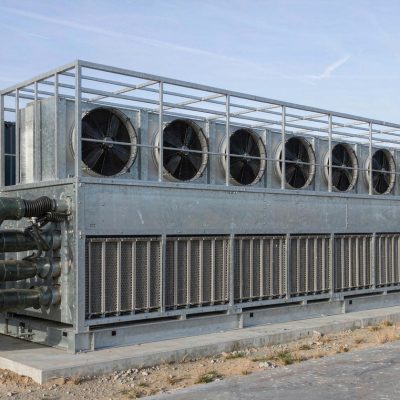
The skid arrives with the coil, the fans, the pump set and the controls on one frame, so the site work is two pipe connections and a power feed.
Where it is typically used
Key specifications
| Capacity | 300–1,500 kW at design ambient |
| Coil | Finned copper or aluminium, 2–6 rows |
| Fans | 4–8 axial, EC or AC, variable speed |
| Approach | 8–10 °C above ambient at design |
| Loop | Glycol, 60–300 m³/h, DN50–DN100 headers |
| Pump set | Primary/secondary, N+1 on request |
| Noise | 55–65 dB(A) at 10 m depending on fan speed |
| Build time | 35–45 days |
Figures are for the standard configuration and change with the project. Values are design values; acceptance follows the contract technical agreement.
What goes in the box
Installed, wired and tested before dispatch. On site the work is placement and external connections.
Finned coil sized on wet-bulb, altitude and glycol concentration.
Axial fans with guards, variable speed and a maintenance walkway.
Primary and secondary pumps with strainers and a bypass.
Galvanised skid with lifting points and a bunded drip tray.
VFD panel, temperature control and dry contacts to the site PLC.
Which model to take
| Model | Capacity | Fans | Flow | Boxes |
|---|---|---|---|---|
| MC-HX-300 | 300 kW | 4 | 60 m³/h | 1 × 20 ft |
| MC-HX-600 | 600 kW | 6 | 60 m³/h | 1 × 40 ft |
| MC-HX-1300 | 1,300 kW | 8 | 150 m³/h | 1 × 40 ft + margin |
Standard models are listed. Other capacities are built to order, with two to three weeks added to the standard lead time.
Altitude eats fan capacity before temperature does
At 2,000 m the same fan moves 20% less air
Air density falls with altitude, and a fan is a volume machine, so the mass flow — and therefore the heat rejection — falls with it. A cooler chosen at sea level and installed at 2,000 m will not make its rating, and the loop will run hot while nobody can explain why.
We correct for altitude, glycol concentration and coil fouling before quoting a capacity, and we write the assumptions on the drawing.
When to use it, when not to
These come from projects rather than general advice. Match your case against them; it is more useful than reading the specification table.
This is the other half of the system, not an accessory.
Dry cooling uses no water at all.
The approach becomes uneconomic; adiabatic or water cooling is the honest answer.
Tie in rather than duplicate, and send us the curve.
From contract to energisation
Ambient, altitude, wet-bulb, glycol %, loop flow.
Cooler curve and fan power in 5 days.
35–45 days.
Two pipe connections, one power feed, one day to commission.
On site and in detail
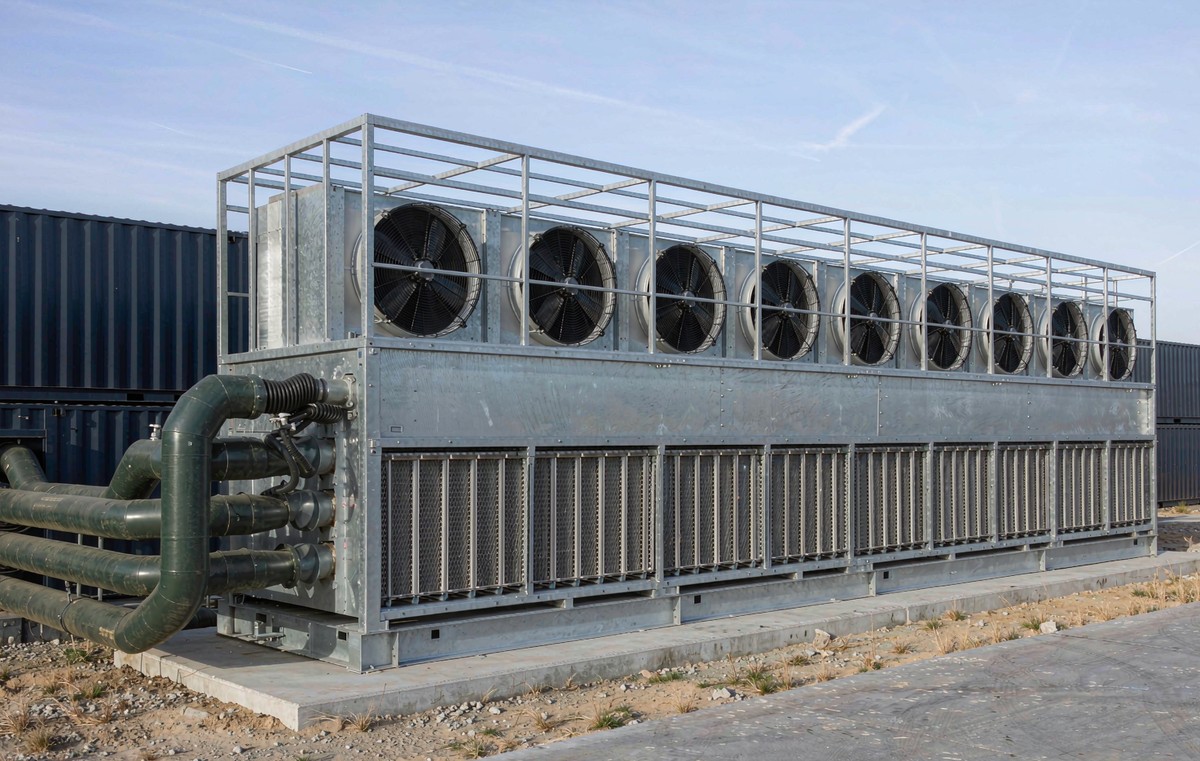
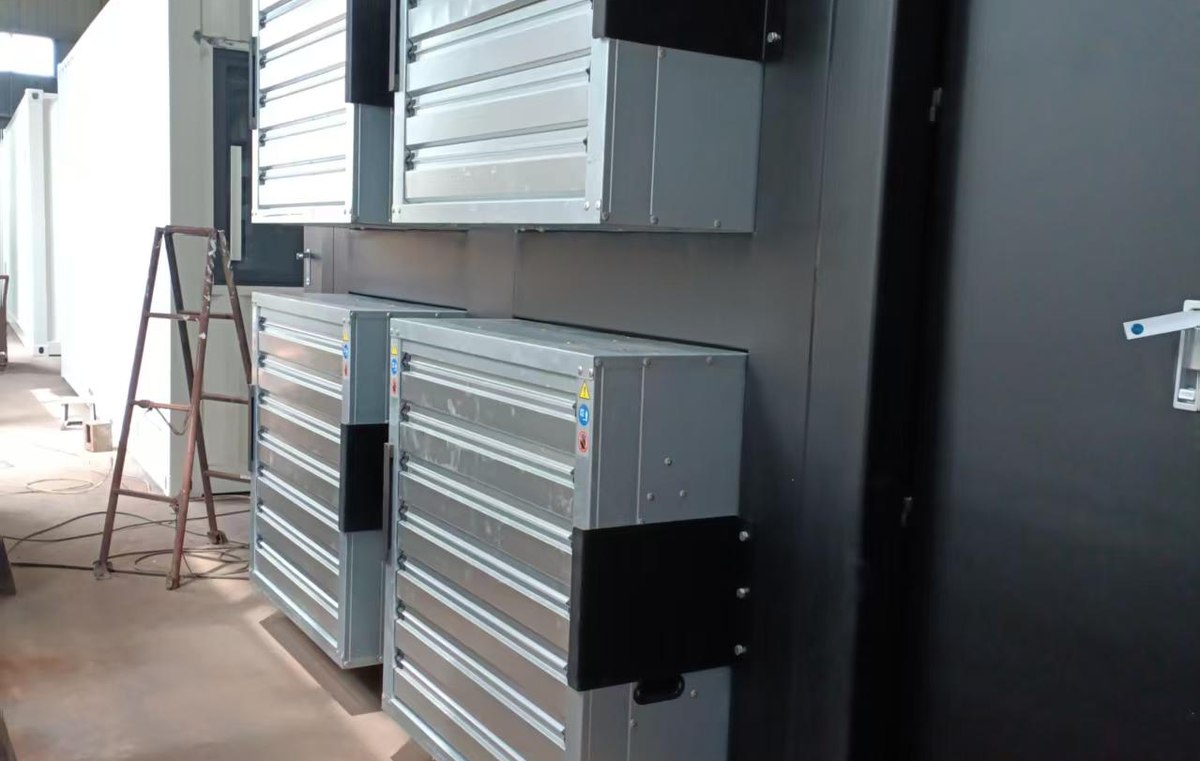
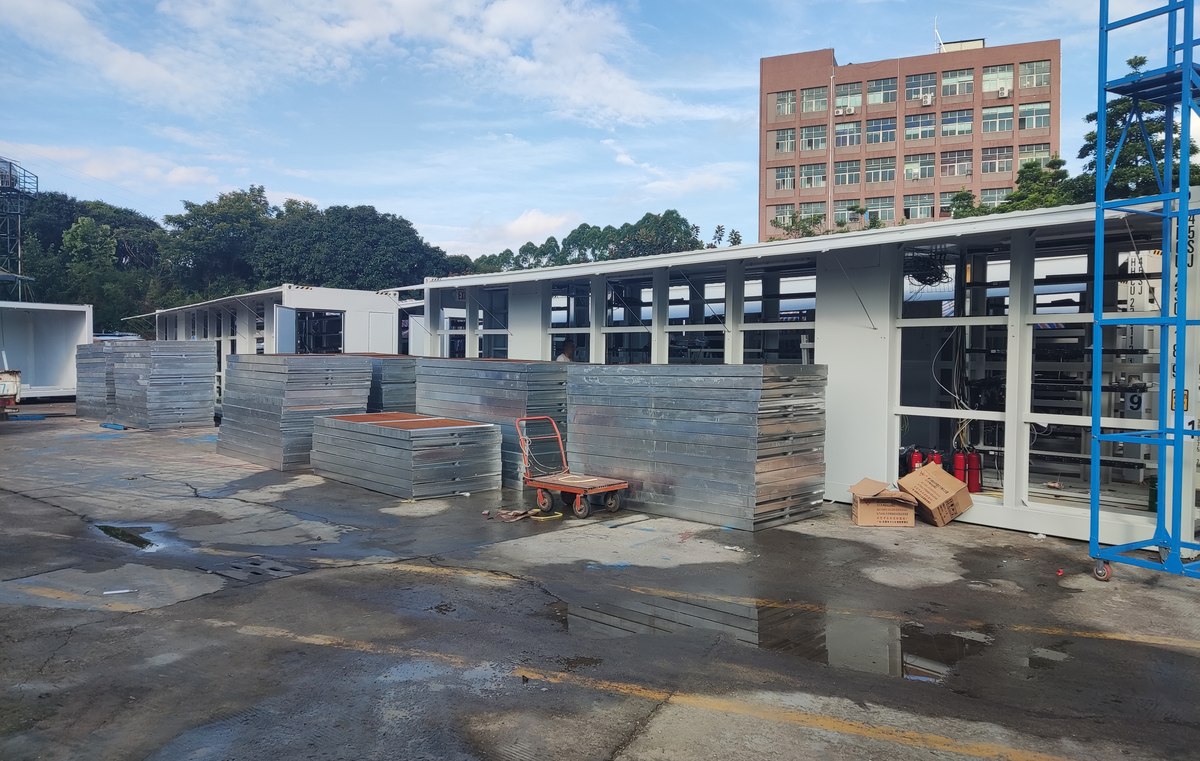
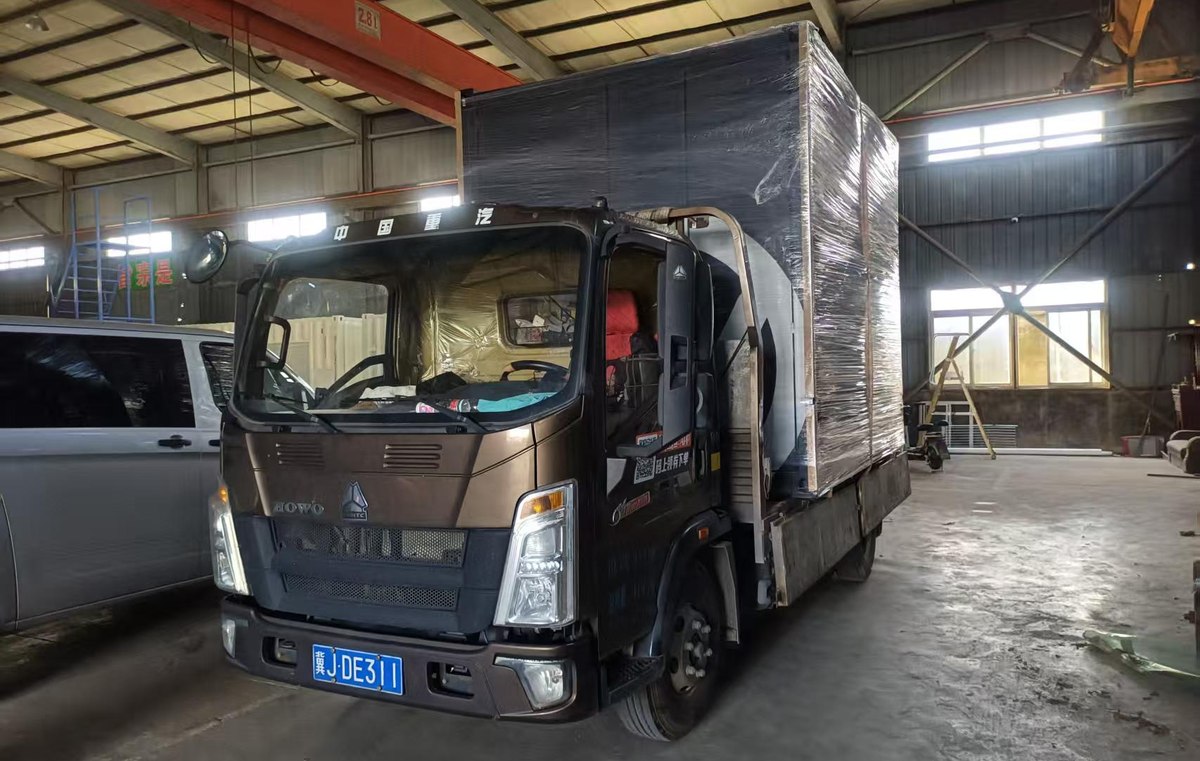
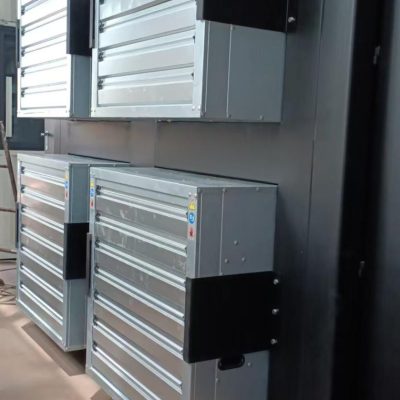
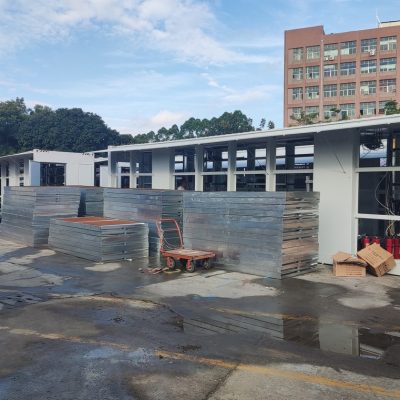
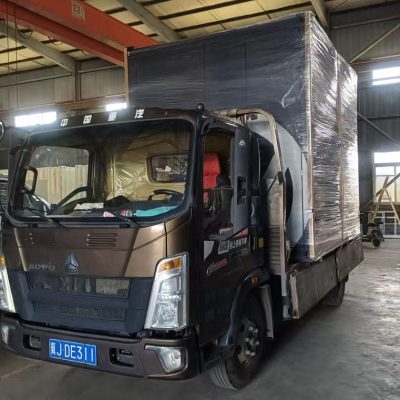
Some images are scheme illustrations and renders showing structure and layout. Final delivery follows the contract drawings.
What customers ask most
Can it run dry in winter?
Yes, with the glycol concentration set for the site minimum and fan speed control.
How often does the coil need cleaning?
Twice a year in a dusty site, once in a clean one. Access is from the fan deck.
Can two skids be paralleled?
Yes, with a common header and balancing valves.
Ask for a scheme for your site
Send the capacity, rack count, site conditions and local climate. You get a layout, a single-line diagram and a price, at no charge, revised until it works.