

What it is for
A mining container has two fire risks that behave differently: a PSU that fails hot, and a cable joint that arcs. Both give smoke before they give flame, which is why detection matters more than the extinguishing agent in the first thirty seconds.
We supply early smoke detection, clean-agent cylinders, the manifold and a relay that cuts power before the agent discharges — because discharging into a live busbar does not fix the fault.
Where it is typically used
Key specifications
| Coverage | 40, 80 or 120 m³ per set |
| Agent | Clean agent, NOVEC 1230 or FK-5-1-12 equivalent |
| Detection | Aspirating smoke detection, two-stage alarm |
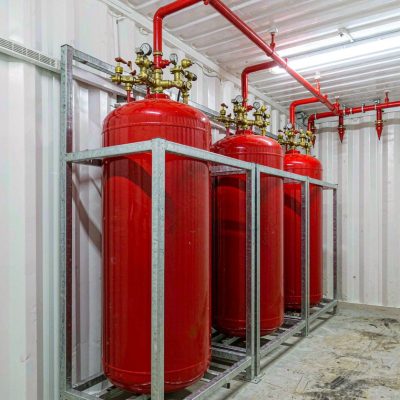
| Cylinders | 2–6 × 40 L, manifolded |
| Interlock | Shunt trip on the main breaker before discharge |
| Alarm | Dry contacts to the site PLC and a local sounder |
| Discharge | 10 seconds, nozzle layout per cylinder calculation |
| Build time | 10–15 days, installation 1 day |
Figures are for the standard configuration and change with the project. Values are design values; acceptance follows the contract technical agreement.
What goes in the box
Installed, wired and tested before dispatch. On site the work is placement and external connections.
Manifolded cylinders on a rack, with pressure gauges facing the door.
Aspirating pipe or point detectors, two-stage alarm logic.
Red painted manifold and nozzles laid out per the discharge calculation.
Shunt trip and a relay that drops the PDU before the valve opens.
Discharge calculation, cylinder weights and the test record.
Which model to take
| Model | Coverage | Cylinders | Detection | Interlock |
|---|---|---|---|---|
| MC-FIRE-40 | 40 m³ | 2 × 40 L | Aspirating | Shunt trip |
| MC-FIRE-80 | 80 m³ | 3 × 40 L | Aspirating | Shunt trip |
| MC-FIRE-120 | 120 m³ | 6 × 40 L | Aspirating + point | Shunt trip |
Standard models are listed. Other capacities are built to order, with two to three weeks added to the standard lead time.
Cut the power first, then discharge
A live arc will re-ignite after the agent clears
Clean agent works by removing heat and interrupting the chain reaction, but it does not stop a fault current. If the main breaker is still closed, the joint that started the fire is still arcing and the fire comes back as soon as the concentration drops.
So the sequence is detection, alarm, power cut, discharge. The interlock is not an optional extra and we do not supply a set without it.
When to use it, when not to
These come from projects rather than general advice. Match your case against them; it is more useful than reading the specification table.
Nobody is there to use an extinguisher.
The documentation is written for a surveyor, not for a brochure.
Water mist or nothing at all may be accepted; we will say so.
An unmaintained system is worse than none, because it is assumed to work.
From contract to energisation
Volume, layout, existing detection, interlock point.
Discharge calculation and nozzle layout in 5 days.
Cylinders, pipework and panel in 10–15 days.
Installation in a day, weights recorded, test certificate issued.
On site and in detail
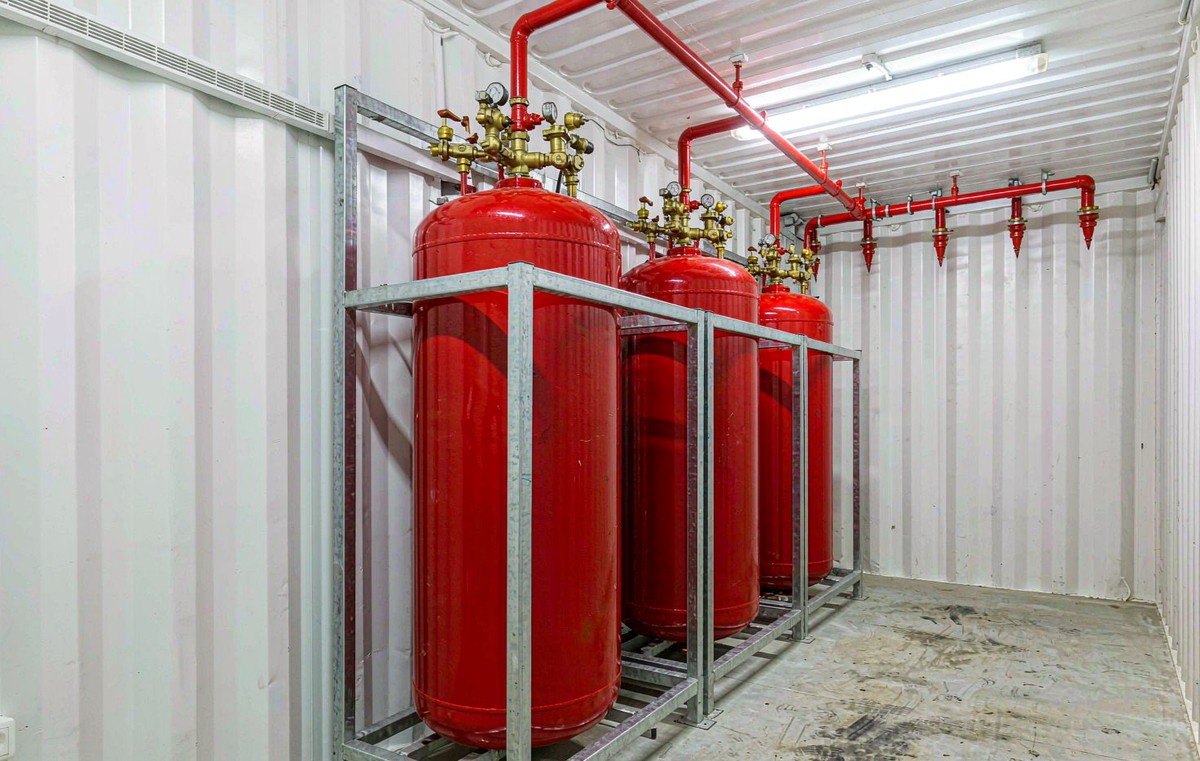
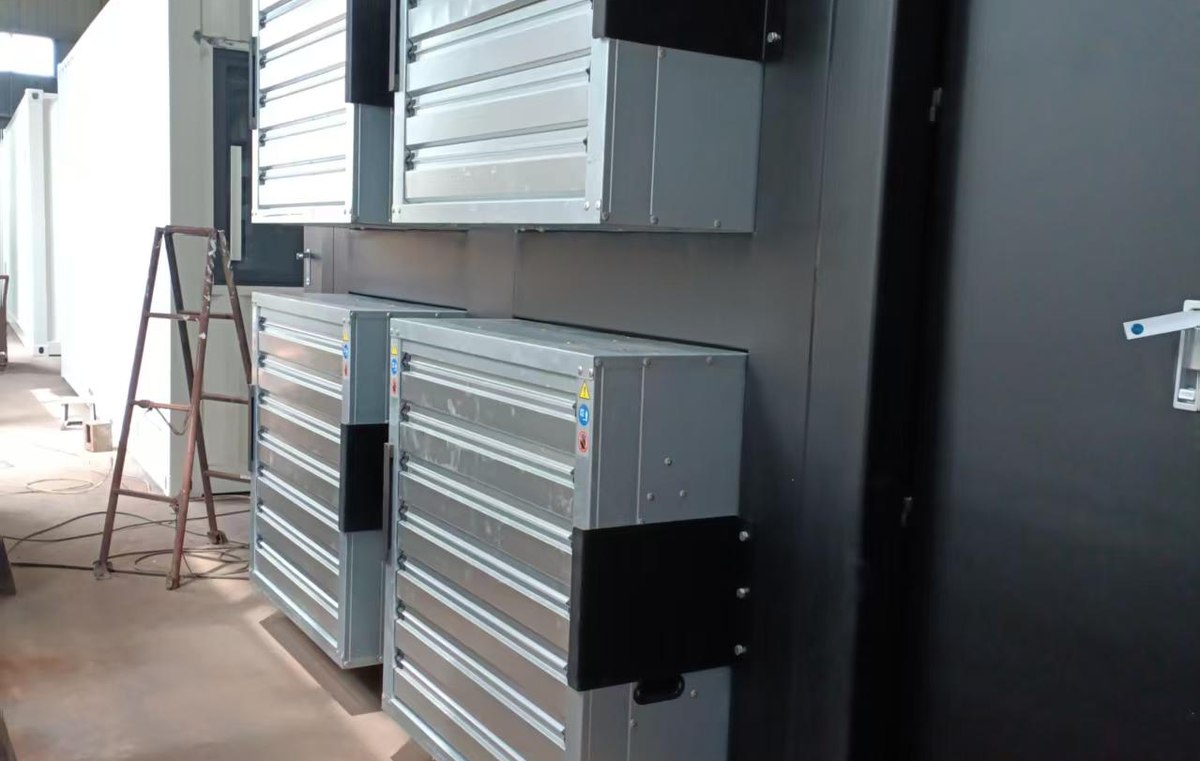
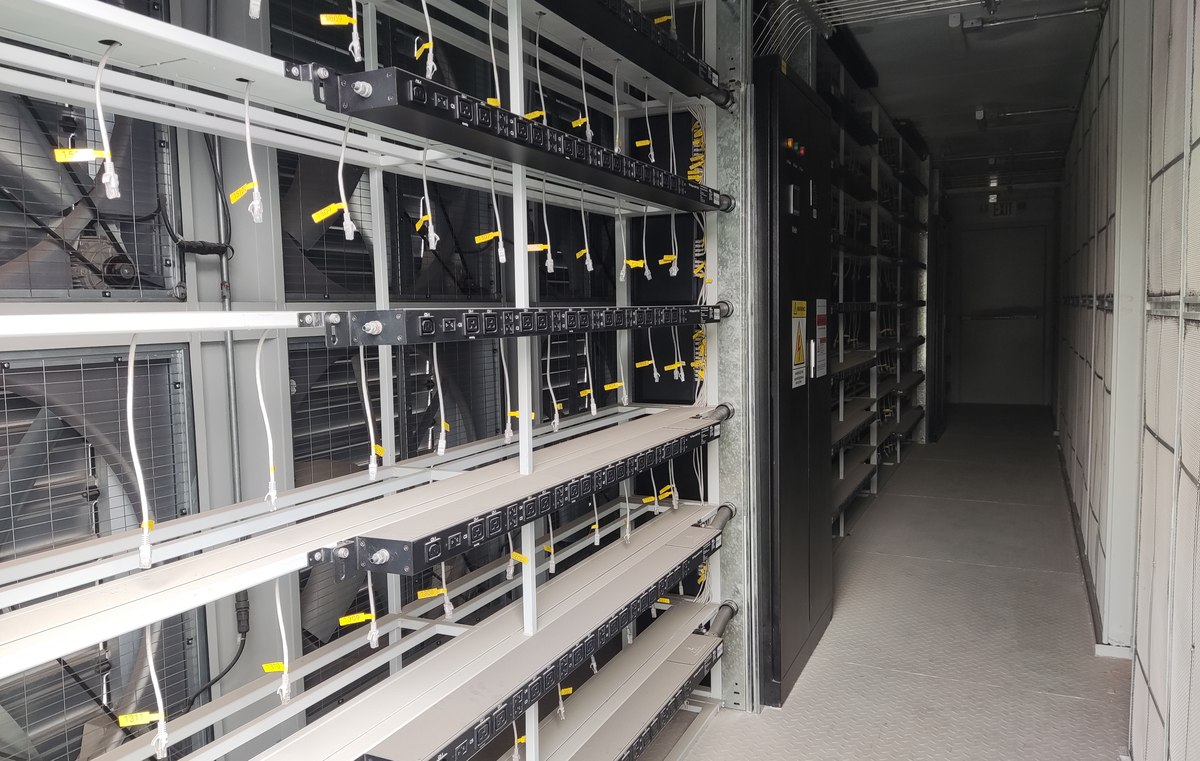
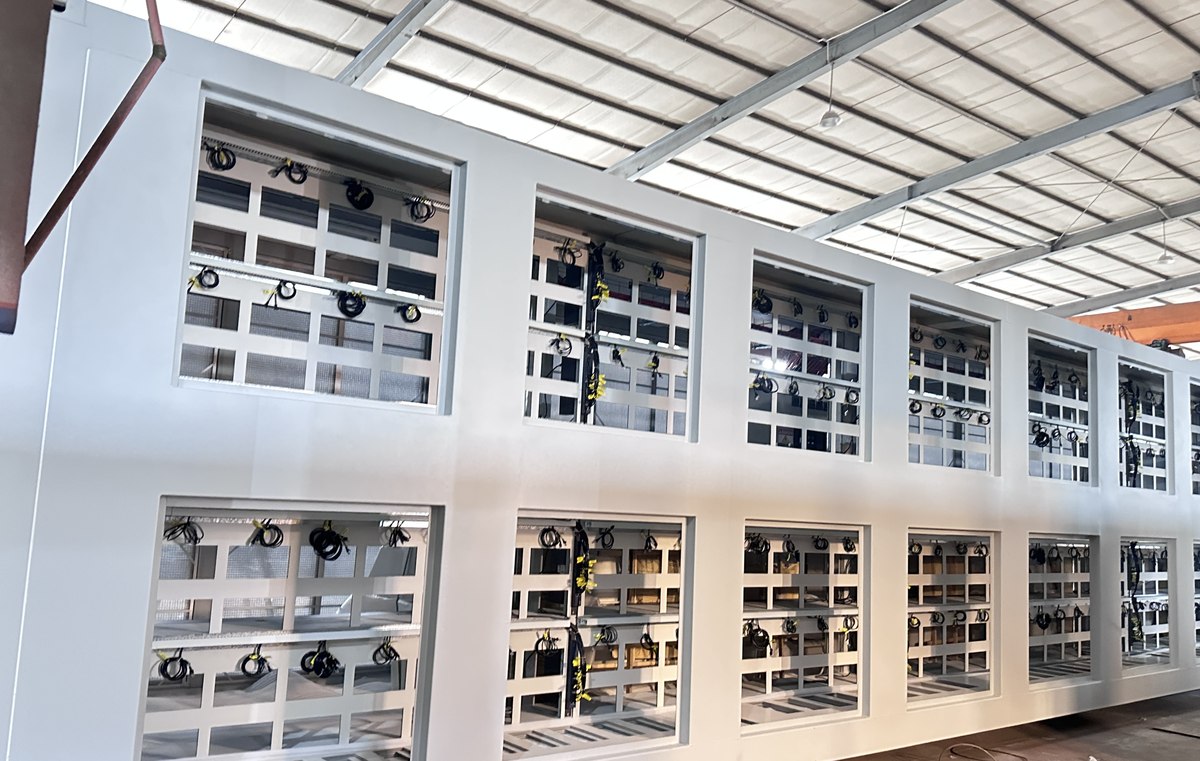
Some images are scheme illustrations and renders showing structure and layout. Final delivery follows the contract drawings.
What customers ask most
Which agent do you use?
NOVEC 1230 or an equivalent FK-5-1-12 fluid, depending on what is available in the destination country.
How often does it need servicing?
Annual weight and pressure check; the detection pipe needs blowing through at the same visit.
Can it cover two containers?
Only with two independent sets. A shared cylinder bank across a wall is not accepted by most insurers.
Ask for a scheme for your site
Send the capacity, rack count, site conditions and local climate. You get a layout, a single-line diagram and a price, at no charge, revised until it works.