

What it is for
Immersion is the answer to two problems at once: density and dirt. The boards sit in dielectric fluid, the heat goes into the fluid and then into a plate exchanger, and the container no longer needs to move air across a heat sink at all.
What it does not solve is maintenance. A failed board has to come out of a tank, drained and drip-dried, and the fluid has to be tested and topped up. Sites that buy immersion for the density and forget the handling usually regret it.
Where it is typically used
Key specifications
| Shell | 40HC, CSC plated, reinforced floor for two tanks |
| Tanks | 2 × stainless single-phase tanks, 120–144 units total |
| Design load | Up to 1.4 MW depending on unit model |
| Fluid | Single-phase dielectric, about 1,600 L per tank |
| Heat rejection | Plate exchanger 1,500 kW to a glycol loop |
| Power | 1,600 A main, DC busbars per tank |
| Handling | Drip tray, hoist rail and a drain pump per tank |
| Build time | 45–60 days from drawing release |
Figures are for the standard configuration and change with the project. Values are design values; acceptance follows the contract technical agreement.
What goes in the box
Installed, wired and tested before dispatch. On site the work is placement and external connections.
Two stainless tanks with lids, level sensors and a drain point at the low corner.
1,500 kW, sized with a 5 °C approach to the secondary loop.
One pump per tank plus a bypass, so a tank can be isolated for service.
Hoist rail over each tank and a drip tray that takes a full board tray.
Fluid temperature, level and moisture, alarmed to the site dashboard.
Which model to take
| Model | Units | Load | Fluid | Exchanger |
|---|---|---|---|---|
| MC-IMS-40-S | 120 | 1.2 MW | 3,200 L | 1,300 kW |
| MC-IMS-40-H | 144 | 1.4 MW | 3,200 L | 1,500 kW |
| MC-IMS-40-R | 120 | 1.2 MW | 3,200 L | 1,300 kW + heat reuse |
Standard models are listed. Other capacities are built to order, with two to three weeks added to the standard lead time.
Immersion moves the maintenance from the filter to the fluid
What you stop doing, and what you start doing
You stop washing curtains, changing 40-mesh panels and cleaning heat sinks. You start testing fluid for moisture and acidity, and you plan board swaps around a drain-and-dry procedure that takes about an hour per tray.
For a site with clean power and stable ambient, air cooling is still cheaper. Immersion earns its place where the ambient is hostile or the density is the constraint.
When to use it, when not to
These come from projects rather than general advice. Match your case against them; it is more useful than reading the specification table.
The boards never see the air, which is the point.
Immersion is the only route to 1.4 MW in a 40 ft shell.
Moisture in the tank is a slow, expensive failure.
Air cooling is faster to service; immersion is not a test bench.
From contract to energisation
Unit model, tank count, loop interface. 10 days.
45–60 days including tank fabrication and pressure test.
Fluid fill, circulation, 48 hours at rated load with thermal imaging.
Fluid shipped separately as non-hazardous; tanks braced and sealed.
On site and in detail
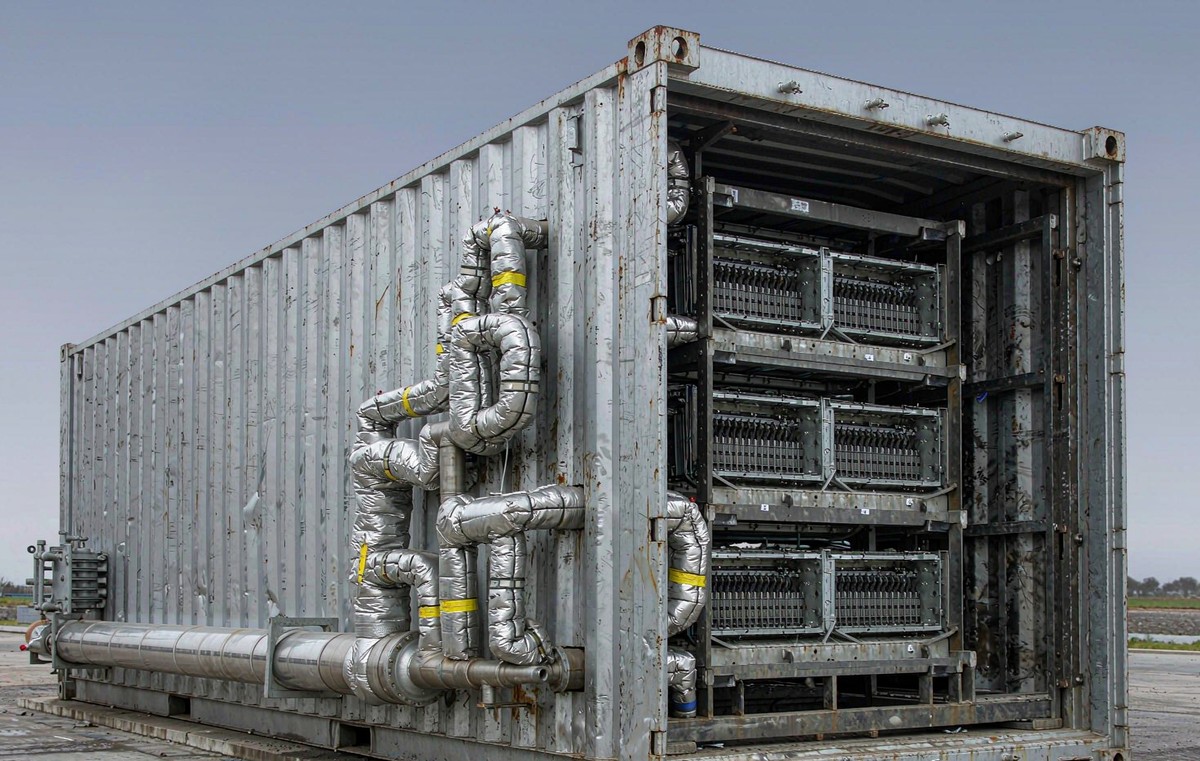
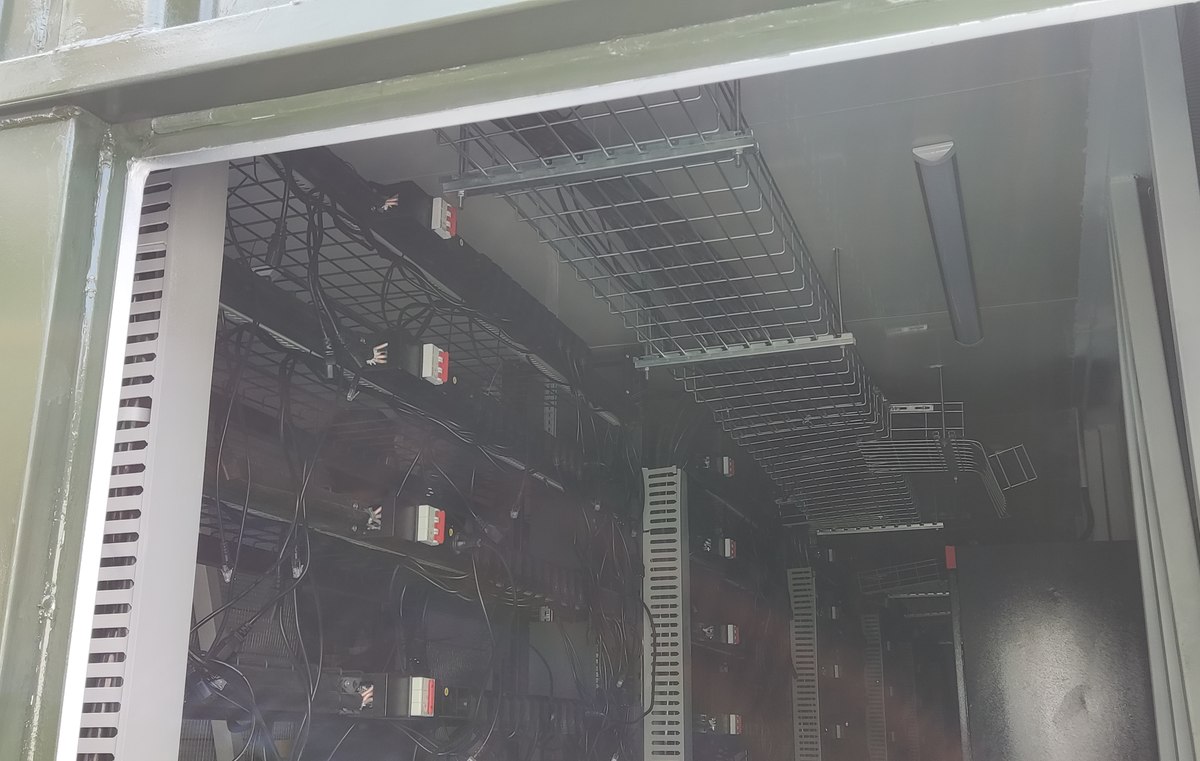
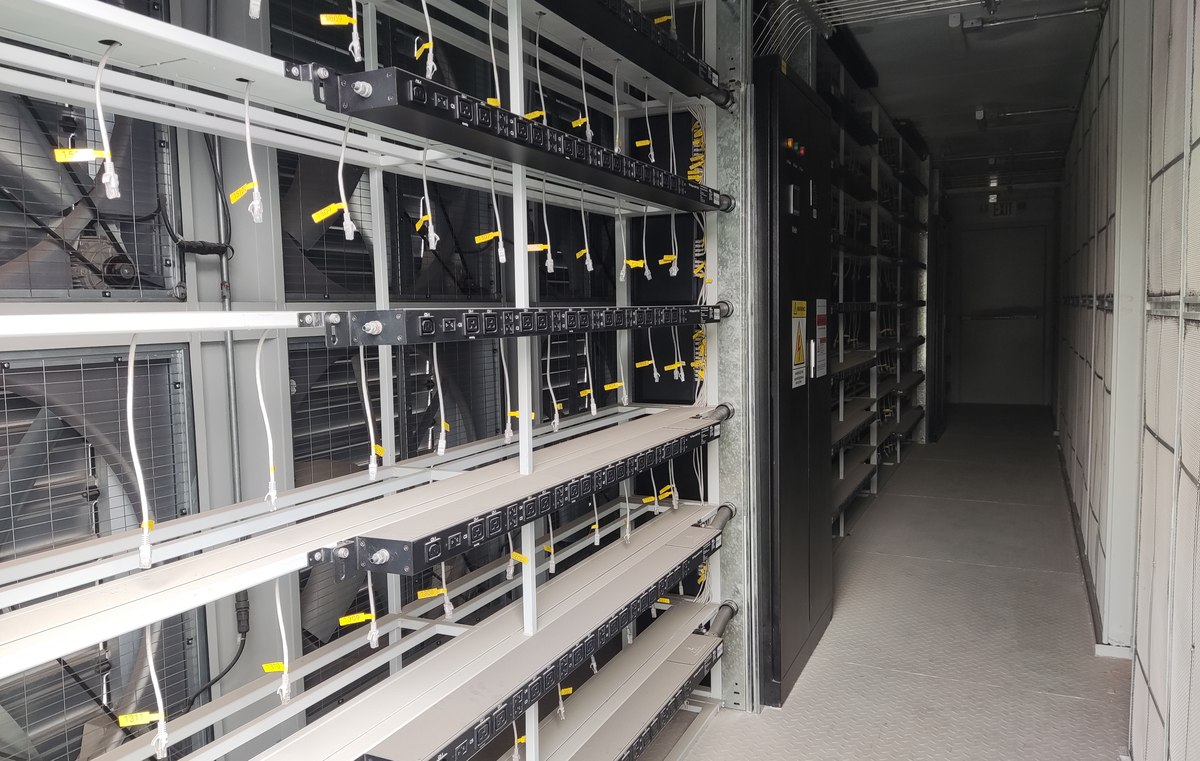
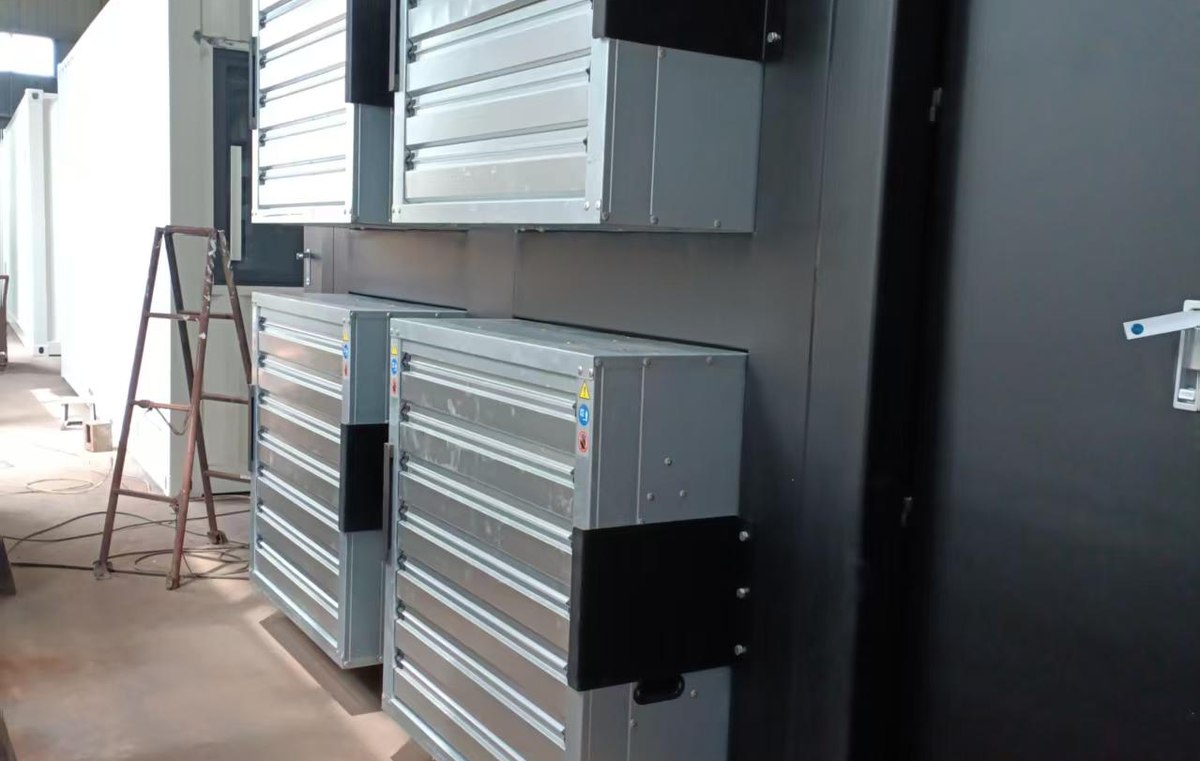
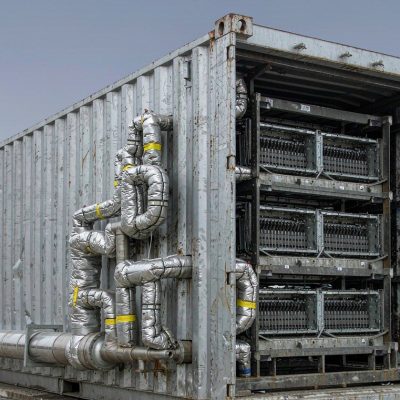
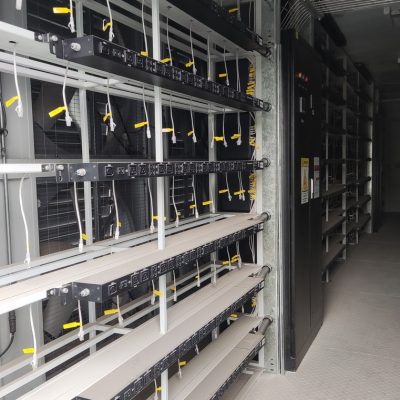
Some images are scheme illustrations and renders showing structure and layout. Final delivery follows the contract drawings.
What customers ask most
Can I convert an air-cooled box?
Sometimes. The floor needs reinforcing, the tanks need a drain, and the electrical layout changes. It is usually cheaper to buy the immersion build.
What fluid do you use?
A single-phase synthetic hydrocarbon, specified by the unit vendor. We will not ship a fluid the machine warranty does not accept.
How long does a board swap take?
About an hour per tray including drain and drip-dry, once the team has done it twice.
Ask for a scheme for your site
Send the capacity, rack count, site conditions and local climate. You get a layout, a single-line diagram and a price, at no charge, revised until it works.