

What it is for
The 20 ft box exists for two reasons: a 380 V feed that cannot carry a 40 ft load, and a shipping budget that is counted in containers rather than in megawatts. Two of them fit in a 40HQ with the doors on, which changes the freight arithmetic completely.
At 66 kW it is not a compromise on quality — it is the same shell construction, the same per-position breakers and the same negative-pressure airflow, in half the length and half the machine count.
Where it is typically used
Key specifications
| Shell | 20GP, CSC plated, 6,058 × 2,438 × 2,591 mm |
| Machines | 144 at 3.5 kW class, 4 columns × 36 |
| Design load | 66 kW at 35 °C ambient |
| Power | 1 cabinet, 1,250 A main, 12 × 100 A + 1 × 80 A branch |
| PDU | 12 strips, switchable per socket |
| Airflow | 10 × 1,000 mm negative-pressure fans |
| Inlet | Water curtain + 40-mesh filter, snow baffle optional |
| Network | 6 × 24-port switches, one cable per machine |
| Weight | About 11 t loaded |
| Build time | 25–35 days from drawing release |
Figures are for the standard configuration and change with the project. Values are design values; acceptance follows the contract technical agreement.
What goes in the box
Installed, wired and tested before dispatch. On site the work is placement and external connections.
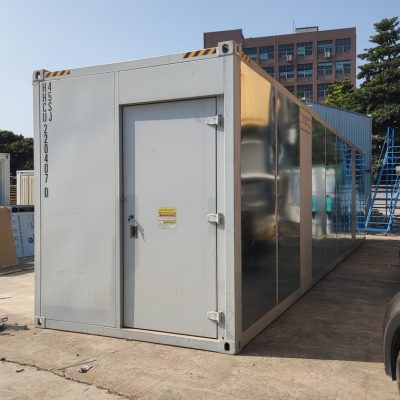
20GP with CSC plate, insulated roof, one service door and one escape door.
Single cabinet, main breaker and branch protection per position.
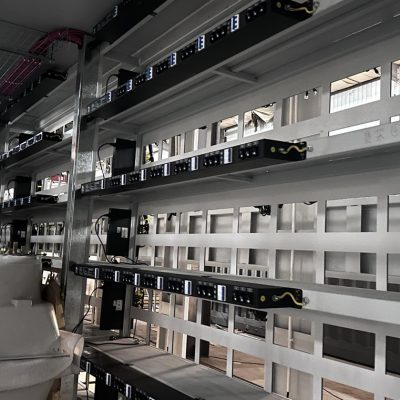
Twelve strips, reachable from the aisle without a ladder.
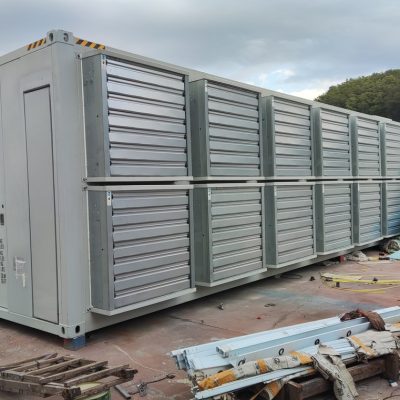
Ten fans, filtered inlet, aisle separation panels.
Switches and cabling, plus the same spares kit as the 40 ft.
Which model to take
| Model | Machines | Load | Feed | Per 40HQ |
|---|---|---|---|---|
| MC-AIR-20-S | 144 | 66 kW | 380 V 50 Hz | 2 units |
| MC-AIR-20-H | 132 | 60 kW | 380 V 50 Hz | 2 units |
| MC-AIR-20-C | 144 | 66 kW | 415 V 60 Hz | 2 units |
Standard models are listed. Other capacities are built to order, with two to three weeks added to the standard lead time.
Two per 40HQ is the number that decides this box
Freight, not steel, is the variable
A 20GP and a 40HC cost nearly the same to move on most lanes. Two 20 ft boxes therefore carry 288 machines for one 40 ft freight bill, against 336 machines for the same bill — so the 40 ft still wins on paper, and the 20 ft wins whenever the destination cannot take a 40 ft trailer or a 12 m turning circle.
That last constraint is more common than people expect: mountain roads, island ferries, and sites where the gate is 8 m wide.
When to use it, when not to
These come from projects rather than general advice. Match your case against them; it is more useful than reading the specification table.
This is the honest reason to buy it, and it is the most common one.
A 20 ft box stays inside what the transformer will give you.
The 40 ft is cheaper per kW. Buy it unless something stops you.
Water cooling in a 20 ft shell exists, but at 0.55 MW the economics are tighter.
From contract to energisation
Machine model, feed voltage, transport route. Four days.
25–35 days from drawing release.
Rated load test with the ambient logged.
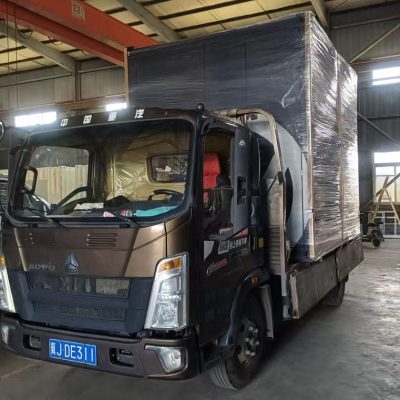
Two per 40HQ, braced, spares kit inside one of them.
On site and in detail
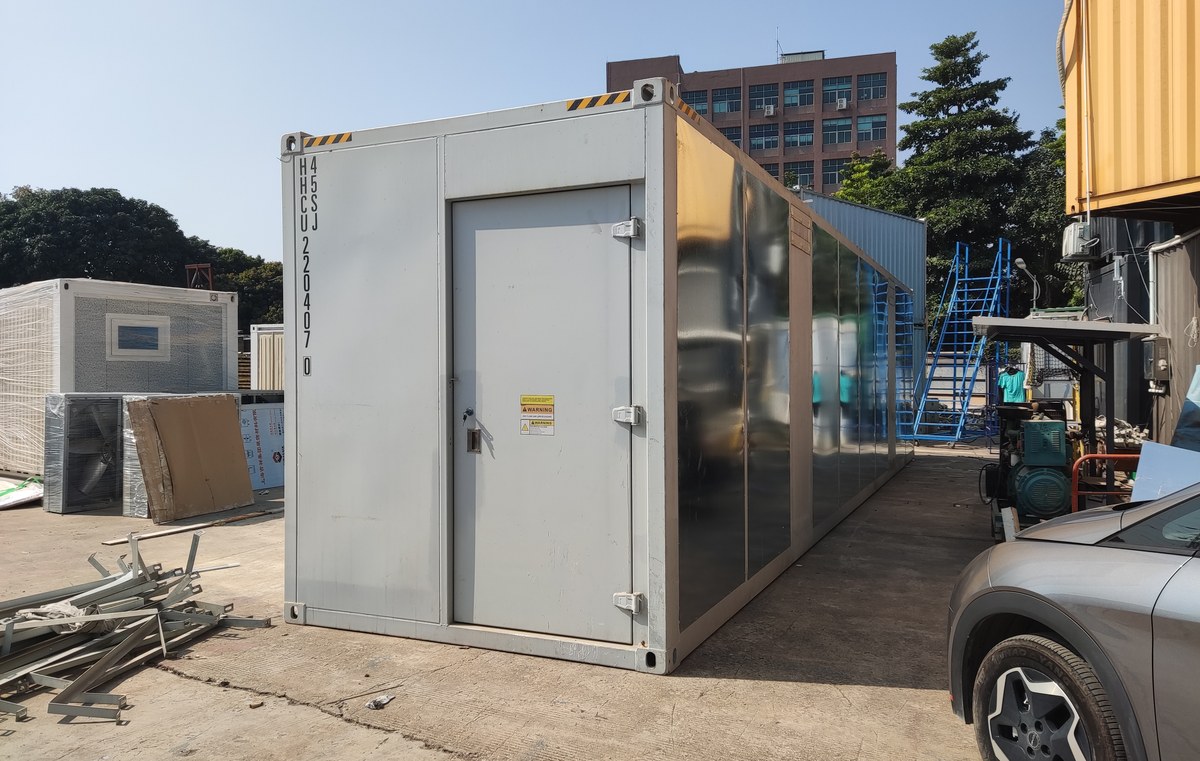
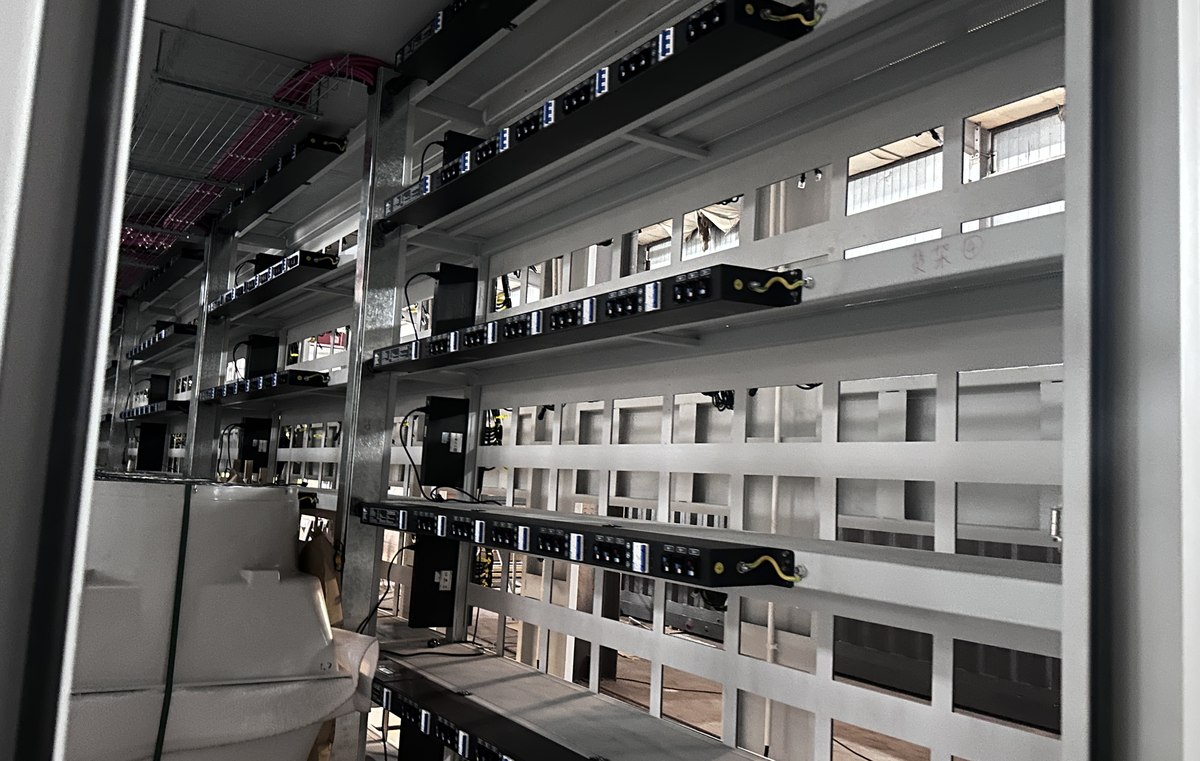
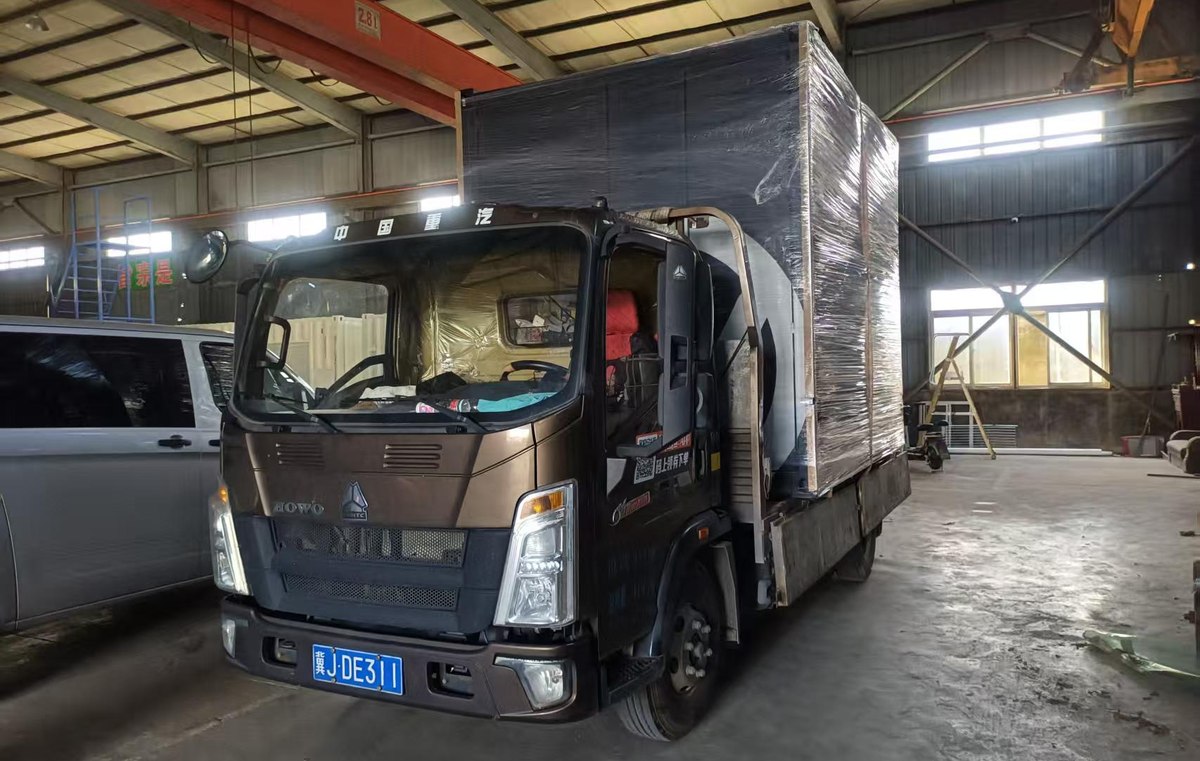
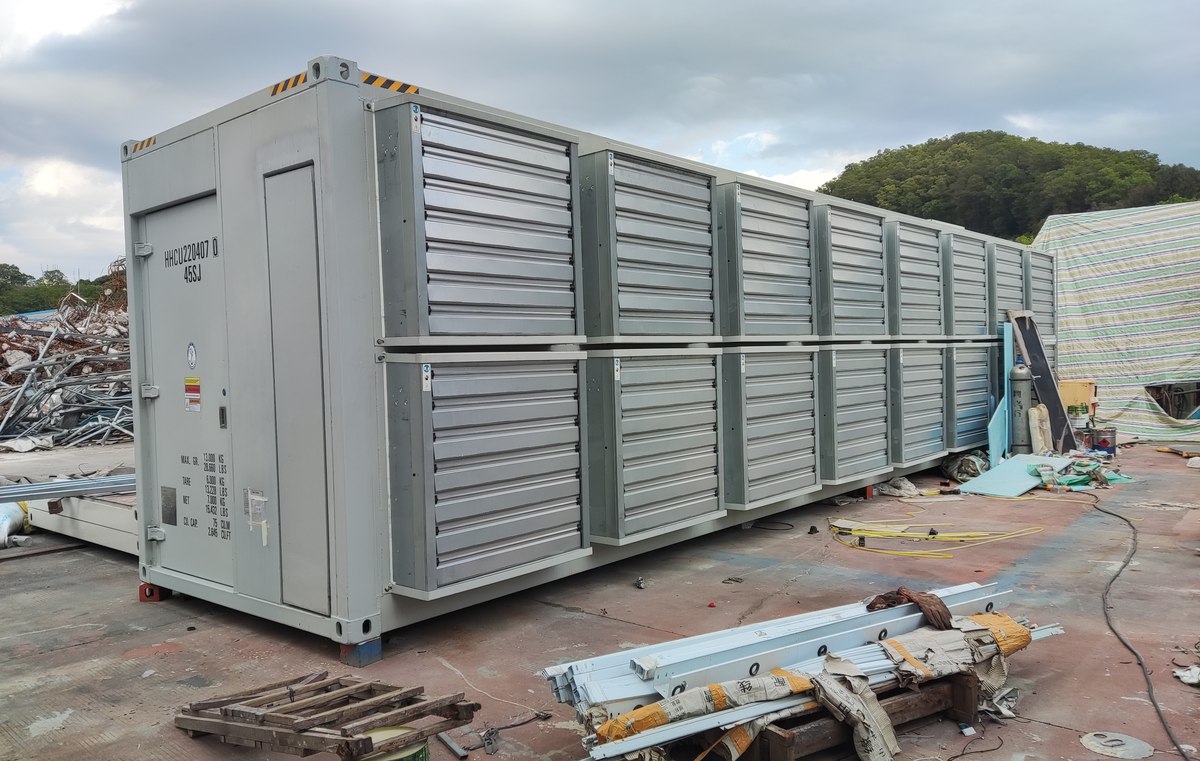
Some images are scheme illustrations and renders showing structure and layout. Final delivery follows the contract drawings.
What customers ask most
Can two units share one substation?
Yes, and it is the normal arrangement: one 250 kVA unit for two boxes with spare ways.
Is the 20 ft box quieter than the 40 ft?
Slightly, because there are fewer fans, but it is the same order of noise. Plan for 66–70 dB(A) at ten metres.
Can it be stacked?
Two high on corner castings, if the pad and the access allow. We supply the stacking kit and the brace drawing.
What is the lead time on a repeat order?
20–25 days, because the drawings and the electrical build are already fixed.
Ask for a scheme for your site
Send the capacity, rack count, site conditions and local climate. You get a layout, a single-line diagram and a price, at no charge, revised until it works.