


What it is for
Some customers already own the equipment, the integrator and the design. What they need is an envelope: a box with the right holes in the right places, the right coating, and a door that closes. That is a real product and it is priced as one.
We build to your drawing, or we draw it from your equipment envelope and cut list. Penetrations, doors, louvres, insulation, lining and coating are all specified; nothing is left to site improvisation.
Where this goes wrong is when a shell is bought as a commodity container and then modified by a local fabricator. The cut edges are bare steel, the door frame is welded without a thermal break, and the C4 claim on the paint does not survive the first winter.
Where it is typically used
Key specifications
| Shell | 10 / 20 / 40 ft HC, CSC plate or new-build frame |
| Insulation | None, 50 mm or 100 mm PU, or rock wool to a fire requirement |
| Lining | Galvanised, pre-coated steel, stainless or wipe-clean panel |
| Coating | C4 three-coat epoxy standard, C5-M on request; RAL colour to your spec |
| Doors | Personnel, double, louvred, roller or sliding — sized and positioned to your drawing |
| Louvres | Fixed or adjustable, with insect mesh and a filter frame on request |
| Penetrations | Cuts, sleeves and gland plates per your schedule, edges sealed and coated |
| Floor | Steel deck, plywood, epoxy or vinyl, with a load rating stated |
| Ingress | IP54 standard, IP55/IP65 on request |
| Earthing | Boss at each corner, connected to a common bar |
| Lifting | ISO corner castings retained; lifting points marked with the centre of gravity |
| Build time | 15–25 days for a standard shell; 30+ with lining and doors |
Figures are for the standard configuration and change with the project. Values are design values; acceptance follows the contract technical agreement.
What goes in the box
Installed, wired and tested before dispatch. On site the work is placement and external connections.
Certified container or new-build frame, blasted and inspected before coating.
Every penetration, door and louvre cut before coating, so the edges are finished rather than patched.
Three-coat epoxy to the agreed class, inside and out, with the RAL colour recorded.
PU or rock wool with a vapour barrier, and the internal finish you specify.
Frames welded with a thermal break, gaskets fitted, hardware in stainless where the site demands it.
Nameplate, lifting marks, centre of gravity and any client signage.
Which model to take
| Model | Shell | Insulation | Coating | Typical use |
|---|---|---|---|---|
| EQ-SH-10 | 10 ft · 2,991 mm | 50 mm PU | C4 | Small machine enclosure |
| EQ-SH-20 | 20 ft · 6,058 mm | 50/100 mm PU | C4 or C5-M | General equipment room |
| EQ-SH-40 | 40 ft · 12,192 mm | 50/100 mm PU | C4 or C5-M | Large skid or process line |
| EQ-SH-40R | 40 ft · rock wool | Rock wool | C4 or C5-M | Fire-rated requirement |
Standard models are listed. Other capacities are built to order, with two to three weeks added to the standard lead time.
Cut before coating, never after
Every cut is a corrosion site
Cut a hole in a coated container and you expose bare steel on four edges, in a place that will collect water. A year later there is a rust stain running down the wall and a customer asking about the C4 claim.
We cut everything first, treat the edges, then coat. It is slower in the drawing office and faster in the yard, and it is the only way the corrosion class means anything.
Doors are where the envelope fails
A door frame welded directly to a corrugated wall has no thermal break, so it condenses on the inside in winter and drips onto the equipment. On an insulated shell the door frame is isolated and the gasket is a real gasket, not a strip of foam.
The same applies to louvres: a fixed louvre without insect mesh is an open invitation to a nest, and the filter frame is much cheaper when it is designed in.
When to use it, when not to
These come from projects rather than general advice. Match your case against them; it is more useful than reading the specification table.
That is the product.
A shell ships cheaper than a finished room.
No tooling, no minimum beyond one.
We will need to draw it first, and that is a design job.
That is a full room — take the enclosure as a system instead.
From contract to energisation
Equipment envelope, cut list, door and louvre positions, coating class, destination climate.
Shell general arrangement in 3–5 days; sign-off before cutting.
Drawing release and deposit.
15–25 days: cut, treat, coat, insulate, line, doors, mark.
Coating report, cut list as built, nameplate and O&M sheet.
On site and in detail
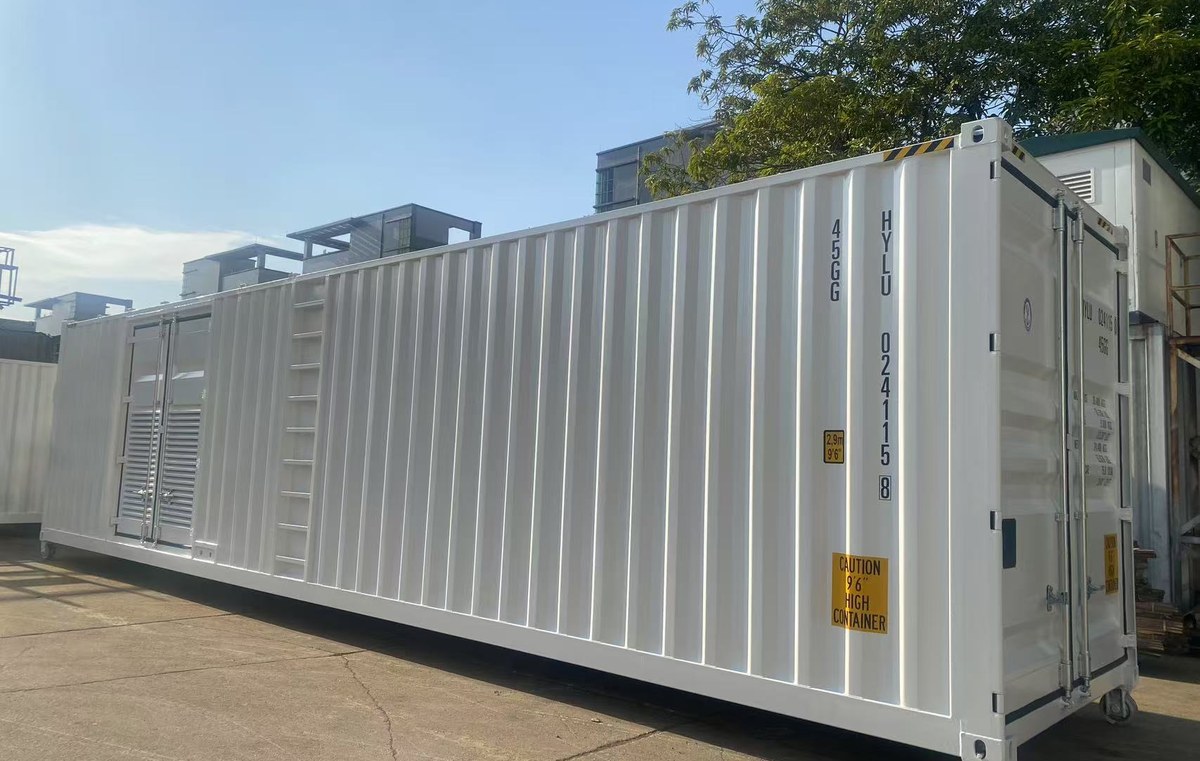
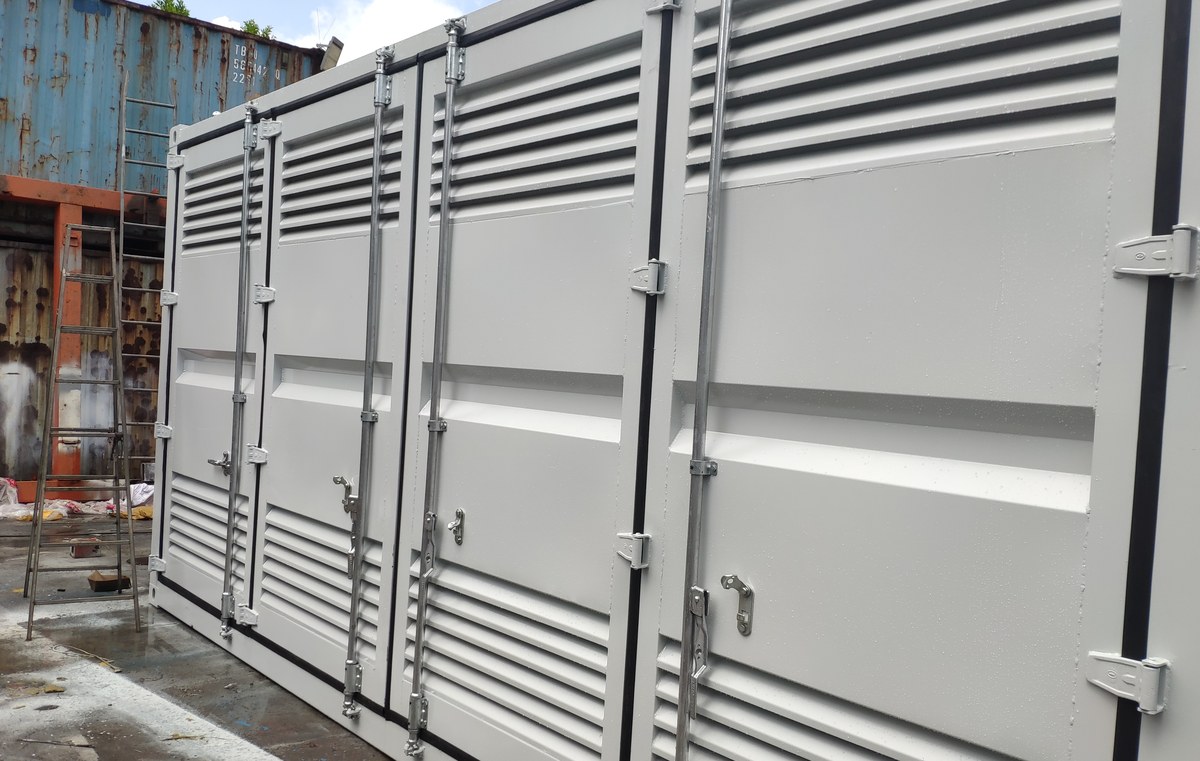
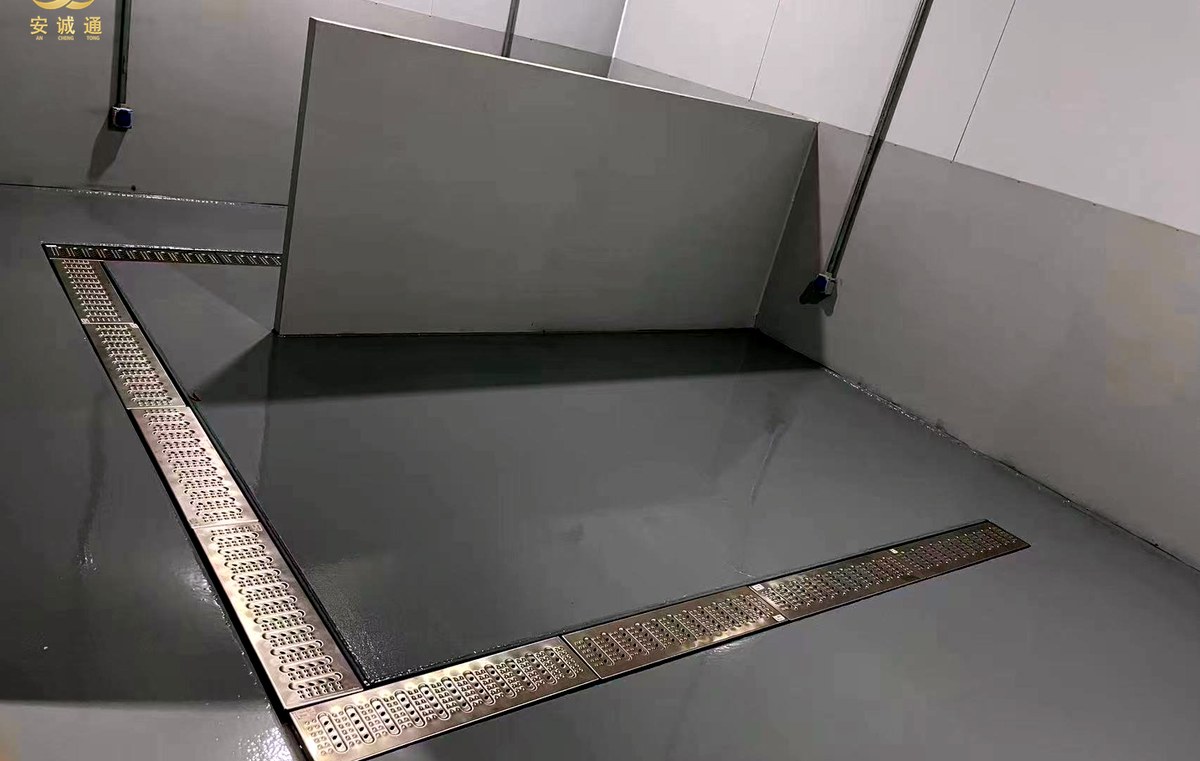
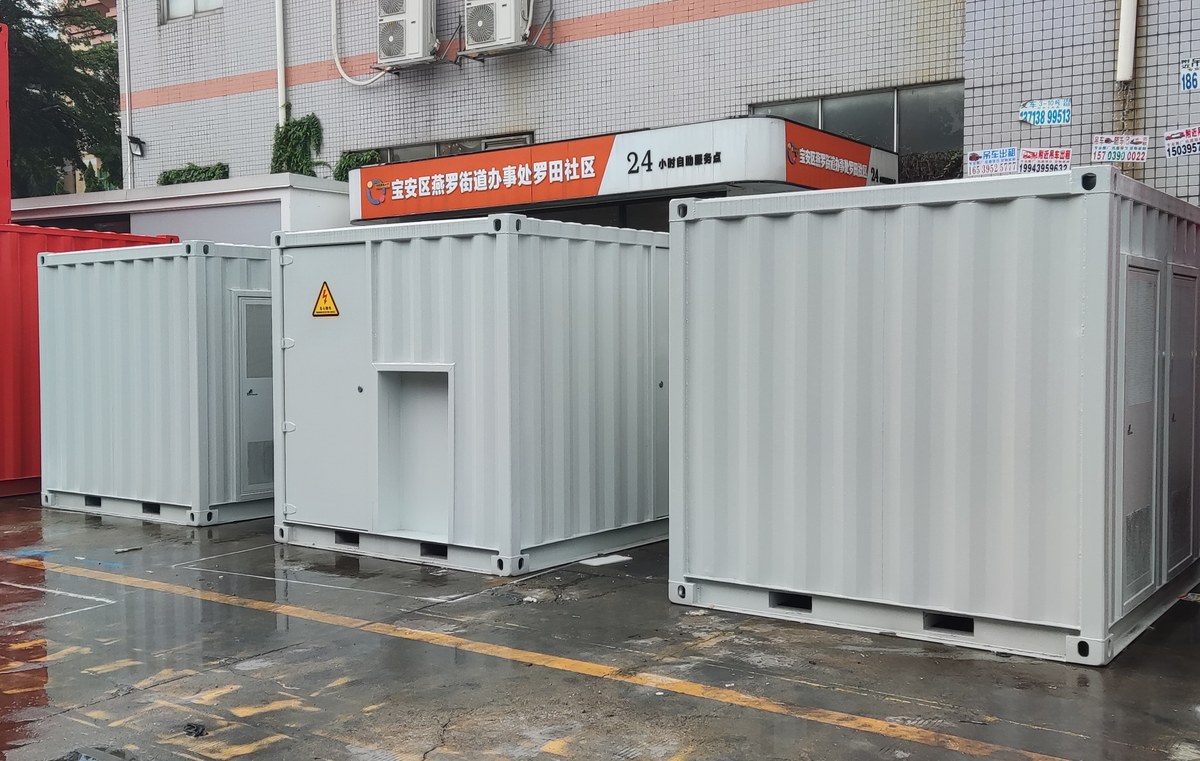
Some images are scheme illustrations and renders showing structure and layout. Final delivery follows the contract drawings.
What customers ask most
Can you work to my drawing?
Yes — send it in DWG or PDF with the cut list. We will mark up anything that cannot be built as drawn and quote the alternative.
What is the minimum order?
One. There is no tooling to amortise, so a single shell is priced as a single shell.
Can the shell be flat-packed?
Not a welded container shell. If you need flat-pack, that is the expandable product line rather than this one.
How is the coating verified?
Surface preparation and dry film thickness are recorded, and the report travels with the unit. Salt-spray testing is available on request at extra cost.
Can you supply the door hardware in stainless?
Yes, and we recommend it for coastal sites. It is the cheapest upgrade on the whole box.
Ask for a scheme for your site
Send the capacity, rack count, site conditions and local climate. You get a layout, a single-line diagram and a price, at no charge, revised until it works.