


What it is for
A hazardous waste store is an environmental approval item, not a shed. It needs a bund that holds 110% of the largest container, ventilation that changes the air six to twelve times an hour, fire separation from anything combustible, and signage that an inspector will accept on the first visit.
We build them as sealed, bunded, ventilated rooms with the drum ramp, the sump, the extinguisher bracket and the label set already fitted, because those are the items that get picked up on inspection and the ones that are hardest to add afterwards.
What we do not do is decide the classification. Tell us what is being stored and where, and we build to the standard your environmental authority or your insurer applies.
Where it is typically used
Key specifications
| Shell | 10 ft or 20 ft, sealed and insulated on request |
| Bund | Integral steel bund at 110% of the largest container, sealed and drained |
| Ventilation | 6–12 air changes per hour, low-level inlet and high-level extract |
| Floor | Epoxy-coated, coved to the wall, with a sump and a pump-out point |
| Access | Double doors with a drum ramp, or a roller shutter on the 20 ft |
| Fire | Detection standard, extinguisher bracket, fire-rated wall on request |
| Signage | Hazard diamonds, no-smoking, and a content board for the store register |
| Lighting | LED, sealed, with an external switch |
| Spill kit | Absorbent, PPE and a container, mounted where it can be reached before entering |
| Corrosion | C4 with chemical-resistant lining on request |
| Monitoring | Sump level alarm and door alarm on request |
| Design ambient | −25 °C to +50 °C |
Figures are for the standard configuration and change with the project. Values are design values; acceptance follows the contract technical agreement.
What goes in the box
Installed, wired and tested before dispatch. On site the work is placement and external connections.
Coated inside and out, with a floor that does not have a weld seam in the traffic path.
Formed with the floor, not dropped in afterwards, sized at 110% of the largest container.
Low inlet, high extract, six to twelve air changes, with a fan rated for the vapour.
Double doors and a drum ramp so a 200 L drum can be rolled in by two people.
Extinguisher bracket, spill kit, PPE hook and a document holder for the register.
Hazard diamonds, no-smoking and a content board, fitted and photographed for your file.
Which model to take
| Model | Shell | Bund | Air changes | Use |
|---|---|---|---|---|
| EQ-HAZ-10 | 10 ft · 2,991 mm | 110% · 1 drum | 6–8 ACH | Small site, oils and aerosols |
| EQ-HAZ-20 | 20 ft · 6,058 mm | 110% · 4 drums | 8–12 ACH | Depot, workshop |
| EQ-HAZ-20D | 20 ft · divided | Two bunds | 8–12 ACH | Segregated incompatible wastes |
| EQ-HAZ-20F | 20 ft · fire rated | 110% · 4 drums | 8–12 ACH | Where separation is required |
Standard models are listed. Other capacities are built to order, with two to three weeks added to the standard lead time.
The bund is 110% of the largest container, and it has to be part of the floor
A tray dropped in afterwards is not a bund
The requirement is usually 110% of the largest container in the store, contained with no route to the ground. A plastic tray on a steel floor satisfies nobody once a drum has been punctured by a forklift.
We form the bund with the floor, seal it, and fit a sump with a pump-out point, so a spill is contained and removable rather than a permanent feature.
Ventilation is sized on air changes, not on a fan
Six to twelve air changes an hour on a 20 ft store means roughly 200 to 400 m³/h, with the inlet low and the extract high so the heavy vapour leaves. A fan selected by “it fits the hole” will not do it.
Where the stored material is flammable the fan and the switch are rated for the zone, and the certification for that equipment is not ours to claim.
When to use it, when not to
These come from projects rather than general advice. Match your case against them; it is more useful than reading the specification table.
We build to the condition rather than around it.
Bund, ventilation and signage are the three items inspectors look at first.
Lift it and take it to the next project.
That is a classified store with a different design and different approvals.
At that size a site-built compound is cheaper.
From contract to energisation
Materials and quantities, container sizes, permit condition, climate, access.
Layout, bund calculation, ventilation and signage schedule in 5–7 days.
Drawing release and deposit; ATEX fan ordered if required.
20–35 days: shell, coating, bund, ventilation, safety kit, signage.
Bund volume record, ventilation measurement, signage photo set and O&M file.
On site and in detail
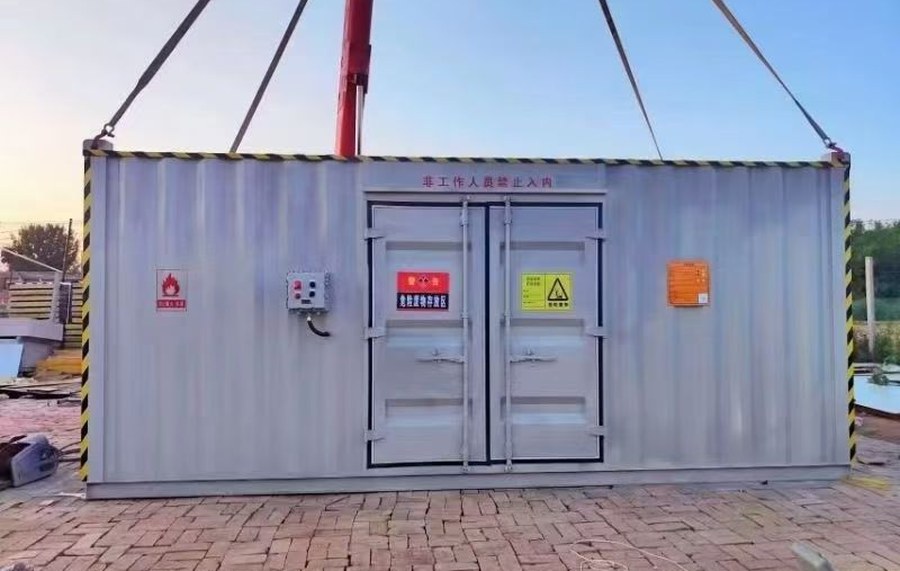
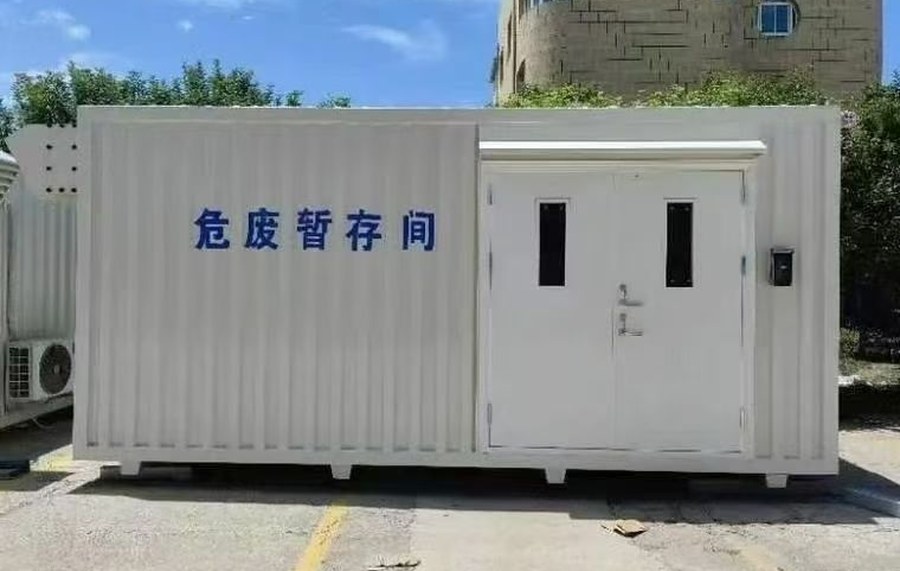
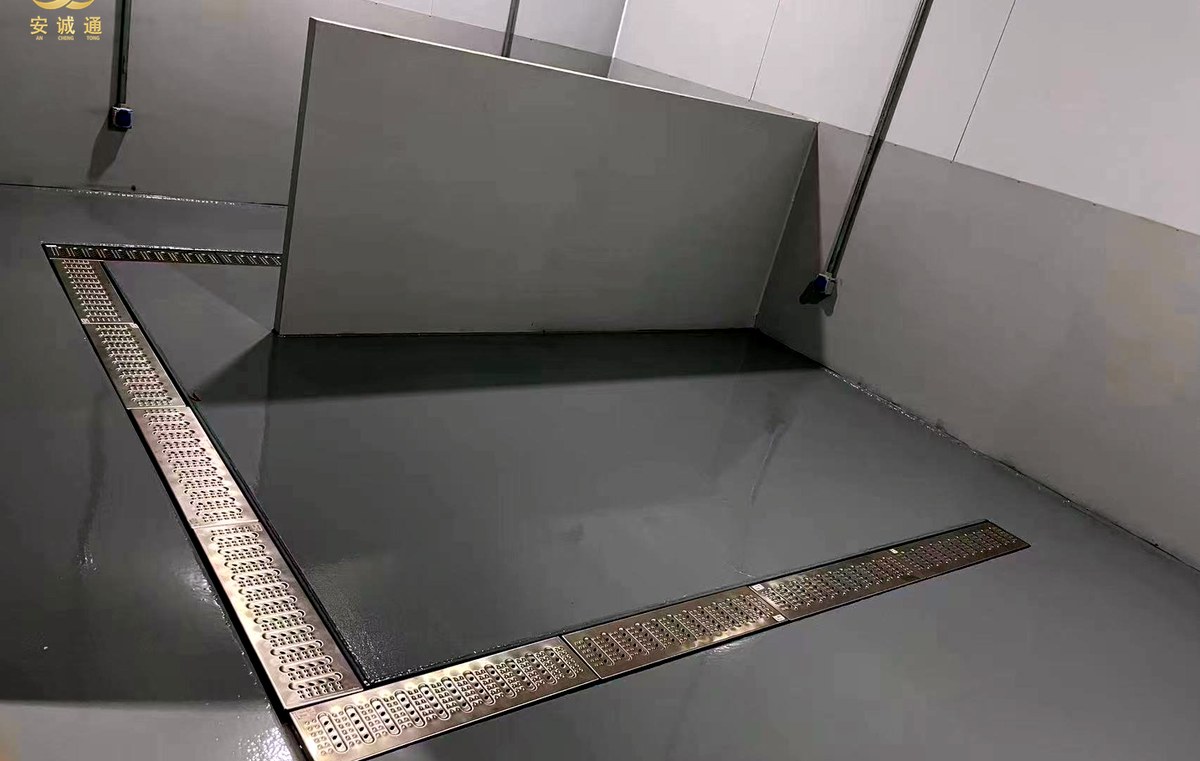
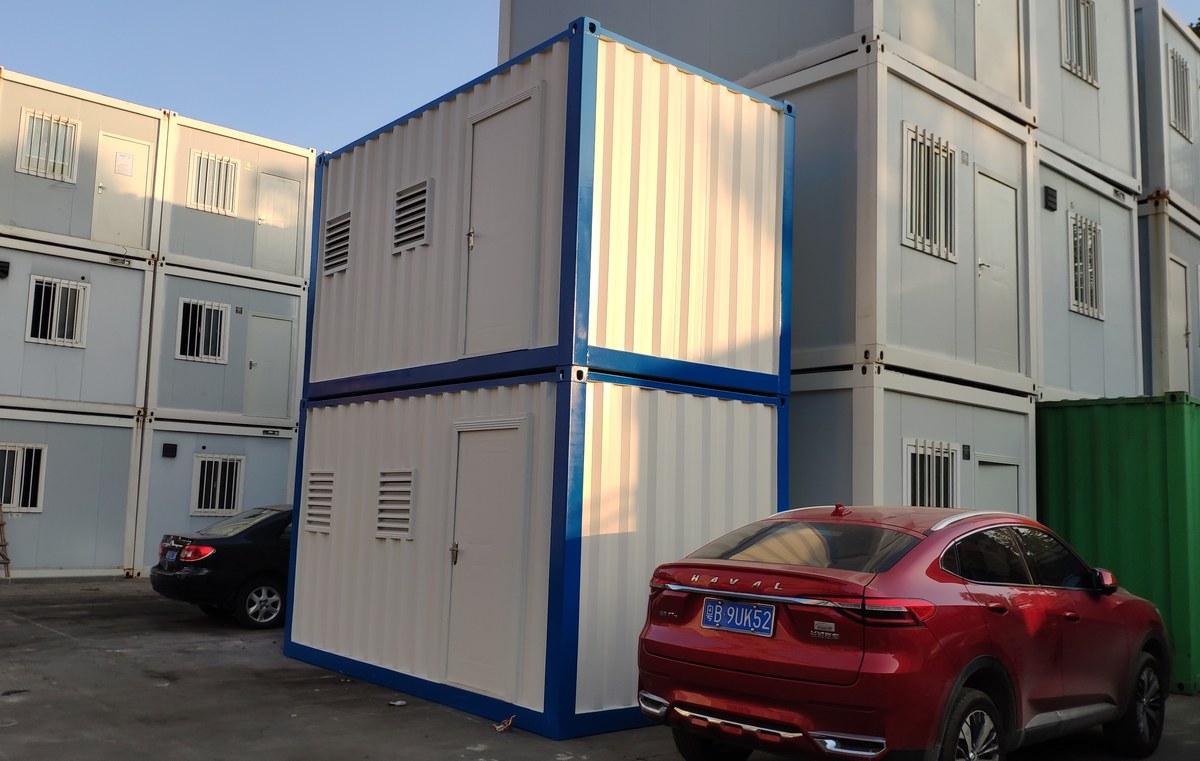
Some images are scheme illustrations and renders showing structure and layout. Final delivery follows the contract drawings.
What customers ask most
Do you provide the waste classification?
No. Tell us what is being stored and which standard applies, and we will build to it. The classification stays with your environmental adviser.
Is the bund really integral?
Yes — formed with the floor and sealed, at 110% of the largest container, with a sump and a pump-out point.
Can it be fire rated?
A rock wool variant gives a fire rating on the walls; the doors and penetrations are the limit and we will state what the assembly actually achieves.
What signage is included?
Hazard diamonds for your materials, no-smoking, and a content board for the store register. Send the material list and we will match the labels.
Can we add a second compartment?
Yes, on the 20 ft with a dividing wall and two independent bunds, for incompatible wastes.
Ask for a scheme for your site
Send the capacity, rack count, site conditions and local climate. You get a layout, a single-line diagram and a price, at no charge, revised until it works.