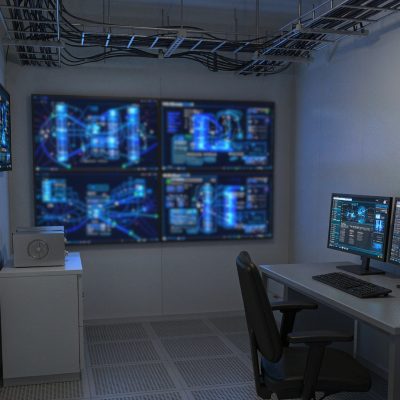


What it is for
Cooling is the second largest load in a data centre, after the IT equipment itself. Choose the wrong type and PUE moves by more than 0.2, which over a year is a six-figure electricity bill.
Three mainstream options: indirect evaporative cooling, chilled water with dry coolers, and DX air-cooled. The choice is not about price, it is about local climate.
Dry regions (northwest China, the Middle East, inland Australia) suit indirect evaporative best, because evaporating water does the work and the compressor can stay off all year. Hot-humid regions (southern China, Southeast Asia) get limited benefit and should use chilled water.
DX suits small capacities only, under 200 kW, where the appeal is simplicity, no water and easy maintenance.
Where it is typically used
Key specifications
| Cooling capacity | 80 / 150 / 250 / 400 kW |
| Type | Indirect evaporative / chilled water / DX |
| Supply temperature | 18–24 °C, adjustable |
| Return temperature | Up to 38 °C with a sealed cold aisle |
| Efficiency | IDEC 8–14 annual average, chilled water 4–6, DX 3–3.5 |
| Water consumption | IDEC 0.3–0.8 L/kWh of IT energy |
| Water treatment | Softening, dosing and blowdown to control scaling |
| Protection | IP54, media section removable for cleaning |
| Controls | Group control switching mode on outdoor wet-bulb temperature |
Figures are for the standard configuration and change with the project. Values are design values; acceptance follows the contract technical agreement.
What goes in the box
Installed, wired and tested before dispatch. On site the work is placement and external connections.
Polymer or fibreglass media at 85%+ effectiveness, sliding out for cleaning.
Plate or tube indirect exchanger, keeping the two air streams apart.
EC fans with variable speed, airflow following load.
Scroll or screw, started only in extreme conditions.
Circulation pump, softening, dosing, blowdown, frost drain-down.
Switching between dry, wet and hybrid modes on wet-bulb temperature.
Which model to take
| Model | Capacity | Type | Annual COP | WUE | Suitable climate |
|---|---|---|---|---|---|
| AIDC-COOL150 | 150 kW | IDEC | 6.5–10 | 0.45 | Dry regions |
| AIDC-COOL250 | 250 kW | IDEC | 6–9 | 0.55 | Dry to semi-dry |
| AIDC-COOL400 | 400 kW | Chilled water | 4.5–5.5 | — | Hot-humid |
Standard models are listed. Other capacities are built to order, with two to three weeks added to the standard lead time.
Indirect evaporative cooling: it depends on the weather, so understand the weather
The principle is simple
Outdoor air passes through wet media and evaporates water, which cools the air towards its wet-bulb temperature. That cooled stream does not enter the hall; it passes through a heat exchanger and takes heat from the return air on the other side. The two streams never touch, so no moisture and no dust enter the room.
That is what indirect means. Direct evaporation, blowing the cooled humid air straight into the hall, is cheaper and more effective but leaves humidity uncontrolled, which is why data centres cannot use it.
How much cooling you get depends on the wet-bulb depression outdoors. Dry regions see 15–20 °C of depression and drop 15 °C or more. Humid regions see 5–8 °C and get little, so the compressor has to run.
Wet-bulb temperature is the parameter that matters
Selection looks at the annual distribution of wet-bulb temperature at the site, not dry-bulb. Where dry-bulb is 35 °C and wet-bulb 20 °C, such as Urumqi, the unit takes 35 °C down to 21 °C, which is cool enough to supply directly. Where dry-bulb is 33 °C and wet-bulb 28 °C, such as Guangzhou, it reaches 29 °C and needs compressor support.
Free-cooling hours are counted the same way: how many hours a year the outdoor wet-bulb is low enough for direct or hybrid cooling. Northwest China reaches over 5000 hours; the south reaches 1500–2000.
So the same unit reaches PUE 1.18 in Lanzhou and 1.38 in Guangzhou. A quotation that does not name the site is not giving you a number, it is giving you a guess.
The water bill has to be counted
Indirect evaporative cooling consumes water. WUE is annual water use divided by IT energy, in litres per kWh. Dry regions typically sit at 0.4–0.8.
A 1 MW hall at WUE 0.5 uses 4380 tonnes a year. In the northwest that is unremarkable; where water is scarce or expensive it is a real cost.
The water also needs treatment. Without softening the media scales and is scraped within three months; without blowdown bacteria grow and hygiene becomes a problem. Softening, dosing and blowdown are part of the capital and operating cost.
In some regions, parts of the Middle East for instance, water costs more than electricity, and a higher PUE with air cooling or dry coolers is the right trade.
When to use it, when not to
These come from projects rather than general advice. Match your case against them; it is more useful than reading the specification table.
Indirect evaporative is optimal here and the compressor stays off all year.
Performance is poor and the media scale quickly. Move to chilled water with dry coolers.
Use a chilled-water unit and tie into the site plant.
DX is simpler, needs no water system and is easier to maintain.
From contract to energisation
Ten years of TMY data, wet-bulb distribution and free-cooling hours.
Type, capacity, redundancy, with a PUE projection.
Enclosure, exchanger, media, water system, controls.
Capacity test, mode switching, water circuit pressure test.
Placement, water and duct connections, integrated commissioning.
On site and in detail
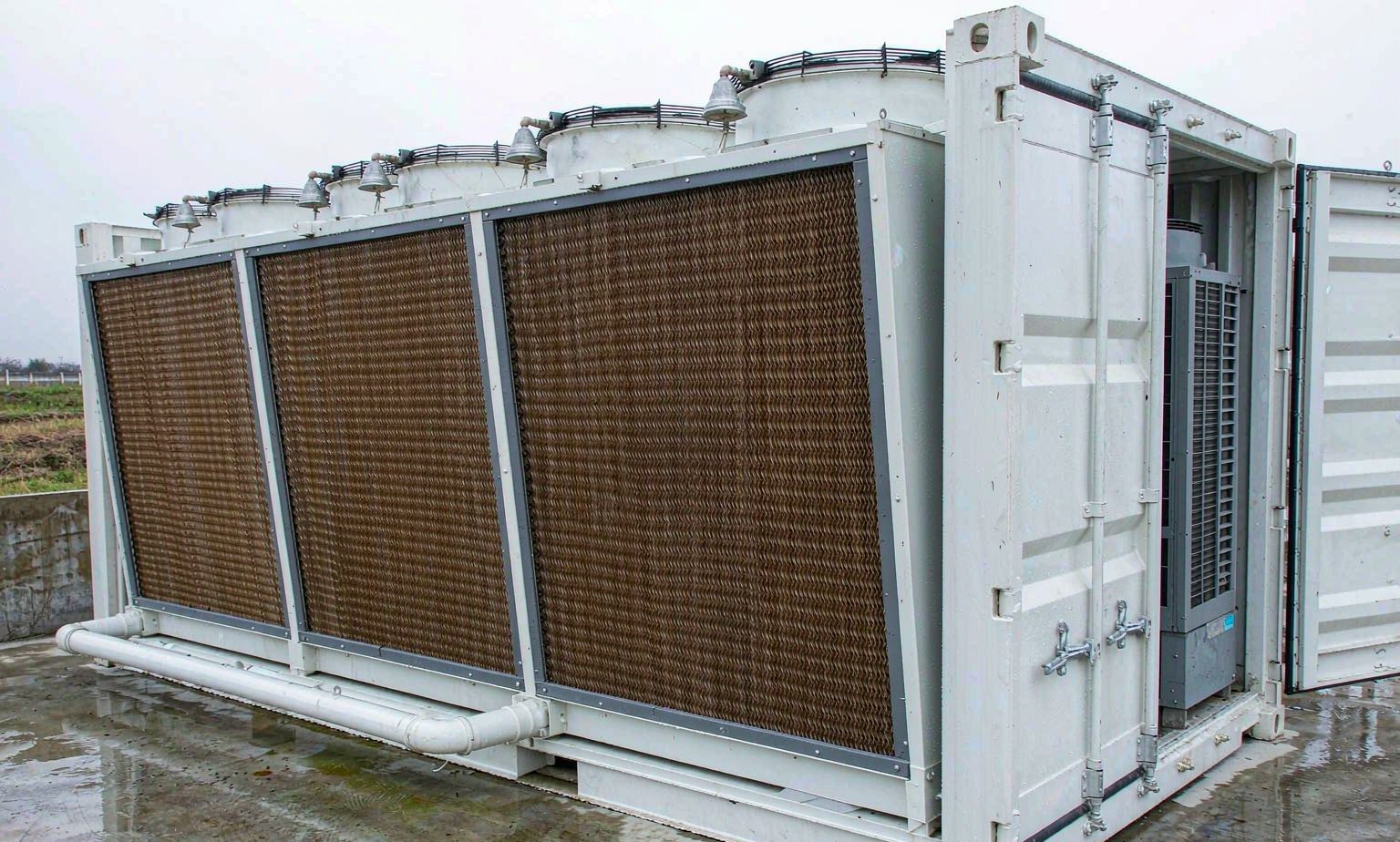
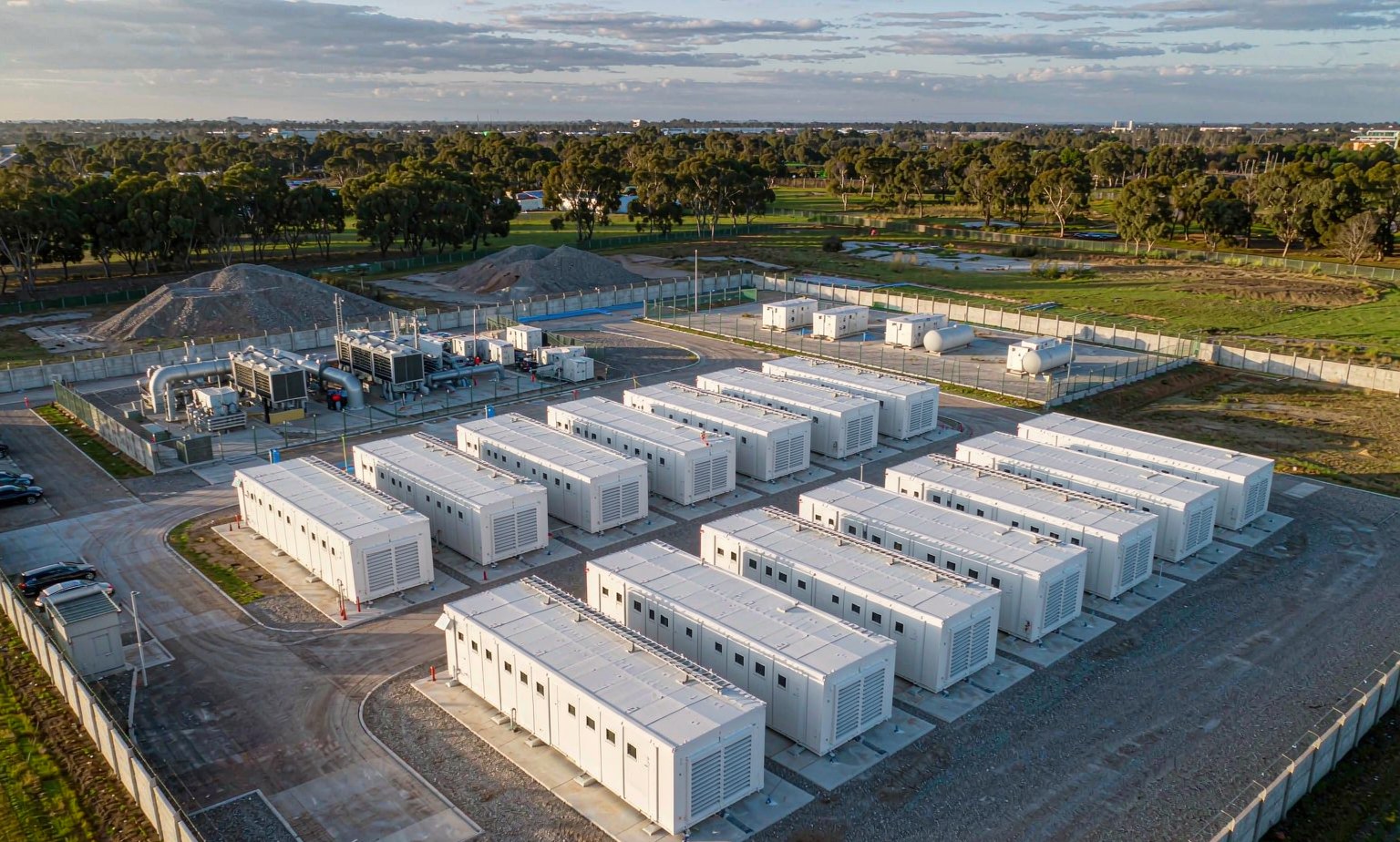
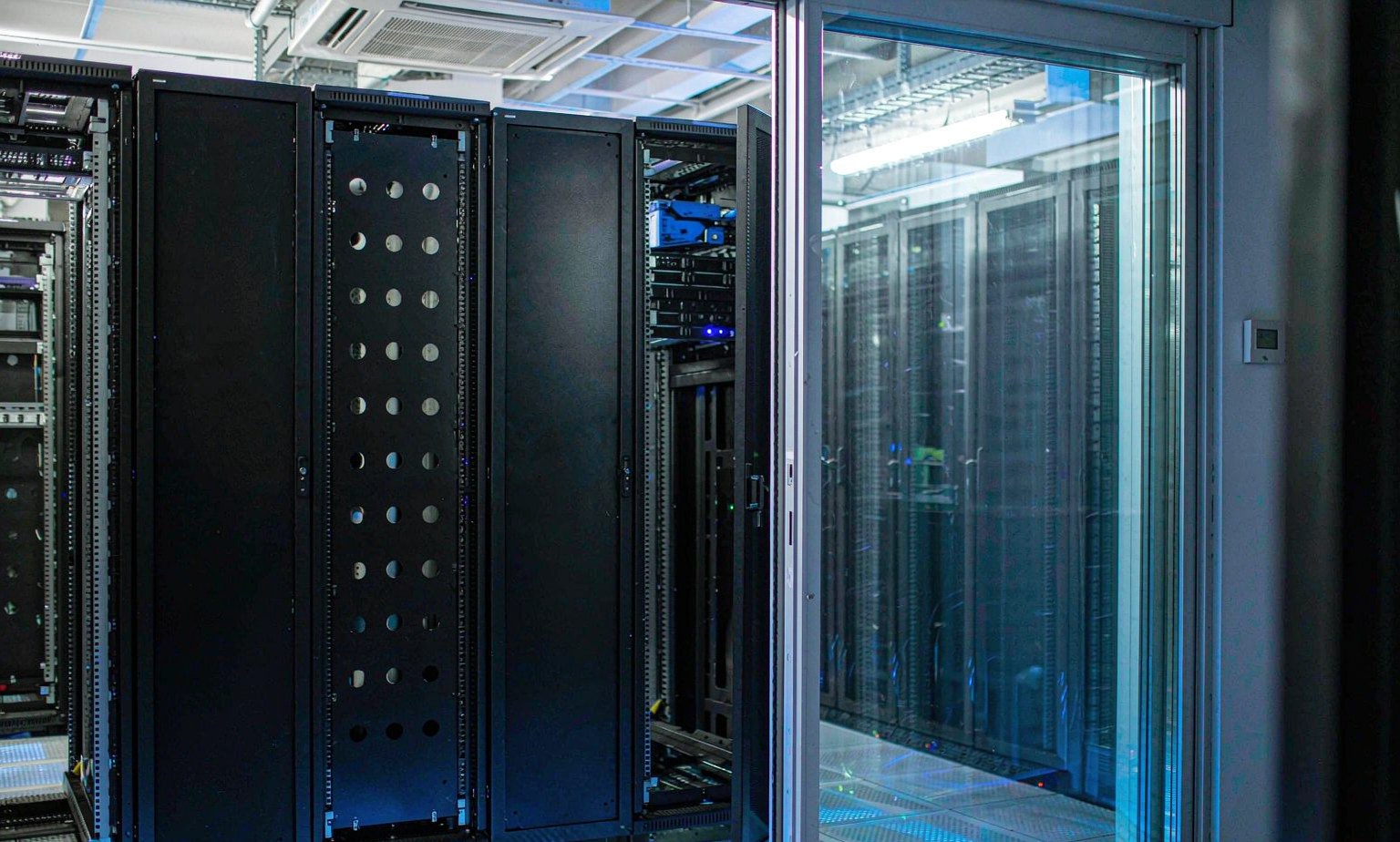
Some images are scheme illustrations and renders showing structure and layout. Final delivery follows the contract drawings.
What customers ask most
Does indirect evaporative put moisture into the hall?
No. The two air streams are separated inside the exchanger, so only heat crosses, not mass. That is the fundamental difference from direct evaporation.
How often is the media replaced?
Three to five years with normal water quality and maintenance. Hard water without softening scales it within a year. Media is a consumable and should be stated in the quotation.
Will it freeze in winter?
It can. The water system needs frost drain-down or glycol. Northern projects must have this, otherwise the pipework splits after a winter shutdown.
How noisy is it?
Louder than a chilled-water unit, because there are more fans: 70–78 dB(A) at one metre. Near housing, add acoustic treatment or relocate.
Can it run without water?
Yes, in dry mode on the exchanger and compressors alone, at a PUE penalty of 0.1–0.15. In water-scarce regions that is the necessary compromise.
Ask for a scheme for your site
Send the capacity, rack count, site conditions and local climate. You get a layout, a single-line diagram and a price, at no charge, revised until it works.