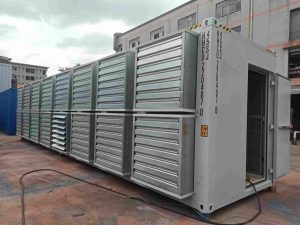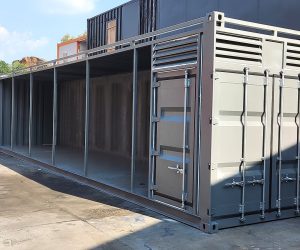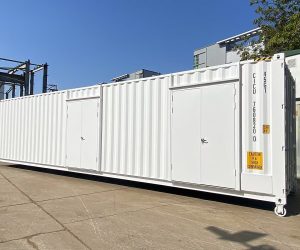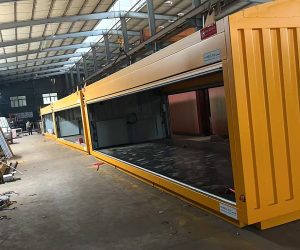
“We need a containerized data center.” That sentence is a useful start, but it is not enough for a quotation. A remote telecom site, an AI lab and a multi-megawatt campus may all use the same phrase while needing very different equipment, interfaces and delivery boundaries. The choice becomes clearer when the buyer first describes the load, then the site, then the speed at which capacity will be added.
The current ACTBOXES AIDC page lays out twelve products in three tiers. Campus and cluster systems address staged, multi-module capacity. Complete halls arrive as an integrated room. Function modules add power, batteries, cooling, generation, suppression or an IT skid to infrastructure the customer already owns. The page also shows five configuration templates: a standard hall, an AI GPU cluster, a liquid-cooled center, an edge node and a micro-module. Those labels are helpful only when they are tied to a real load schedule and a released drawing.
The first decision is the workload, not the shell
Imagine two RFQs arriving on the same day. One asks for a 20-foot box and three racks. The other asks for a 40-foot box and fourteen servers. Neither tells the supplier how much heat the equipment creates, how much backup time is expected or what the utility can deliver. A container length is a transport description; it is not a design basis.
Write the IT load in kW, the number of racks, the expected density per rack and the share of GPU or other high-density equipment. Keep phase one and the likely next phase in separate lines. A future rack that is only a possibility should not silently become today’s cooling or UPS requirement, but the yard and interface plan may still need to reserve space for it.
Site conditions change the answer as well. The AIDC page uses 35 °C as a default design ambient and asks for altitude above 1,000 m. Add the actual ambient range, altitude, dust or coastal exposure and the operating schedule to the brief. Those details affect the cooling interface and the practical headroom on a hot afternoon. They also tell the supplier which assumptions need to appear on the quotation rather than remain in an engineer’s notebook.
A 20-foot edge node fits a distributed first phase
An edge node earns its place when compute has to sit close to the equipment or process that creates the demand. The current AIDC page describes the 20-foot edge template with three to four racks, one in-row unit, optional UPS and remote monitoring. That combination is aimed at a compact, distributed workload, often with limited day-to-day attendance.
For this option, location and serviceability deserve as much attention as rack count. The route for a replacement part, the network handoff, the alarm destination and the lifting plan should be visible before the order is frozen. A single-feed assumption may be acceptable for one project and unacceptable for another. If backup power is required, say whether the UPS belongs inside the node or in a separate module.
An edge node is less convincing when the first rack schedule already fills its density envelope or when several boxes will be needed immediately. In that situation, compare repeated edge units with one complete hall or a small cluster. Use the same scope on every line of the comparison. The ACTBOXES page states that servers, switches and software licences are outside the standard configuration scope, so the equipment list should not be hidden inside the word “turnkey.”
A complete hall suits a known rack schedule
When the first phase is well defined, a complete hall can reduce coordination between separate suppliers. ACTBOXES describes a standard 40-foot template with seven racks and fourteen servers, a 400 kVA online double-conversion UPS, fifteen minutes of battery at full load, ATS dual feed, seven in-row units, NH-200 clean-agent suppression and integrated cabling.
Those numbers are a current template on the product page. They are not a promise that every 40-foot container has the same internals. A different rack density, utility frequency or redundancy target can produce a different configuration. Ask the supplier to connect each number to the released drawing and the load schedule. If the input changes after the drawing is frozen, the change should be visible in the revised quotation.
The interface outside the hall is easy to miss. The page describes a 2.4 m internal width and an outdoor chiller that may be quoted separately when a customer already has chilled water. The RFQ should therefore name the pipe size, flow, temperature difference, control signal and heat-rejection responsibility. A hall can fit the racks and still be a poor project match if the external plant is not defined.
Cluster and campus options support staged capacity
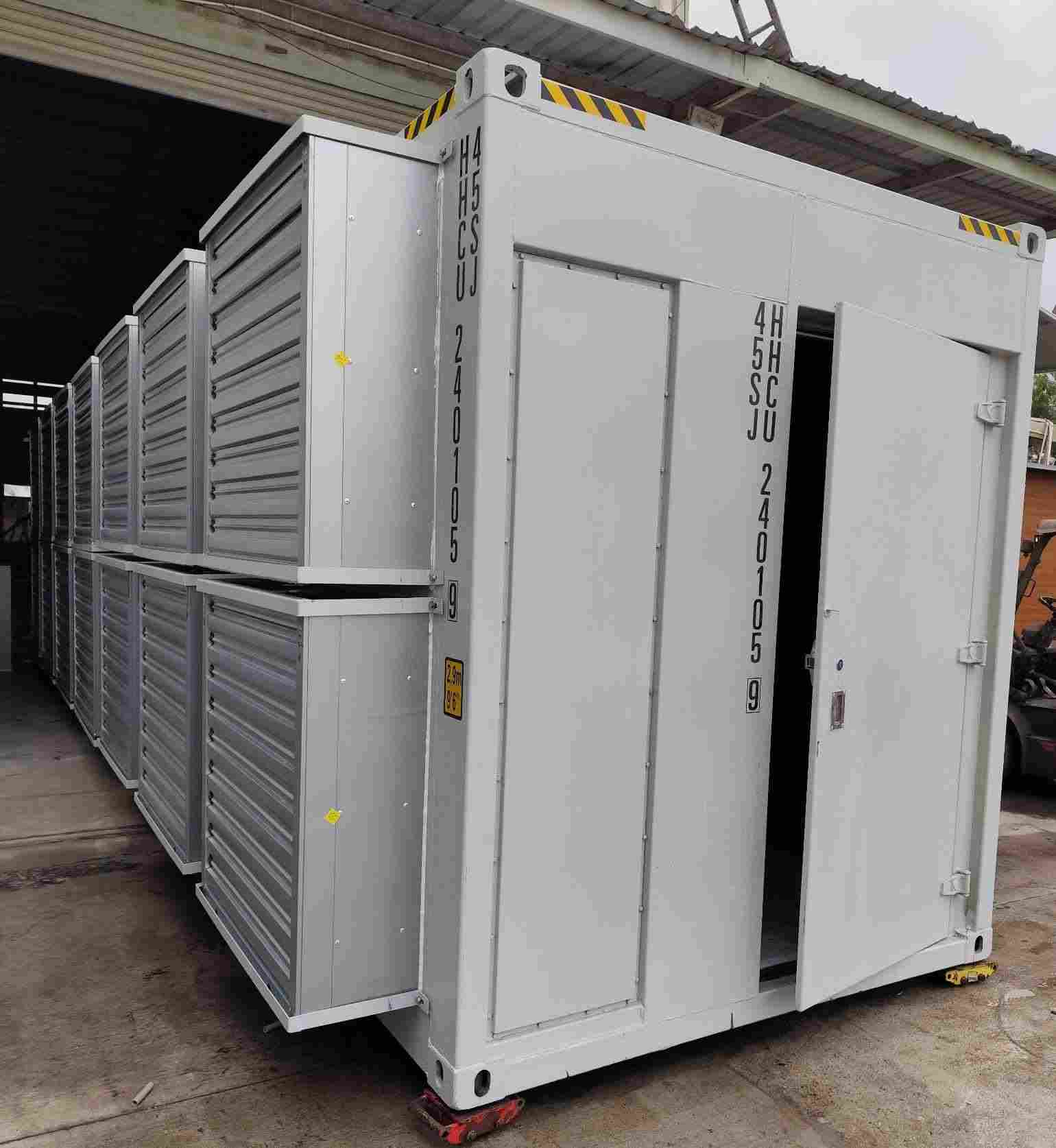
The cluster and campus tiers address a yard, not a single box. The current AIDC page describes a prefabricated data center cluster at 0.5–2 MW in six to sixteen modules. It describes a modular data center campus at 2–20 MW in 40–160 racks. Foundations, utility connections and the arrangement of the modules remain part of the site conversation even when the modules arrive finished.
This is a sensible direction when the buyer expects capacity to arrive in steps. It also creates a longer list of decisions. The phase-one boundary, future module positions, utility corridor, crane access, fire strategy, network topology and handover point should all be drawn. Repeating a module does not remove the need to decide what is shared at campus level.
For example, a generator, chiller, suppression system or monitoring platform might sit in one module, be distributed across several, or stay in the customer’s scope. Each choice changes the cable route, maintenance access and commercial comparison. Ask the quotation to show those responsibilities directly instead of compressing them into one MW figure.
Function modules fill a defined gap
Sometimes the buyer already has a room, a chilled-water plant or part of an electrical system. In that case, buying one missing function may be more sensible than buying another complete hall. The AIDC page lists power, battery, cooling, generator, fire-suppression and auxiliary modules, along with a prefabricated IT skid.
The page gives indicative ranges: 200–800 kVA for the power module, 100–500 kWh for the battery module, 80–400 kW for the cooling module and 500–2,000 kVA for the generator module. Treat those as configuration clues. They do not replace the single-line diagram, protection study, cooling interface or fire strategy for the site.
A battery module needs an autonomy target, charging arrangement, suppression approach, transport plan and dangerous-goods discussion. A cooling module needs the wet-bulb condition and the heat-rejection side. An IT skid needs a rack schedule, a cold-aisle arrangement, a lifting method and a clear list of services available in the room. If the site team cannot provide one of these inputs, mark it pending rather than assuming that the module is compatible.
Check the four technical paths together
Choosing a tier is only half the decision. Power, cooling, fire and monitoring must describe the same operating condition.
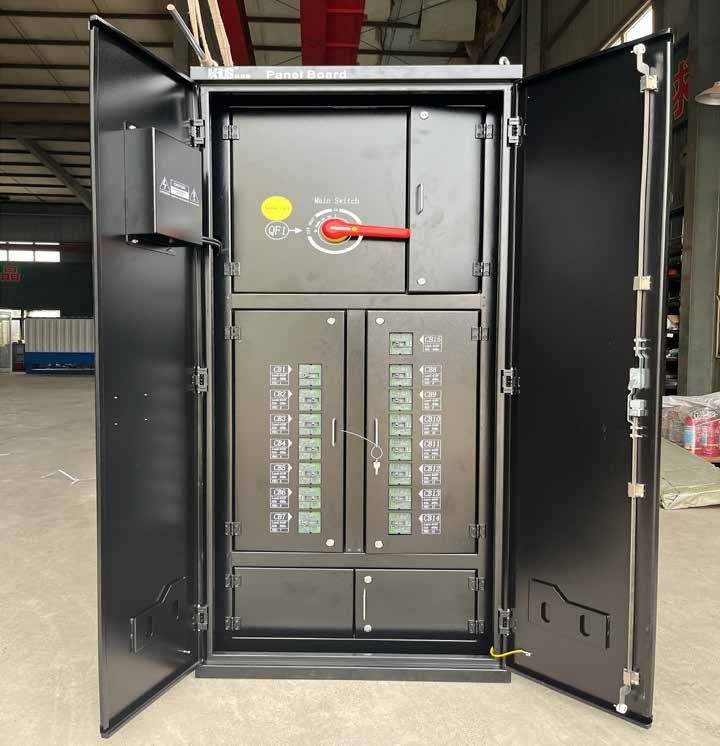
The power path starts with the utility feed and changeover, then continues through the UPS, battery autonomy and branch protection. The cooling path follows the rack heat through in-row or liquid equipment, the outdoor chiller and the stated design ambient. The fire path covers detection, suppression and discharge. The monitoring path covers temperature, humidity, door, leak, smoke and power-state signals, as well as the connection to the buyer’s BMS or DCIM.
The AIDC page describes NH-200 clean-agent suppression, local display, dry contacts or Modbus, and yard testing with the box energised. Ask what the witness test includes and which records travel with the shipping documents. A product label or a component certificate cannot answer a site-specific question about the utility, controls or customer network.
The shell belongs in the same review. ACTBOXES describes a CSC-certified 40-foot high-cube shell, thermal lining, sealed floor, destination-specific paint, load-tested lifting points and a marked centre of gravity. Confirm which items apply to the selected configuration and transport state. The answer may change if batteries or the chiller travel separately.
Turn the choice into a comparable RFQ
An effective first brief is short enough to complete and specific enough to check. Include:
IT load in kW, rack count, rack density and GPU share.
Redundancy target such as N, N+1 or 2N, plus battery autonomy.
Utility voltage and frequency, generator and chiller scope, and available site interfaces.
Design ambient, altitude, weather exposure, network handoff and monitoring protocol.
Delivery boundary for foundation, freight, duties, server installation, commissioning and local approvals.
The current AIDC page says the first-pass price is prepared against a layout and that the configuration is frozen before the price is held. Treat the timing and commercial terms as points to confirm in the live quotation. The page also separates freight, duties, foundation, utility connection and on-site commissioning unless they are listed. That separation makes two supplier offers easier to compare because the equipment total is not being mistaken for the installed project cost.
Buyers can review the ACTBOXES AIDC containerized data center range and the container data center product page before preparing the load sheet. Send the load, site assumptions and scope questions through the ACTBOXES contact page so the proposed layout can be checked against the actual project.
Conclusion
The best containerized data center configuration is the one whose load, site and growth plan agree. An edge node serves a compact distributed phase. A complete hall fits a defined first rack schedule. A cluster or campus supports staged capacity. A function module fills a known gap in infrastructure that already exists. In every case, the released drawing, load schedule and interface list should settle the choice before price becomes the deciding number.
FAQs
Is a 40-foot containerized data center always the best choice?
No. A 20-foot edge node, a function module or a multi-module cluster may fit the workload and site better. Compare delivered scope, density, interfaces and the next phase rather than choosing by length alone.
Can an existing chiller be used with a containerized data center?
The ACTBOXES AIDC page says an existing chilled-water plant can be used when the interface is defined. Confirm pipe size, flow, temperature difference, control signal, heat-rejection responsibility and the conditions used for sizing.
Are servers included in the AIDC configuration?
The page states that servers, switches and software licences are outside the standard configuration scope. If server installation or on-site commissioning is needed, ask for those services and their responsibilities as separate quotation lines.
What should be sent with the first RFQ?
Send the IT load, rack and GPU schedule, redundancy target, utility voltage and frequency, design ambient, altitude, and the scope of the chiller and generator. Add the site plan, network handoff and delivery boundary when available.