
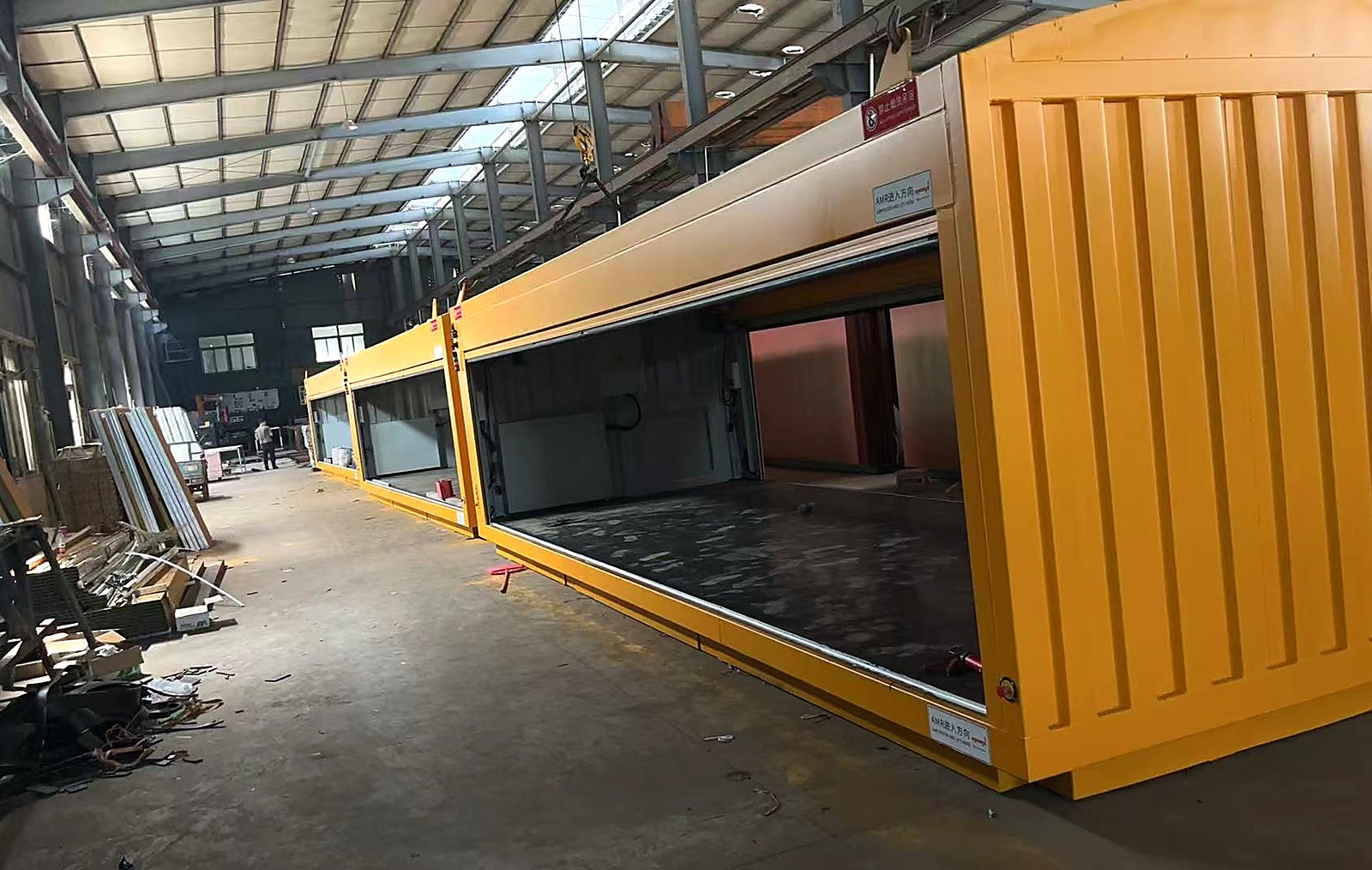
A Container Whose Whole Side Lifts
One panel the length of the long side, hinged at the top and held open on two struts. Open, it is an awning over the working area. Closed, it is a wall with a man door in it.
Opening the side is a loading decision
It is about what goes in, and how
Anything that arrives on a skid, a pallet or a frame and is too tall for a door gets loaded through the side. With the panel up, the crane or the forklift has the full length of the box to work with and the roof stays where it is.
Hinged at the top rather than the bottom, so the panel does not become a ramp, a trip hazard or a place where water sits.
The struts carry the weight, not the crew
Two struts hold the panel at working height. The panel is sheet steel with a frame, and it is heavy: nobody holds it while somebody else finds a prop.
Sealing is the part that gets skipped on this kind of opening. The gasket runs the full perimeter, the top hinge is covered by a drip, and the panel is pulled down onto the seal by the latches, not by gravity alone.
Three details
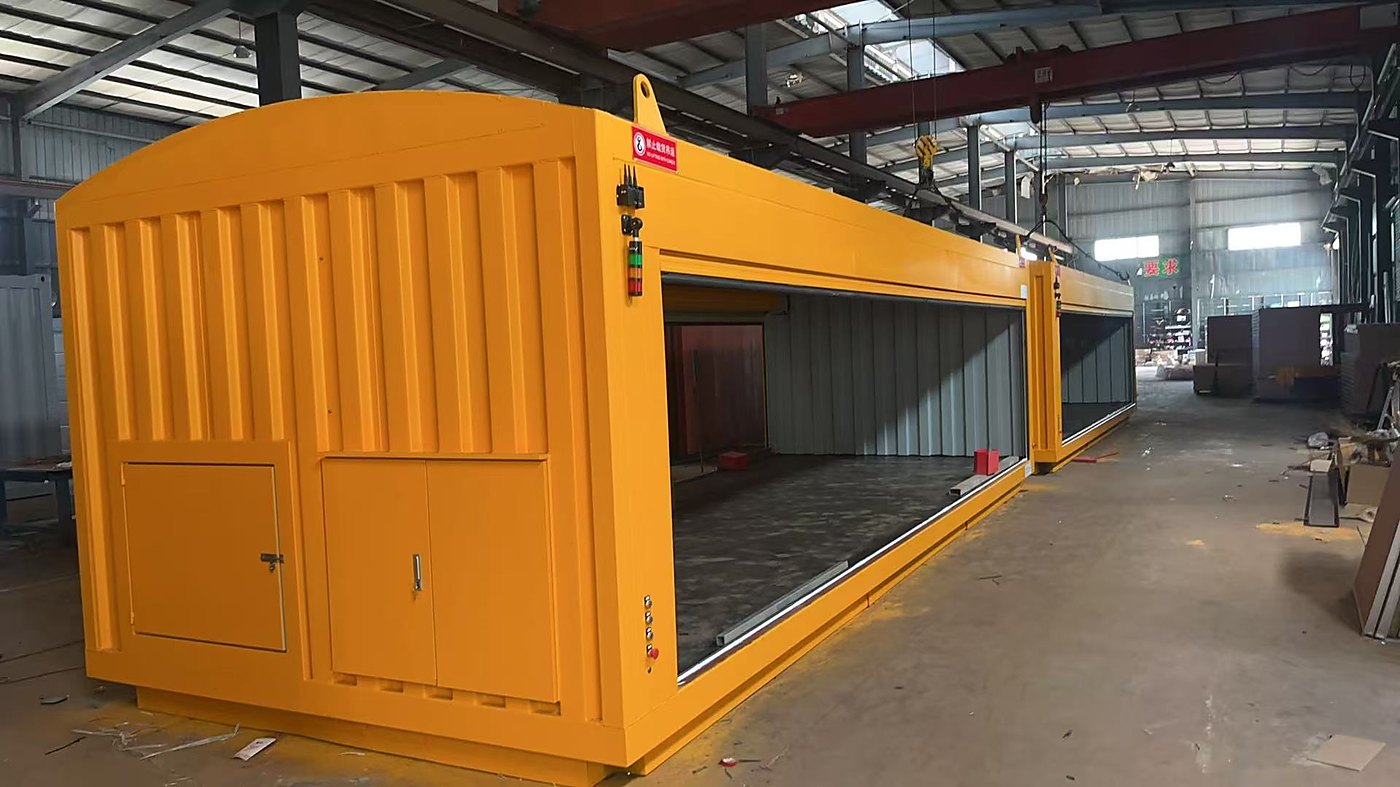
The man door is cut into the side panel itself, so the panel is also the access. Latches along the bottom edge pull the whole length down onto the gasket.
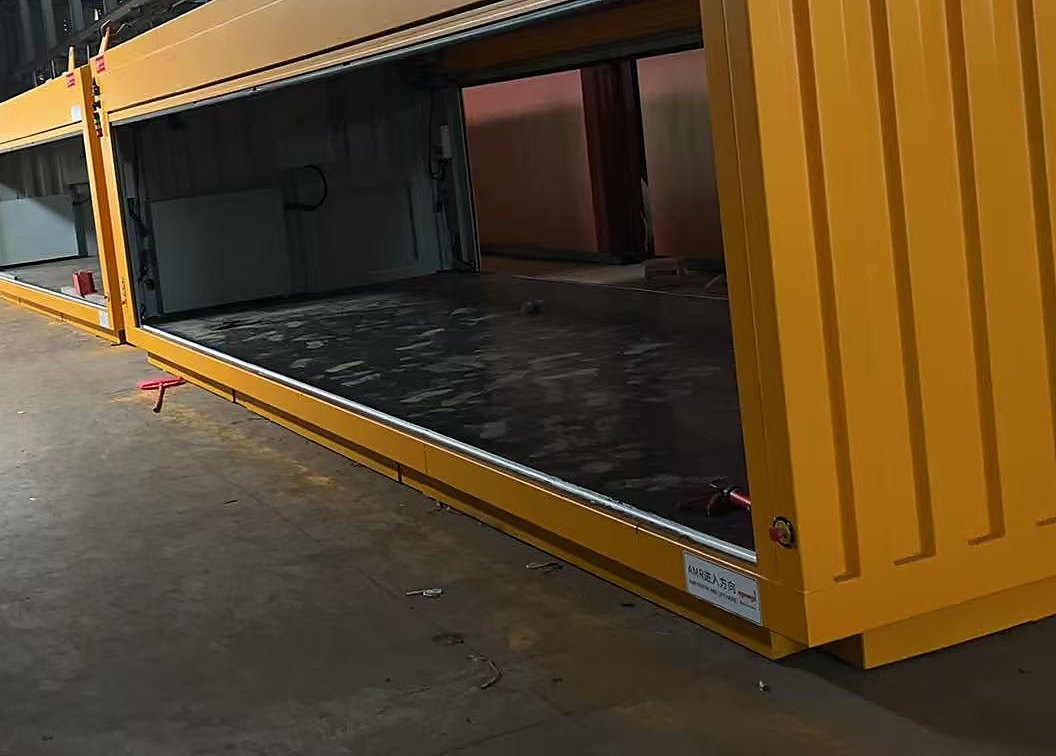
The hinge line is above the opening, under a drip. Water runs off the panel and past the seal instead of standing on it.
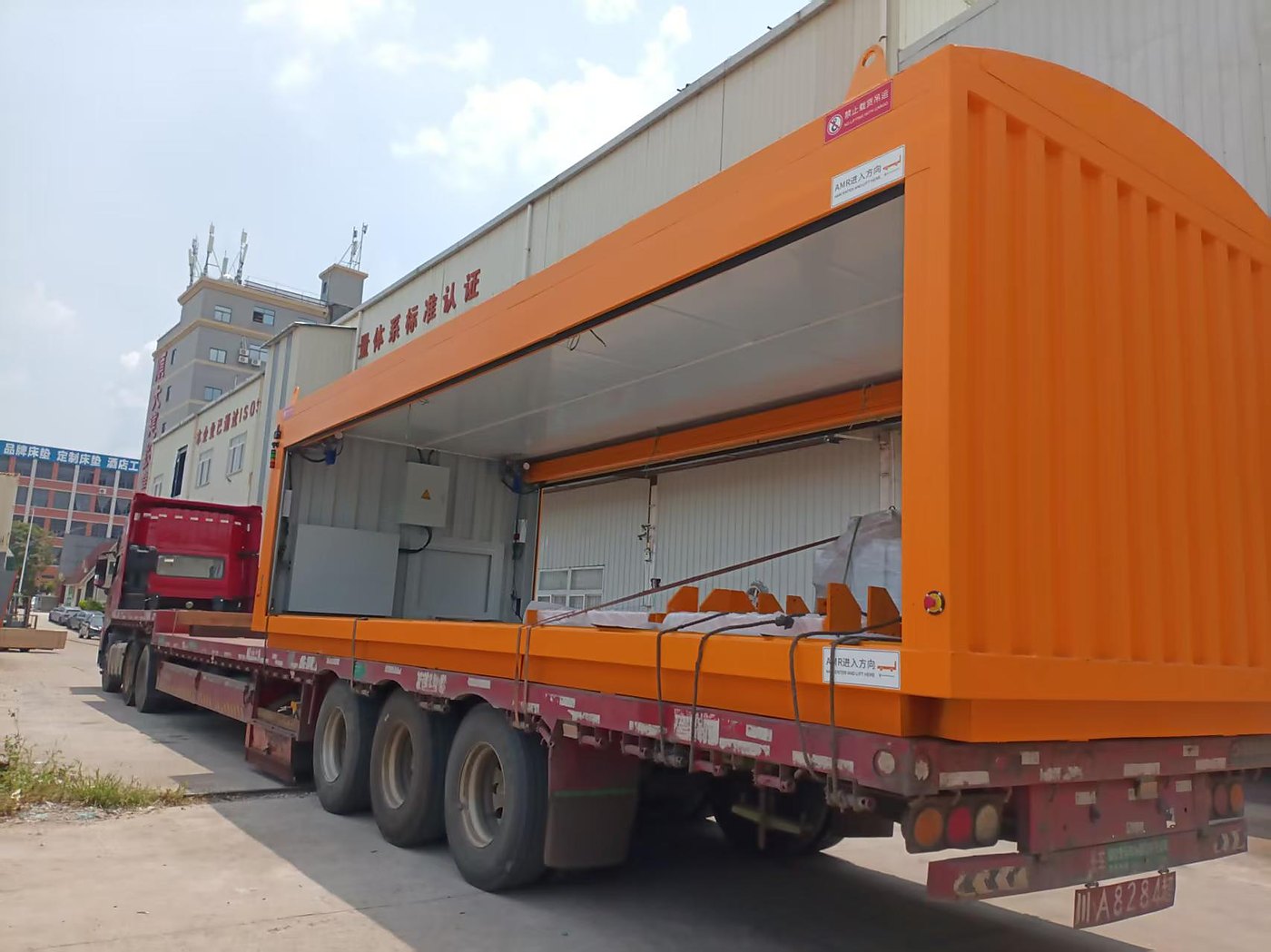
Latched, strapped and sitting on a lowbed. The panel travels closed: an open side is not something to move on a public road.
How it went together
The opening, in four numbers
Counted from the shell. Commercial values are not disclosed.
Open in the shop, closed on the trailer
The products this build maps to
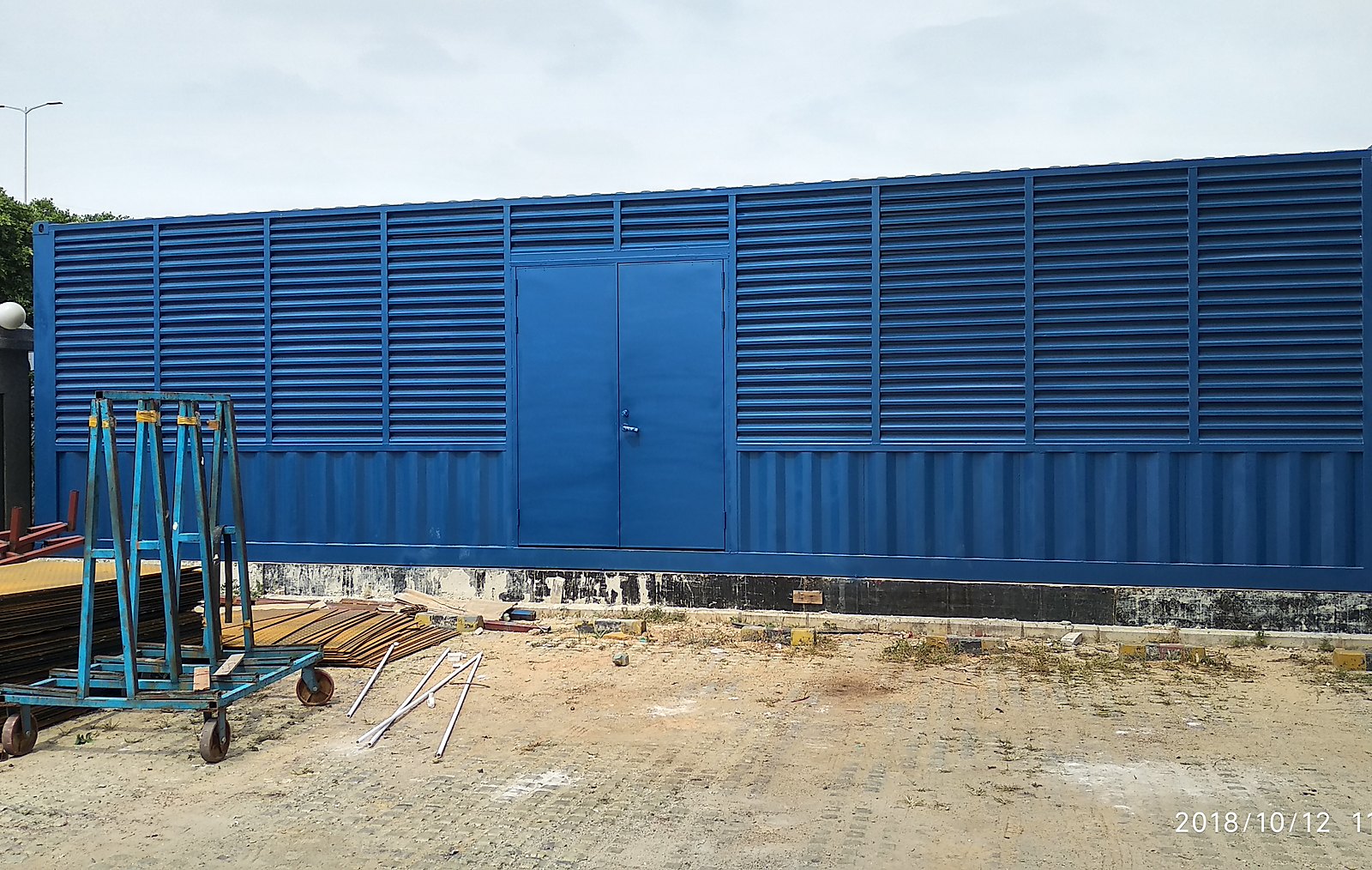
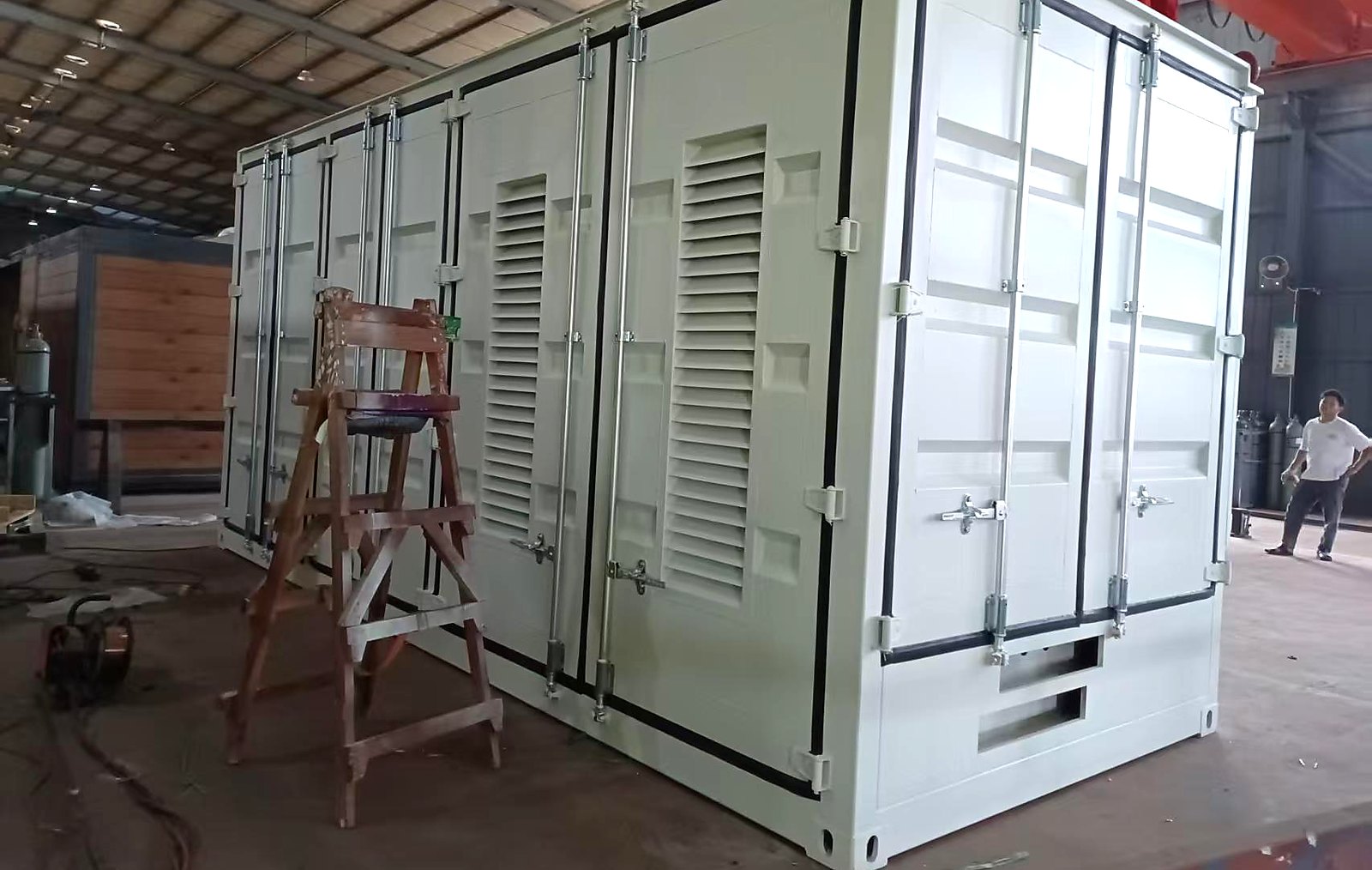
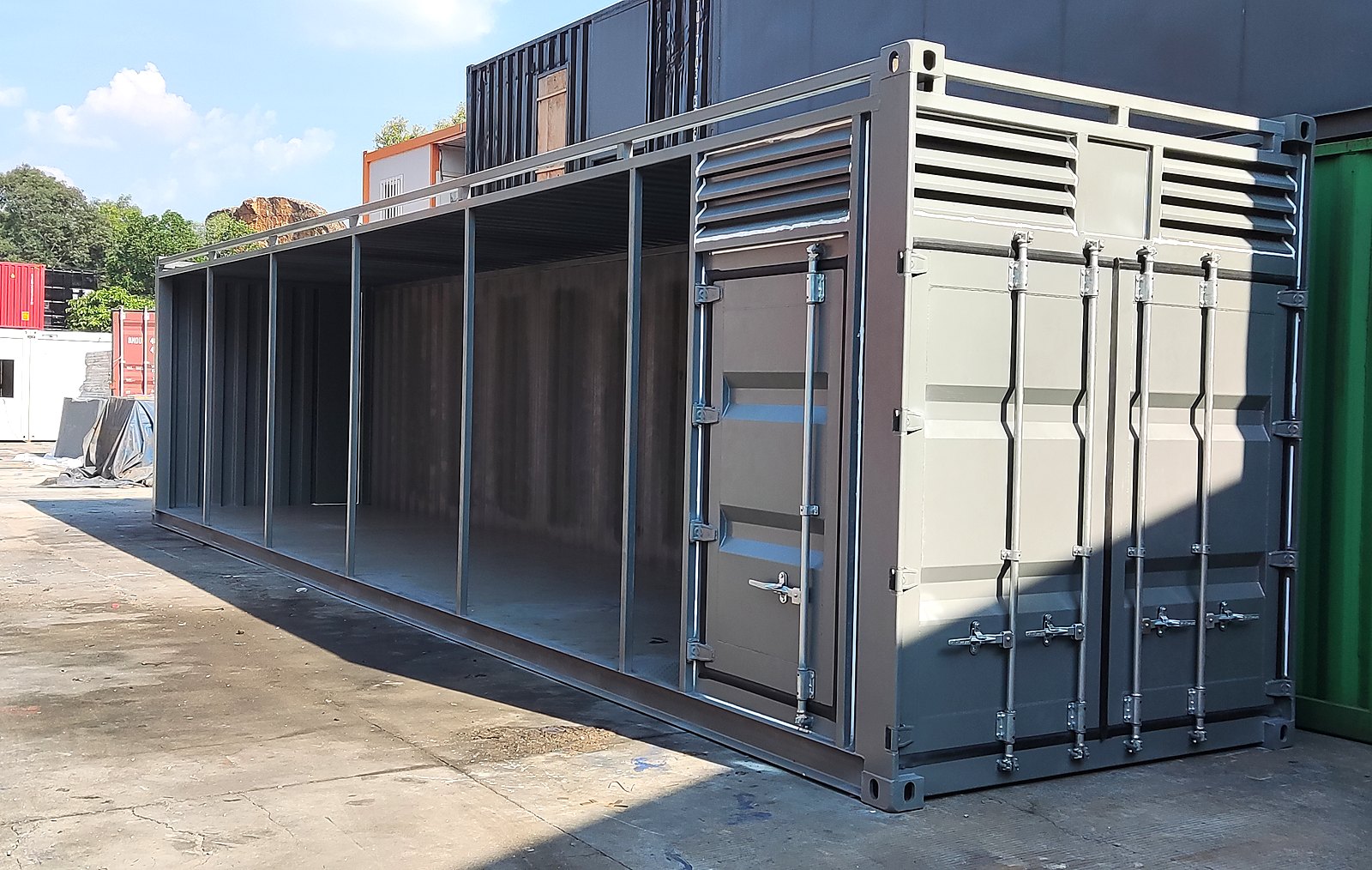
Photographs are from the delivered project. The client is not named and the site is not disclosed. Commercial values are withheld; the figures describe the build as shipped.
Tell us the biggest thing that has to go in.
Height, width and how it is lifted decide the opening; the opening decides the frame. Send those three and the rest follows.