


What it is for
Rotating equipment in a steel box gives you three problems that an office container does not: the floor has to carry the load and the vibration, the heat has to leave, and the noise has to stay in. Get any one wrong and the box is unusable.
A pump skid bolted straight to a container floor transmits vibration into the shell, and the shell becomes a loudspeaker. We build a isolated equipment frame on anti-vibration mounts, sized for the skid you are installing, with the floor plate designed for the point loads.
Ventilation is calculated from the motor losses plus the casing heat, not from the floor area. On a 40 ft box with four 30 kW sets that is a real number, and it is why the louvre area looks larger than you expect.
Where it is typically used
Key specifications
| Shell | 20 ft or 40 ft HC, insulated, with a removable roof panel on request |
| Floor loading | 1,500 kg/m² standard, higher on request with a stated point load |
| Vibration | Isolated equipment frame on anti-vibration mounts, seismic restraint on request |
| Ventilation | Louvres sized from motor losses plus casing heat, with thermostatic fans |
| Cooling | None as standard — ventilation only; cooling on request for control cabinets |
| Acoustic | 65–75 dB(A) at 1 m depending on lining and equipment |
| Drainage | Sloped floor to a gully, bunded where the fluid demands it |
| Lifting | Removable roof panel or a side hatch for pump replacement |
| Power | Distribution, motor starters or VSDs, isolators beside each set |
| Penetrations | Pipe sleeves welded and capped, spare ways for a future set |
| Corrosion | C4 standard; C5-M and stainless wet areas on request |
| Design ambient | −25 °C to +50 °C |
Figures are for the standard configuration and change with the project. Values are design values; acceptance follows the contract technical agreement.
What goes in the box
Installed, wired and tested before dispatch. On site the work is placement and external connections.
Deck plate designed for the point loads of your skid, with grouting points marked.
Anti-vibration mounts and a frame that keeps the vibration out of the shell.
Louvres and thermostatic fans sized from the motor losses, with a filter where the site is dusty.
Sloped floor, gully, sample point and a discharge connection.
Removable roof panel or hatch so a pump can be lifted out without cutting the box.
Distribution, starters or VSDs, isolators, and a control panel space.
Which model to take
| Model | Shell | Sets | Floor | Ventilation |
|---|---|---|---|---|
| EQ-PUMP-20 | 20 ft · 6,058 mm | 1–2 | 1,500 kg/m² | Louvre + 2 fans |
| EQ-PUMP-40 | 40 ft · 12,192 mm | 2–4 | 1,500 kg/m² | Louvre + 4 fans |
| EQ-PUMP-40H | 40 ft · heavy | 2–4 | 2,500 kg/m² | Louvre + 6 fans |
| EQ-AIR-40 | 40 ft · compressor | 2–3 | 1,500 kg/m² | Ducted, high volume |
Standard models are listed. Other capacities are built to order, with two to three weeks added to the standard lead time.
Vibration and heat, in that order, decide whether the box works
The shell is a loudspeaker
Bolt a pump skid directly to a container floor and the corrugated steel becomes a diaphragm. The noise inside the box goes up, the noise outside goes up, and the vibration finds every weld that was not designed for it.
An isolated frame on mounts, with the shell lined where the acoustics demand it, costs a fraction of a noise complaint and a re-weld.
Ventilation from losses, not from floor area
A 30 kW motor at 93% efficiency loses about 2.3 kW as heat, and the pump casing adds more. Four of those in a 40 ft box is roughly 10 kW that has to leave through louvres, and the louvre free area follows from the airflow, not from the wall size.
We calculate it, write it on the drawing, and specify thermostatic fans so the box is not drawing cold air all winter for no reason.
When to use it, when not to
These come from projects rather than general advice. Match your case against them; it is more useful than reading the specification table.
That gives us the losses and the point loads.
We build a removable roof panel or a hatch.
Acoustic lining and isolated mounts are standard options.
That needs a classified enclosure with gas detection — a different design.
A container has no basement; that is a civil structure.
From contract to energisation
Pump or compressor datasheet, motor kW, point loads, fluid, ambient, noise limit.
Layout, ventilation calculation, floor plate drawing in 5–7 days.
Drawing release and deposit; fans and acoustic lining ordered.
30–45 days: shell, floor, isolated frame, ventilation, electrical.
Ventilation and noise test record, as-built drawing, O&M file.
On site and in detail
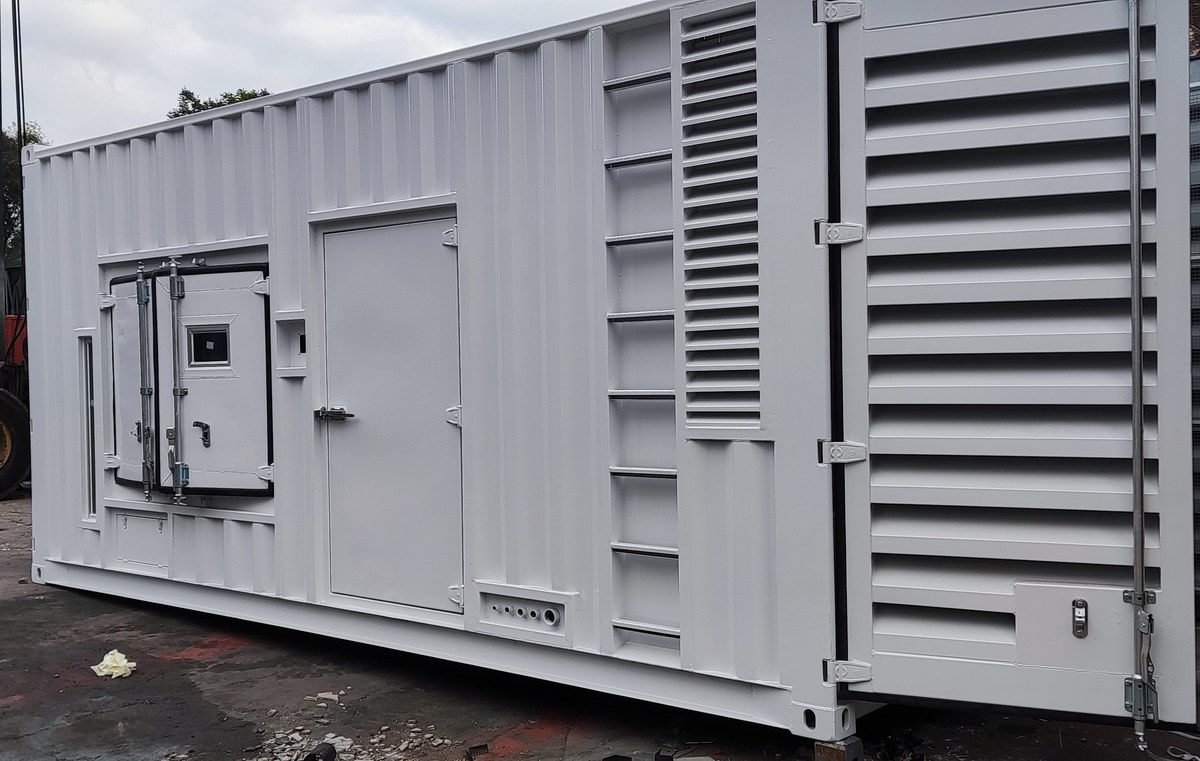
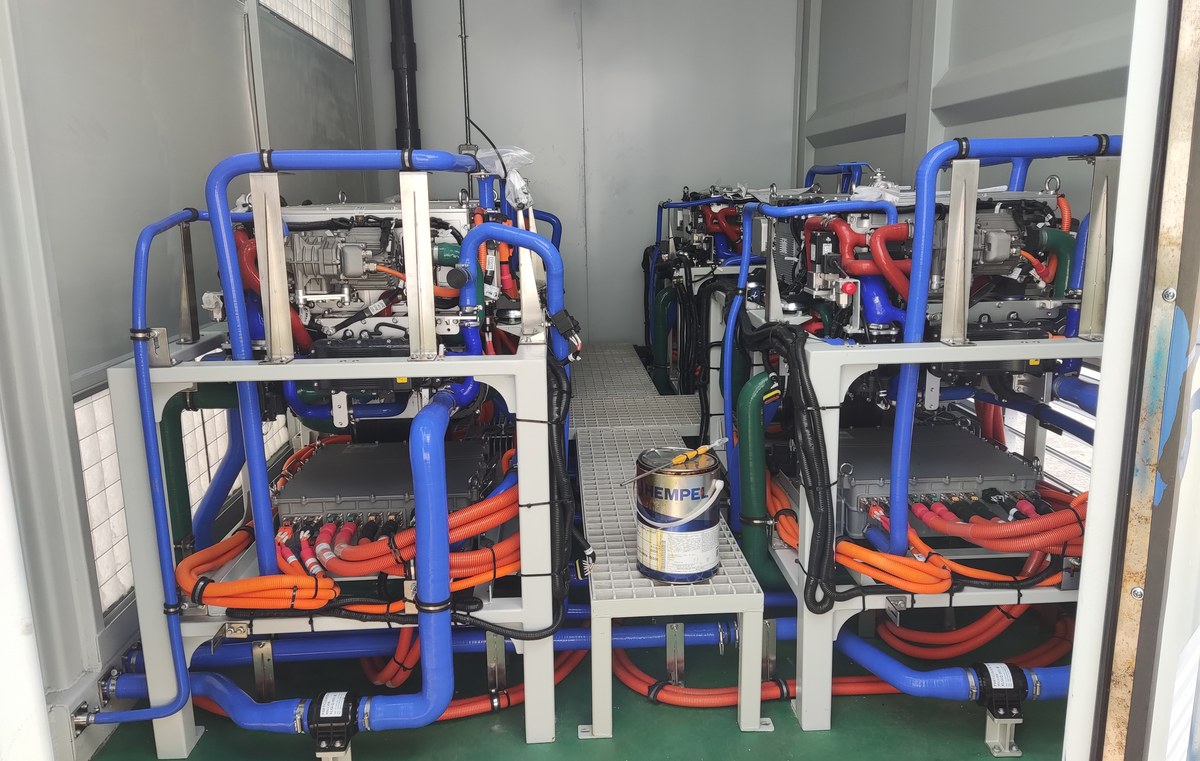
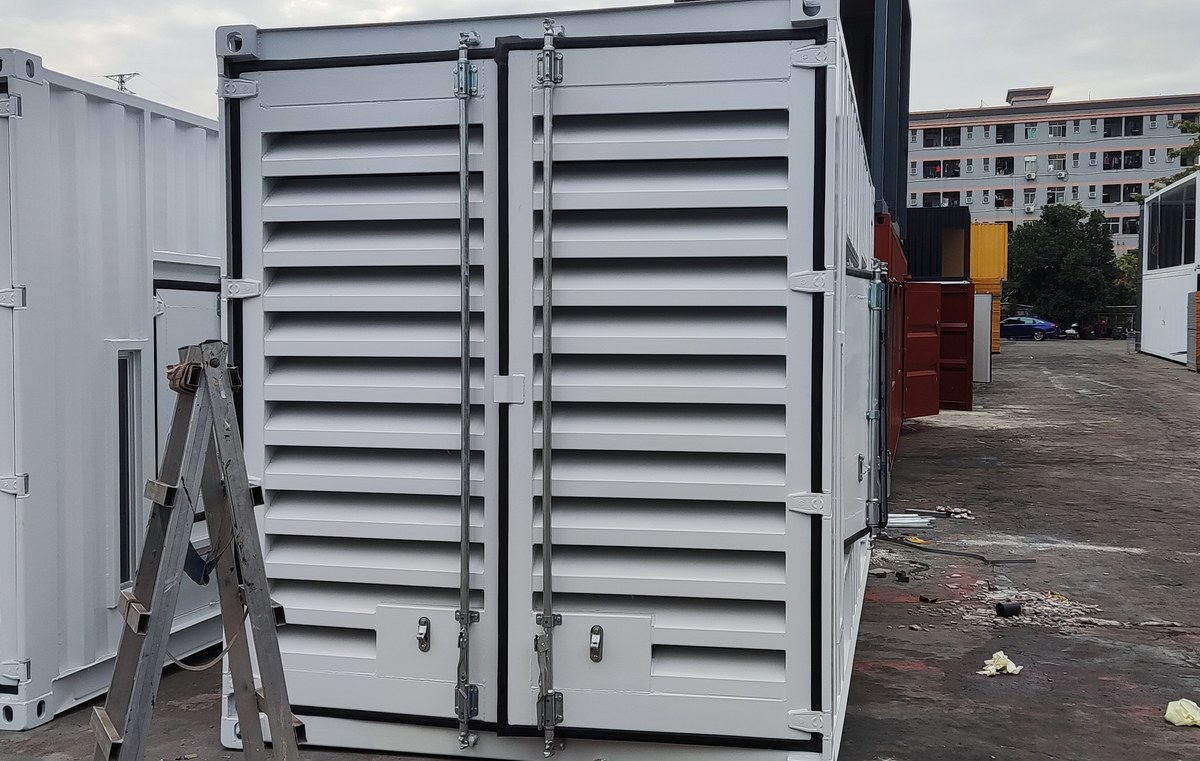
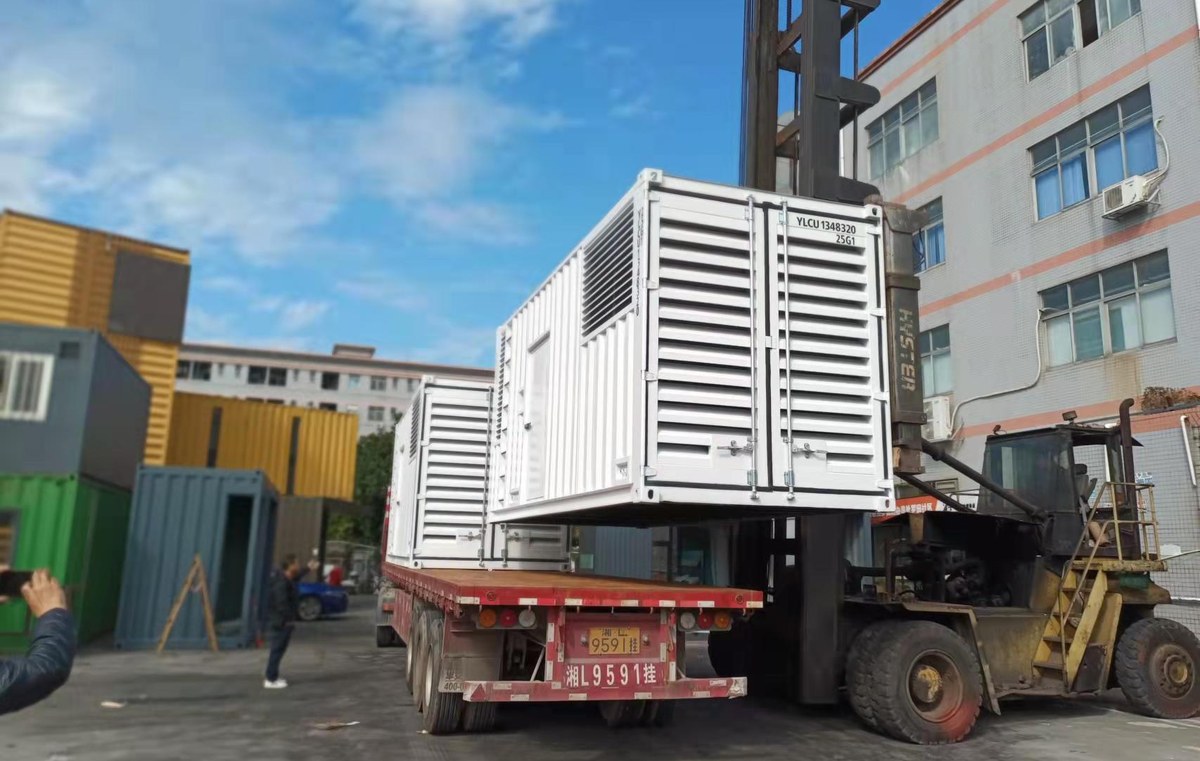
Some images are scheme illustrations and renders showing structure and layout. Final delivery follows the contract drawings.
What customers ask most
Can we install our own pumps?
Yes, and most customers do. We build the floor, the isolated frame, the sleeves and the ventilation around your datasheet, and you install the set.
How do we get a pump out later?
A removable roof panel on the 40 ft, or a side hatch on the 20 ft. Tell us the largest item and we will size the opening.
What noise level is realistic?
65–75 dB(A) at one metre with lining and isolated mounts. Below 65 needs a residential-grade enclosure and a different budget.
Is a fire rating needed?
For a fire pump house, usually yes, to the local standard. Send the requirement and we will quote to it rather than around it.
Can it be buried or partially buried?
Not our standard build. Below-grade installation changes the structural and waterproofing design completely.
Ask for a scheme for your site
Send the capacity, rack count, site conditions and local climate. You get a layout, a single-line diagram and a price, at no charge, revised until it works.