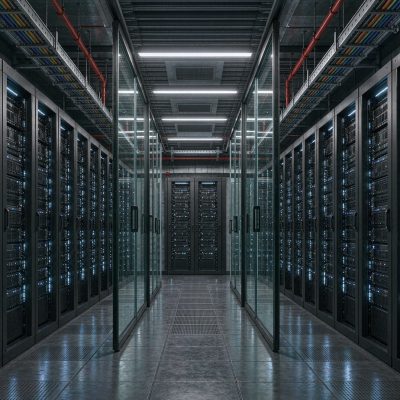


What it is for
The problem with a single enclosure is that IT equipment and electrical plant share one space. Heat, dust and electromagnetic interference all mix, the UPS and switchgear generate their own heat, and they occupy floor positions that could hold racks.
The twin module splits the two functions. The IT enclosure holds racks and cooling only; the power enclosure holds UPS, distribution and batteries. A prefabricated cable tray or busbar links them across an adjustable 1.5–3 m.
There are three gains. All the cooling in the IT enclosure goes to racks rather than to switchgear. Batteries are physically separated from IT equipment, so a thermal event stays contained. And the power enclosure can be serviced without stopping the IT enclosure.
The cost is a second enclosure, a second foundation and a link between them, which comes to roughly 12%–18% more than a single enclosure of the same capacity. Maintainability and safety, however, move up a category.
Where it is typically used
Key specifications
| Module configuration | 20 ft IT module plus 20 ft power module |
| Racks | 6 standard / 7 compact |
| Power per rack | 10–30 kW |
| Total IT load | 200–250 kW |
| UPS | 400 kVA modular, 15 minutes autonomy |
| Cooling | 2 × 35 kW, N+1, sealed cold aisle |
| Link | Prefabricated tray and busbar, 1.5–3 m |
| Fire | Independent detection in each enclosure, shared cylinder bank |
| Protection | IP54 |
| Footprint | About 55 m² including both enclosures and the link |
Figures are for the standard configuration and change with the project. Values are design values; acceptance follows the contract technical agreement.
What goes in the box
Installed, wired and tested before dispatch. On site the work is placement and external connections.
Six racks, cold aisle, two 35 kW cooling units, sprinkler heads.
400 kVA UPS, incoming and outgoing panels, ATS, battery racks.
Prefabricated tray or busbar, fire-stopped where it passes through, demountable.
Cylinders in the power module, pipework run to the IT module in two zones with independent valves.
Sensors in both enclosures, one controller.
Which model to take
| Model | IT load | Racks | UPS | Cooling |
|---|---|---|---|---|
| PAIR20-200 | 200 kW | 6 | 400 kVA | 2 × 30 kW |
| PAIR20-250 | 250 kW | 6 | 400 kVA | 2 × 35 kW |
| PAIR20-250H | 250 kW | 7 | 400 kVA × 2 | 2 × 35 kW |
Standard models are listed. Other capacities are built to order, with two to three weeks added to the standard lead time.
Where the single point of failure sits in a twin module
Separated, but not completely
Splitting IT and power into two boxes looks like two independent pieces of equipment. In practice they only work connected, and that connection becomes the new single point of failure.
The busbar is the usual culprit: a 1.5 m copper run through a wall between the two enclosures. Unprotected and unredundant, its failure stops the system. The industry answer is either dual busbars or a link section built as a quick-replace plug-in.
Water is the second. If the IT module uses chilled water, the pipe crosses from the cooling or power module. Insulation, waterproofing and frost protection at that penetration are the easiest things on site to get wrong.
Communication is the third. The two monitoring controllers talk over one cable, and if it breaks the alarms stop leaving the site. Use a wireless backup or dual routing.
Why it is still worth doing
Because it moves the biggest risk out of the way. Battery thermal runaway is one of the most dangerous failures in a data centre: a lithium fire reaches over 800 °C and is hard to extinguish. With the battery in another enclosure behind a fire wall, at minimum it is not burning the servers directly.
Then there is maintenance. Annual UPS service involves a transfer, and with the UPS in the same box as the IT, people and tools move past the racks and things get unplugged. Separated, that problem disappears.
And capacity. Leave 20% headroom in the power module and racks can be added later without replacing electrical plant; conversely the power module can be upsized without touching the IT module.
When a twin module is the wrong answer
Below 150 kW. The fixed cost of two enclosures, two foundations, the link and the fire system cannot be spread, and a single enclosure is cheaper.
When the site is very tight. A twin module with its link needs 55 m²; a single enclosure needs 30 m².
And if the customer already has a standalone switch room, they should buy only the IT module and take power from the switch room. That is the cheapest option and one we recommend routinely.
When to use it, when not to
These come from projects rather than general advice. Match your case against them; it is more useful than reading the specification table.
A twin module has the best overall value here, and both safety and maintainability move up a level.
The fixed cost does not amortise. Use a single enclosure or the AIDC-40.
Buy the IT module only and take power from the switch room. Cheapest route.
Take the AIDC-40 and accept IT sharing a box with power.
From contract to energisation
Capacity, rack count, link length, dual path or not.
Layout of both enclosures, link section, foundation drawings.
Both enclosures built in parallel and integrated before dispatch.
The two enclosures run connected at full load, transfer tested.
Placement, connection, fire stopping, energisation.
On site and in detail
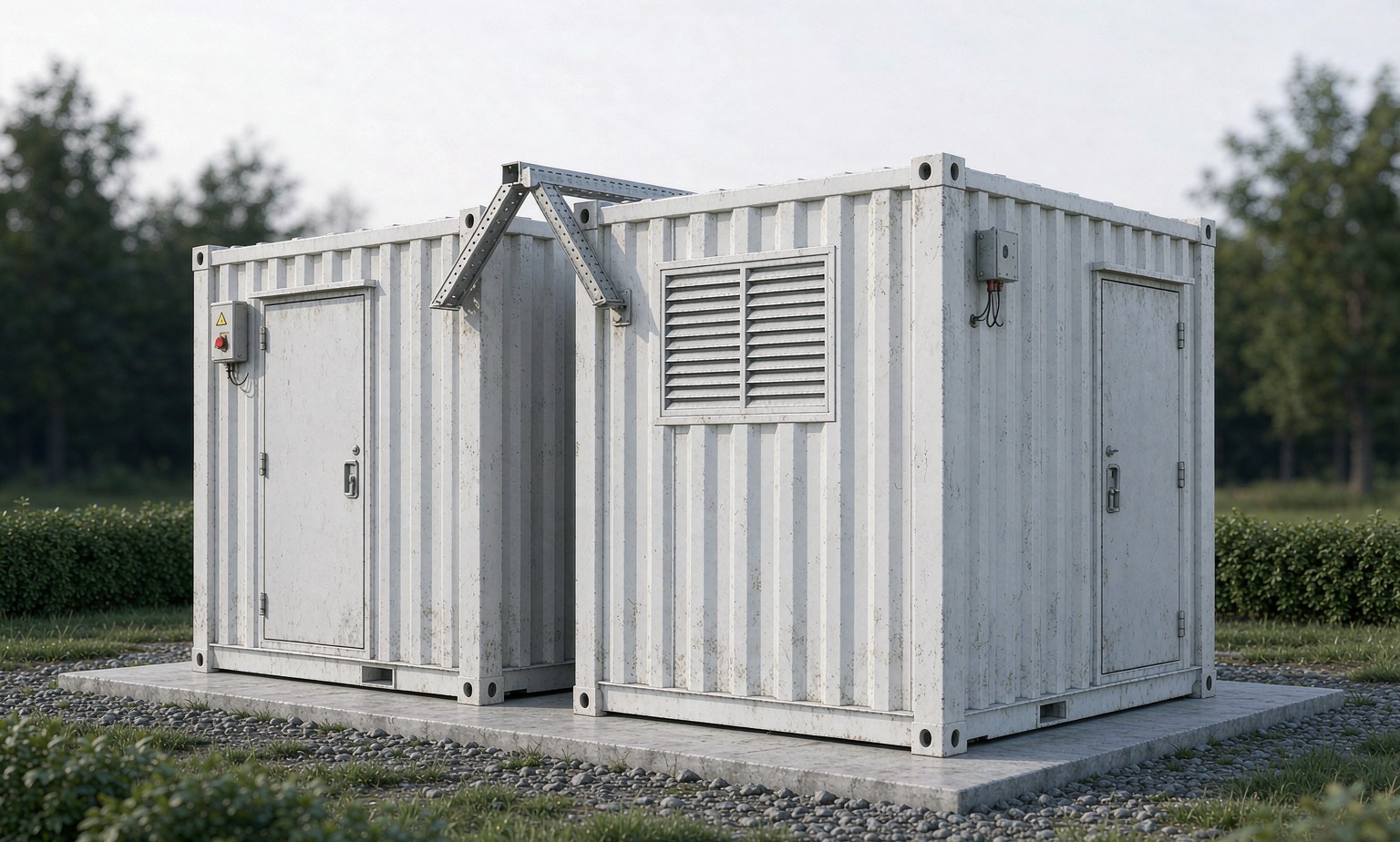
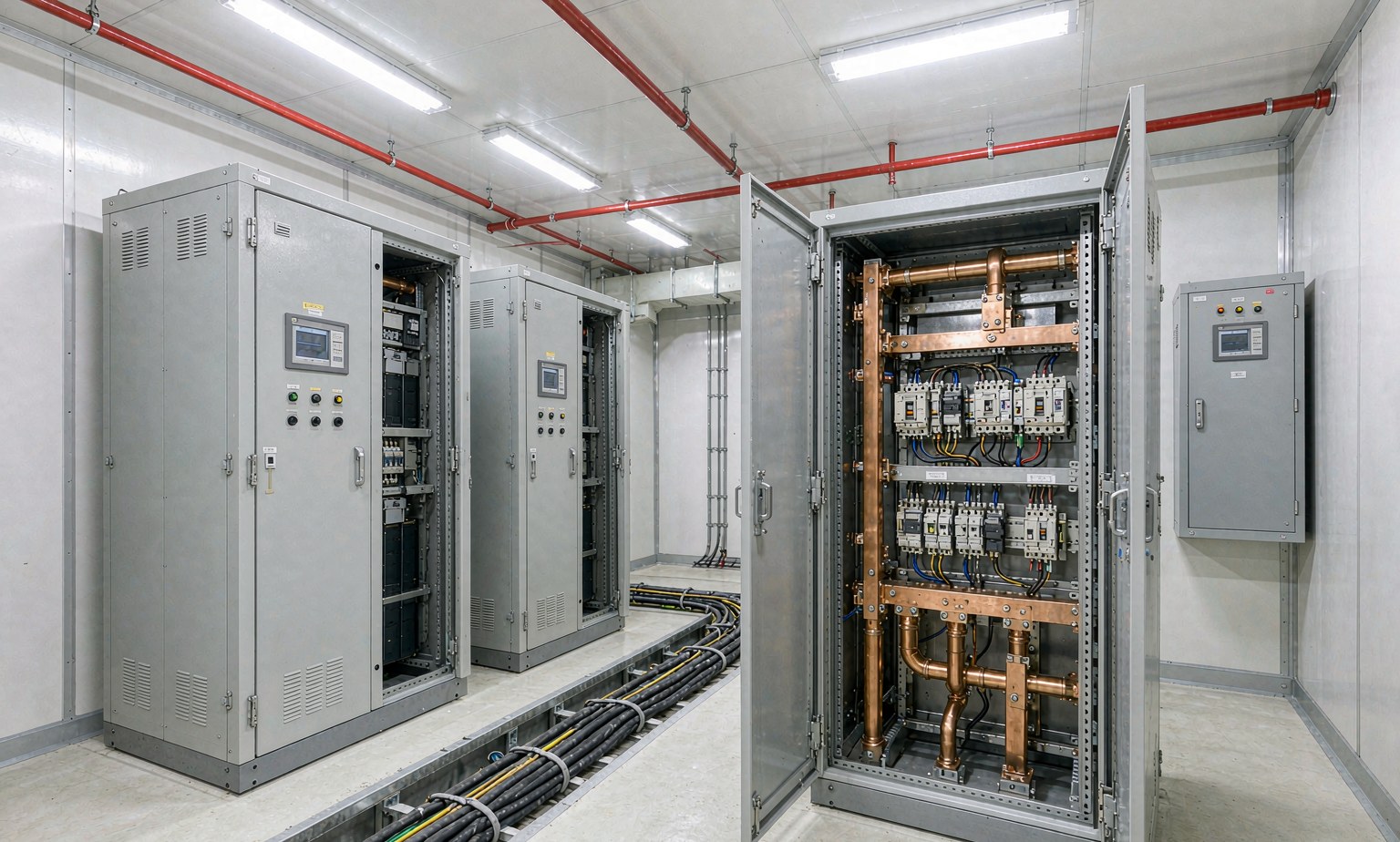
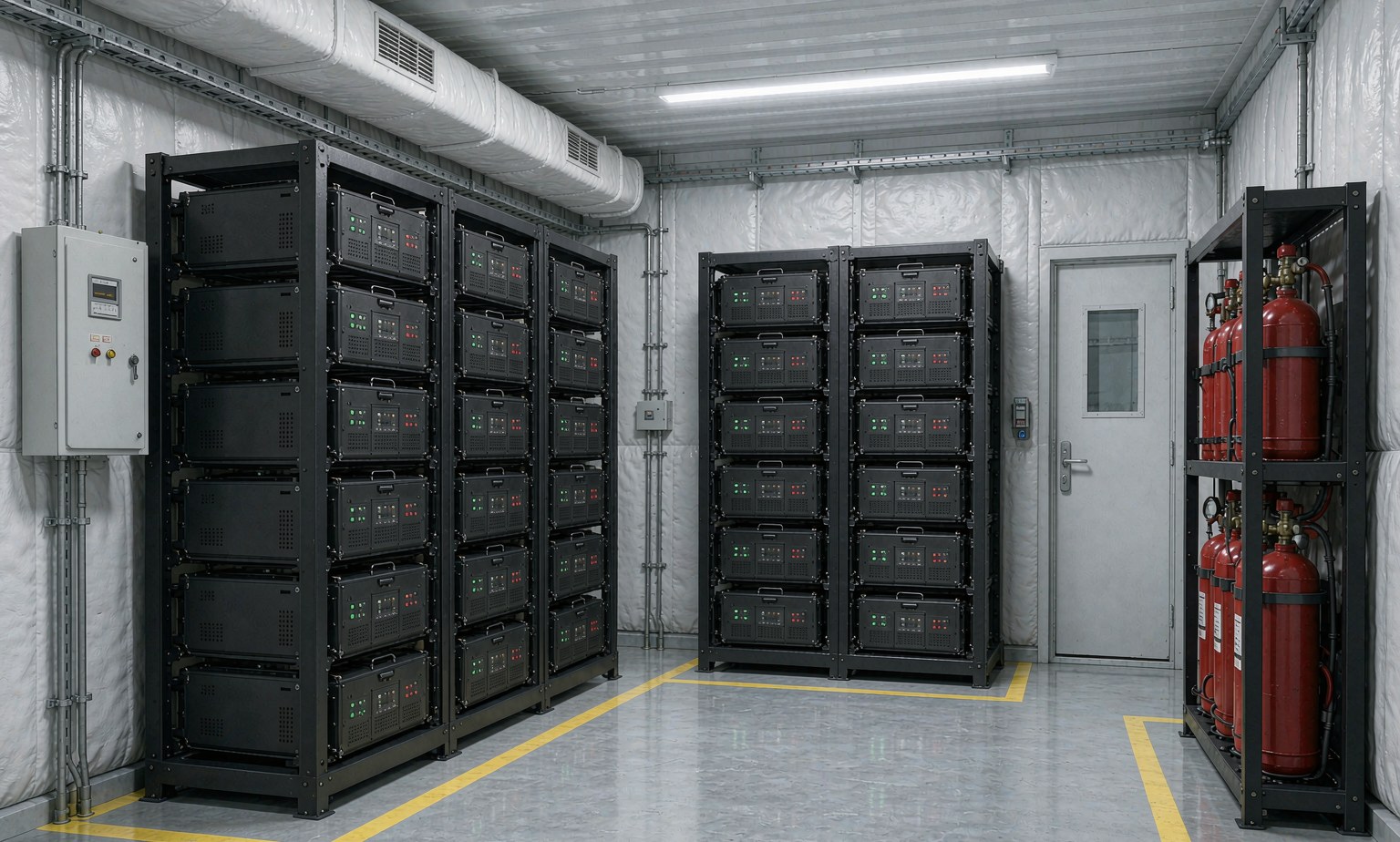
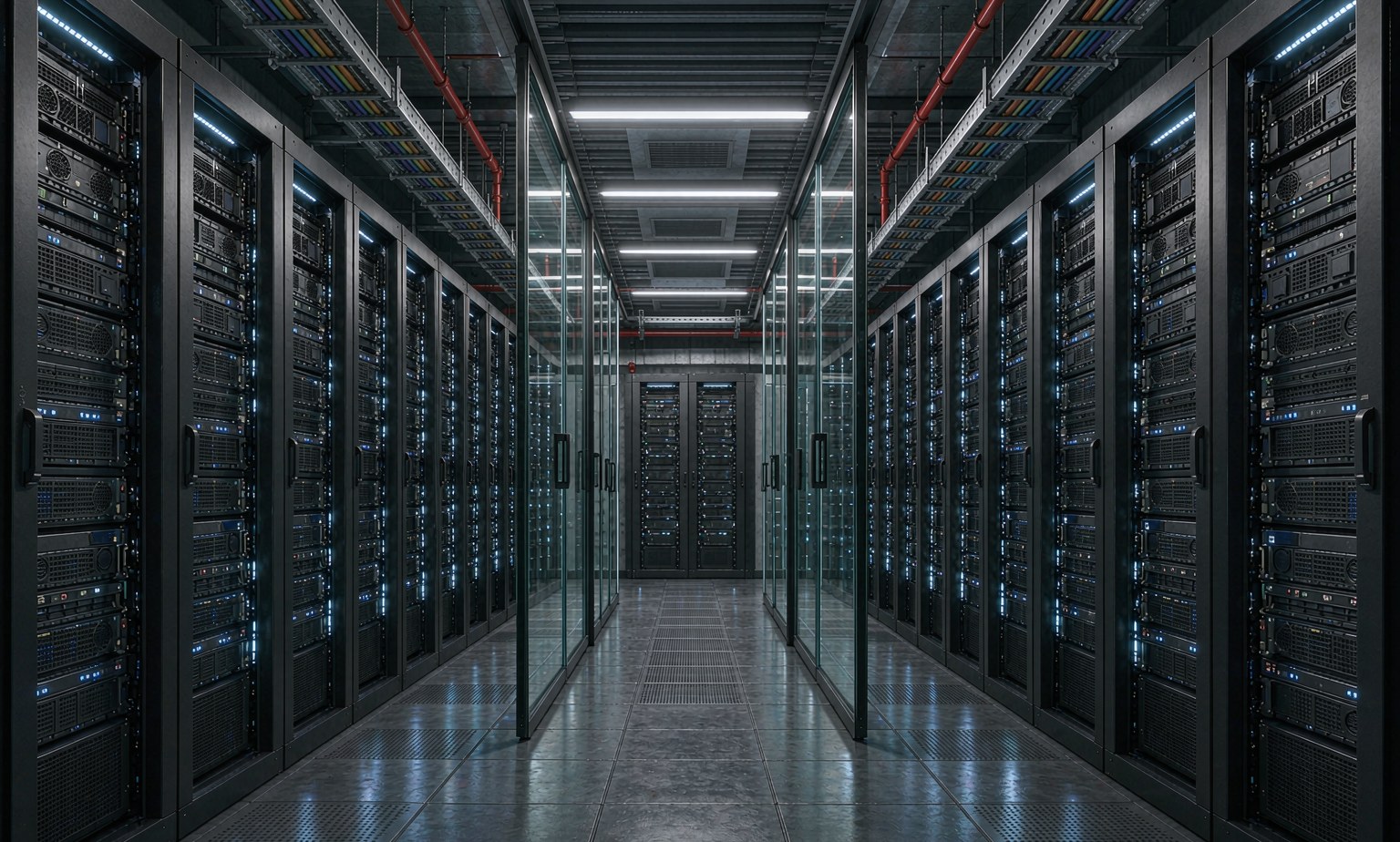
Some images are scheme illustrations and renders showing structure and layout. Final delivery follows the contract drawings.
What customers ask most
Do the two enclosures have to be side by side?
No. They can be arranged in an L, or separated by a wall. The link can run to 5 m; beyond that it becomes cable or busway and the price changes.
Can one enclosure be IT and the other cooling?
Yes, sold as an IT plus cooling pair, which suits sites with no chilled-water source. The cooling module needs its own footprint and is noisy, so keep it away from housing.
Are batteries safe in the power enclosure?
Safer than in the IT enclosure, but a separate battery enclosure is better still. Above 200 kWh we recommend three enclosures: IT, power and battery.
Does the link need fire stopping?
Yes. Seal the penetration with intumescent compound or board rated at least as long as the enclosure itself. Acceptance will check it.
Can the two be shipped separately?
Yes. Both are standard 20 ft units on a normal flatbed, no abnormal-load permit needed.
Ask for a scheme for your site
Send the capacity, rack count, site conditions and local climate. You get a layout, a single-line diagram and a price, at no charge, revised until it works.