

What it is for
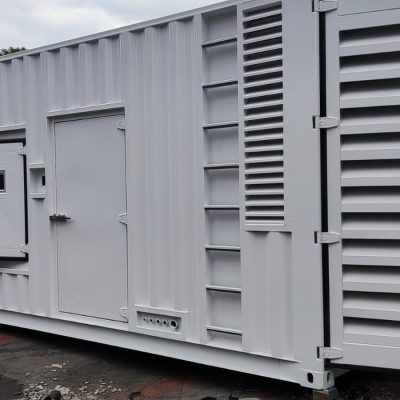
A generator in a container has two problems to solve at once: the radiator has to move enough air to keep the set cool, and the box has to be quiet enough for the site it stands on. Those two requirements fight each other, and the box that loses is the one built by cutting a hole and bolting on a grille.
We build the airflow path first — intake louvre, turning vanes, radiator duct, discharge — and then line the box to hit the noise figure, because attenuation added afterwards always costs more than attenuation designed in.
The electrical room goes at the other end: switchgear, protection relays, a metering panel and a cable entry with spare ways. Factory-wired and tested, so on site the work is the fuel connection, the exhaust and the cable termination.
Where it is typically used
Key specifications
| Shell | 20 ft or 40 ft HC, CSC plate, new-build frame on request |
| Set range | 200–1,500 kVA diesel; gas sets on request |
| Acoustic rating | 65–75 dB(A) at 1 m, 55–65 dB(A) at 10 m depending on lining |
| Air path | Intake louvre with filters, radiator duct, discharge plenum, all sized to the fan curve |
| Day tank | 500–2,000 L integral, bunded, with level gauge and low-level alarm |
| Exhaust | Critical silencer inside the box, stainless flex, wall penetration with thermal sleeve |
| Switchgear | LV panel with main breaker, ATS or manual changeover, metering and protection |
| Ventilation | Thermostatic fans or louvres, interlocked to the set run signal |
| Fire | Detection and clean agent on request; fuel shut-off interlock as standard |
| Corrosion | C4 three-coat epoxy standard, C5-M for coastal |
| Noise doors | Acoustic doors with double seals and a service door at each end |
| Design ambient | −20 °C to +50 °C, derating stated for altitude above 1,000 m |
Figures are for the standard configuration and change with the project. Values are design values; acceptance follows the contract technical agreement.
What goes in the box
Installed, wired and tested before dispatch. On site the work is placement and external connections.
Container or new-build frame lined with mineral wool and perforated sheet, sealed at every joint.
Louvres, filters, radiator duct and discharge plenum, calculated against the set fan curve.
Bunded day tank, fill point with spill containment, level gauge and low-level alarm.
Critical or residential silencer, stainless flex section, insulated penetration.
Switchgear, ATS, metering, protection and a cable entry with spare ways.
Set controller, remote start terminals, alarm contacts to the site system.
Which model to take
| Model | Shell | Set size | Noise | Fuel |
|---|---|---|---|---|
| EQ-GEN-20 | 20 ft · 6,058 × 2,438 | 200–500 kVA | 65–70 dB(A) @ 1 m | 500–1,000 L |
| EQ-GEN-40 | 40 ft · 12,192 × 2,438 | 500–1,250 kVA | 70–75 dB(A) @ 1 m | 1,000–2,000 L |
| EQ-GEN-40S | 40 ft · split rooms | 500–1,250 kVA | 65–70 dB(A) @ 1 m | 1,000–2,000 L |
| EQ-GEN-GAS | 40 ft · gas | 200–800 kWe | 70–75 dB(A) @ 1 m | Gas train, no day tank |
Standard models are listed. Other capacities are built to order, with two to three weeks added to the standard lead time.
The radiator decides the louvre area, and the louvre decides the noise
Free area, not louvre size
A louvre quoted at 1 m² gives you roughly 0.5 m² of free area once the blades are in it. Radiator airflow is quoted in m³/s against a pressure drop, and if the free area is too small the set derates or overheats — quietly, and only on the hottest day.
We calculate the free area from the set fan curve and add the filter and duct losses, then check that the louvre size still fits the acoustic target. If it does not, the box gets a taller discharge plenum rather than a hole.
Attenuation is a lining decision, not a door decision
The difference between 75 and 65 dB(A) at one metre is usually 50 mm more mineral wool, a sealed double door and a ducted discharge — decided at design, priced into the shell.
Acoustic kits bolted on afterwards cost more, look like kits, and rarely hit the number the site permit asked for.
When to use it, when not to
These come from projects rather than general advice. Match your case against them; it is more useful than reading the specification table.
Those three numbers size the box.
We can quote to a dB(A) figure at a stated distance and test it before dispatch.
One delivery, one interface, one set of drawings.
That is a power station, not a container — a different structural and ventilation problem.
Then you need acoustic treatment and ducting, not a container.
From contract to energisation
Set make and model, kVA, fan curve, noise limit, fuel volume, voltage.
General arrangement, airflow calculation and acoustic prediction in 5–7 days.
Drawing release, deposit, set ordered if we are sourcing it.
35–50 days: shell, lining, air path, fuel tank, electrical, factory run test.
Load test at the site rating, noise measurement, as-built drawing and O&M file.
On site and in detail
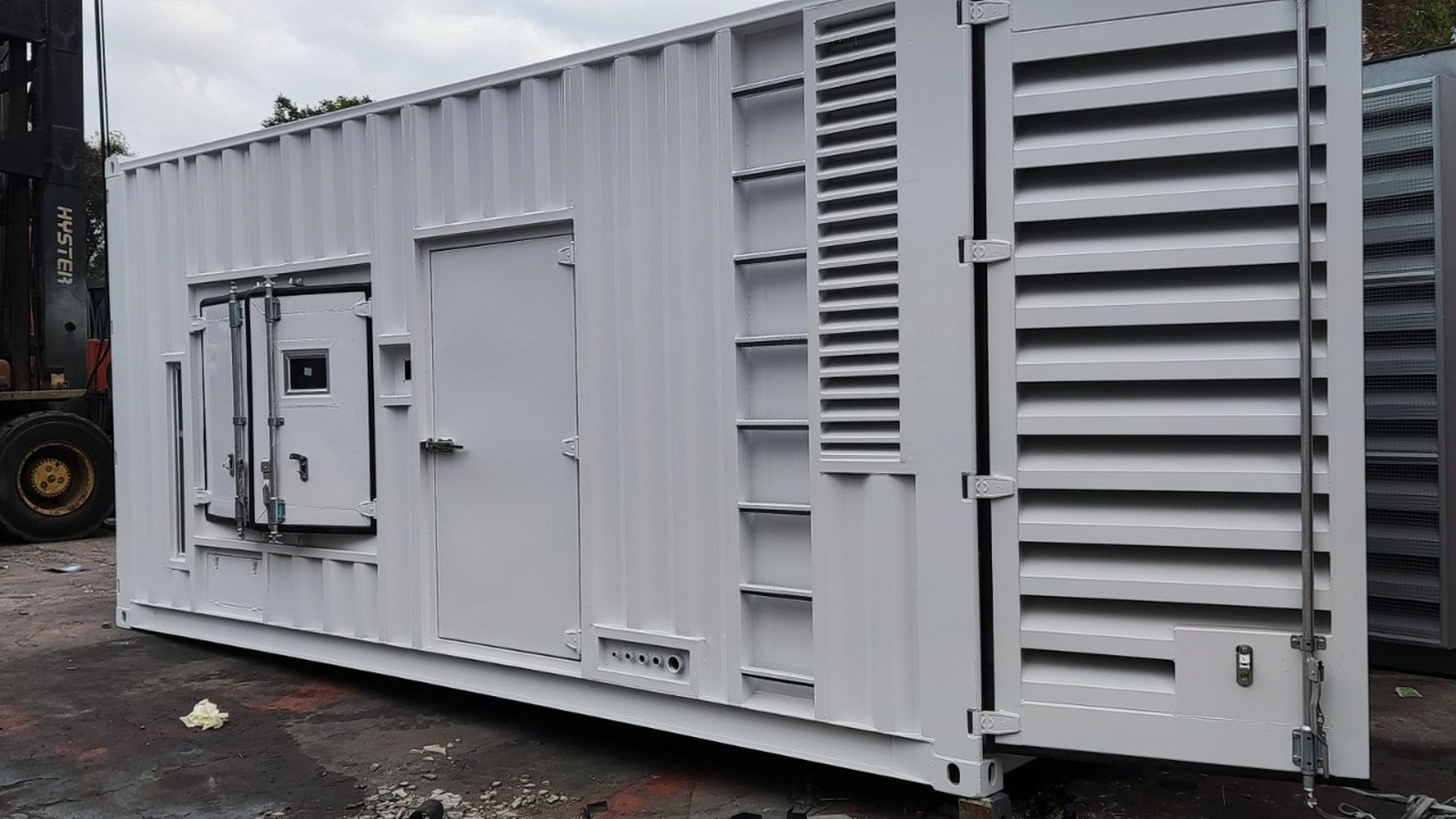
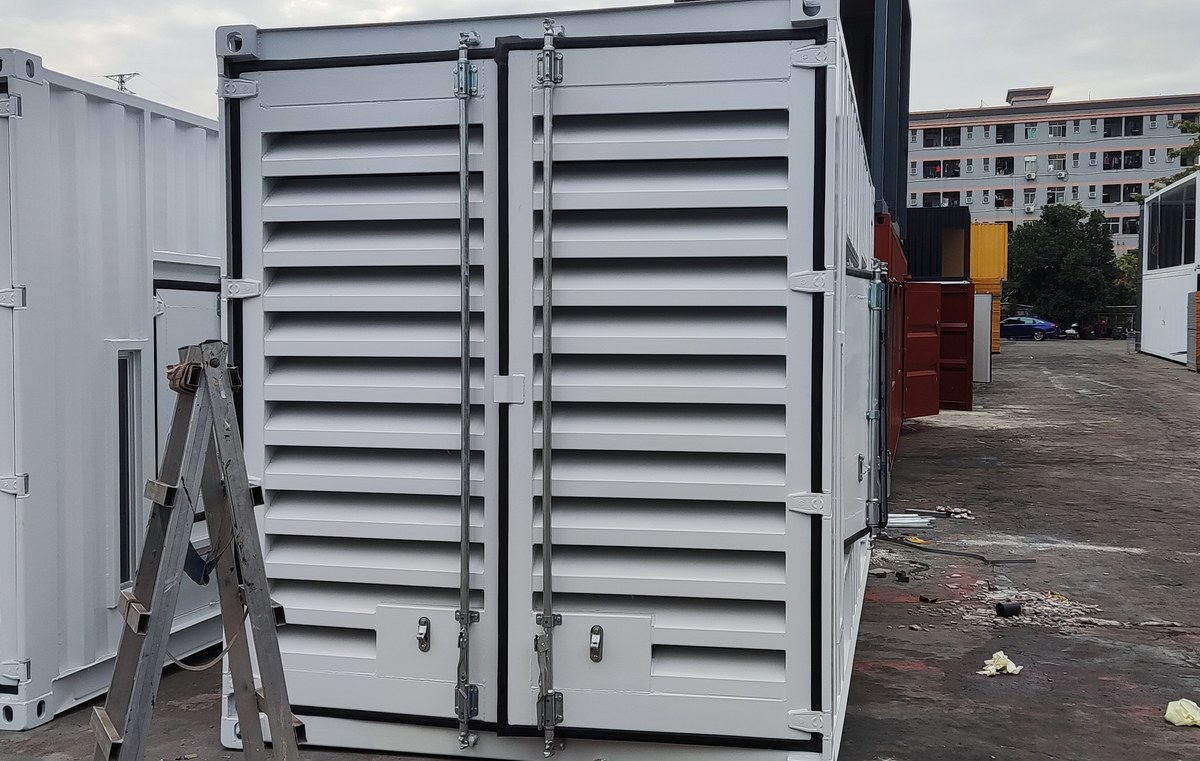
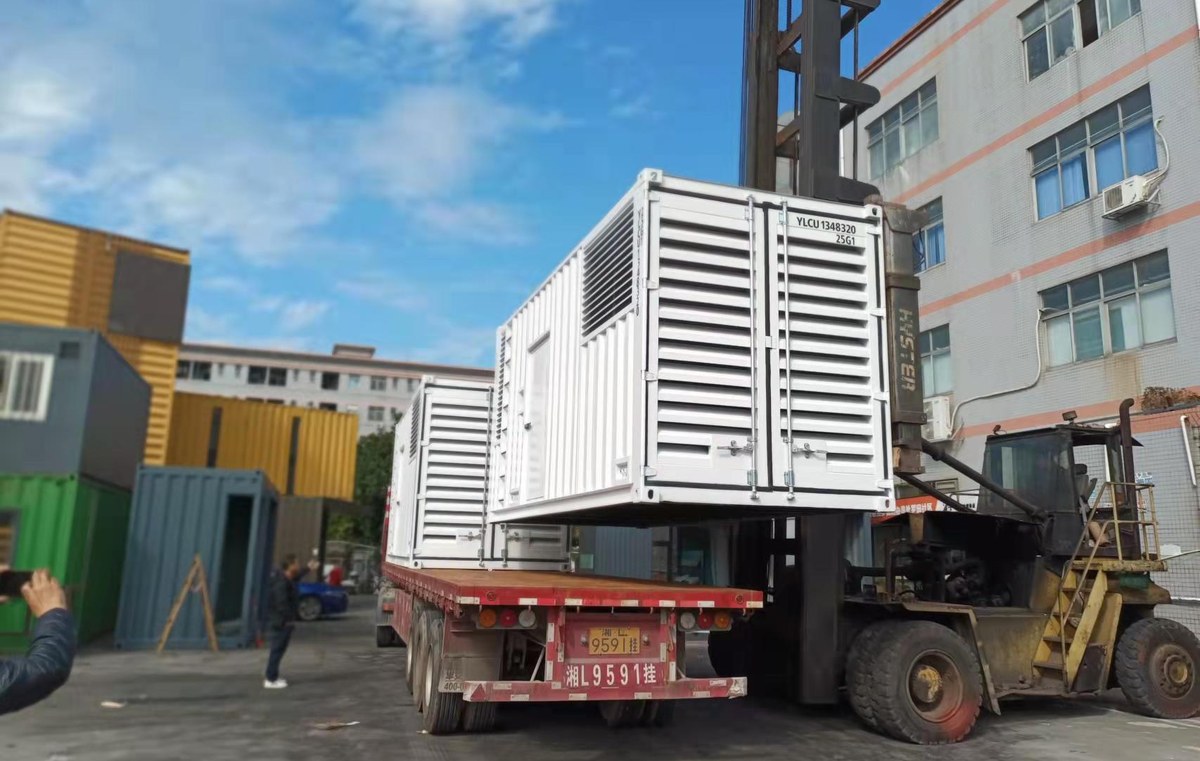
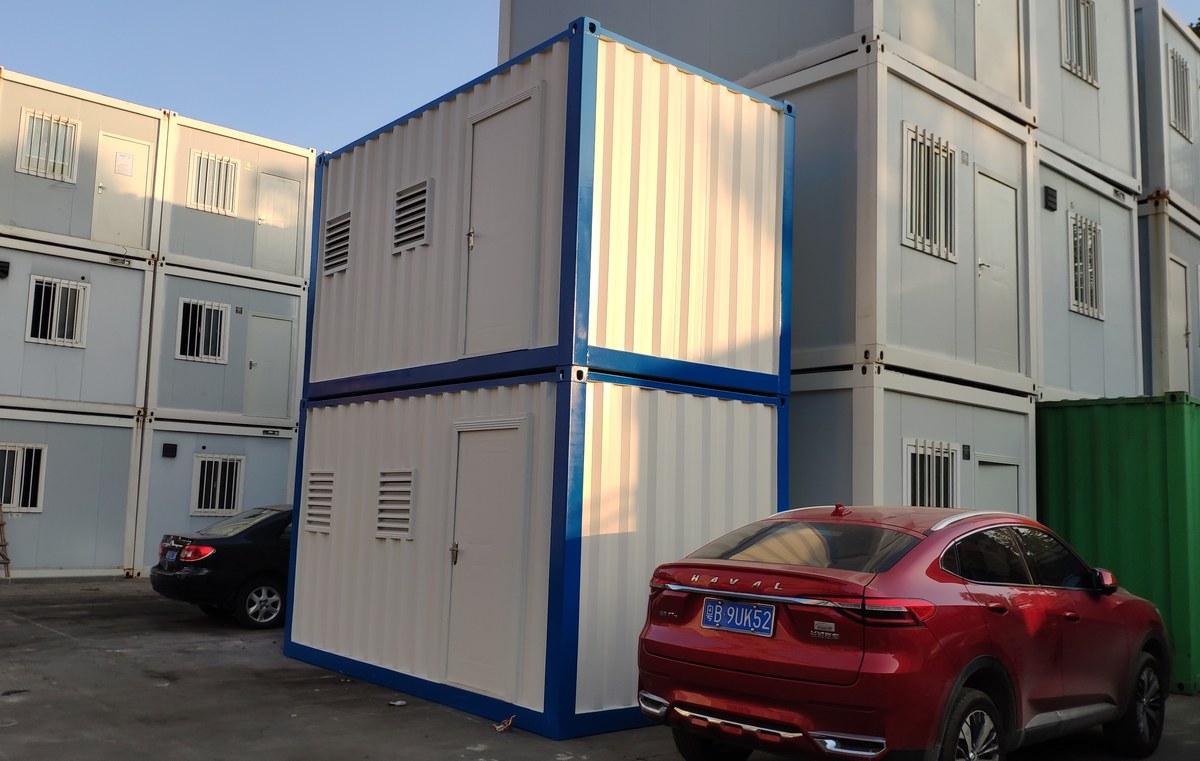
Some images are scheme illustrations and renders showing structure and layout. Final delivery follows the contract drawings.
What customers ask most
Do you supply the generator set?
We can, as a named make with a model number so you can price it independently. Many customers supply their own set and we build the room around it.
How quiet can you make it?
65 dB(A) at one metre is achievable on a 40 ft box with a split-room layout. Below that you are looking at a residential-grade enclosure, which is a different product.
What about the exhaust?
Critical silencer inside the box, stainless flex and an insulated wall penetration. The stack height above the roof is a site decision and we will draw it.
Can it run on gas?
Yes, on a 40 ft shell with a gas train instead of a day tank. Ventilation and detection change with the fuel, so the drawing is not the diesel one.
Does the tank need bunding?
Yes, and it is integral. Fill point, spill containment and a low-level alarm are standard, because a fuel spill is an environmental incident, not a maintenance item.
Ask for a scheme for your site
Send the capacity, rack count, site conditions and local climate. You get a layout, a single-line diagram and a price, at no charge, revised until it works.