


What it is for
The IT module is the building block of the range. It handles racks, the cold aisle, cable management and sprinkler heads. Power comes from outside and cooling comes from outside.
It is designed that way to work with infrastructure the customer already has. If there is a switch room, a chiller plant and generators, and the only thing missing is floor space, buy the IT module and bring power and water to it.
It also runs the other way: buy the IT module now to get the service live, and add the power and cooling modules next year. The real value of modularity is not speed, it is being able to buy in stages.
Three lengths. 10 ft takes two racks for a small branch, 20 ft takes four, 40 ft takes seven to nine. Rack count follows aisle width rather than floor area: two rows need at least 1.2 m between them or a loaded trolley will not pass.
Where it is typically used
Key specifications
| Length | 10 ft (3.0 m) / 20 ft (5.9 m) / 40 ft (12.03 m) |
| Racks | 2 / 4 / 7–9 at 600 × 1200 × 2000 mm |
| Power per rack | 8–25 kW air-cooled / 30–60 kW liquid-cooled |
| Total IT load | 80 kW / 150 kW / 250–500 kW |
| Cooling interface | Chilled water DN50 flow and return, or duct connection |
| Air distribution | Underfloor supply with sealed cold aisle; in-row cooling optional |
| Power interface | Busbar 400/630 A, or cable entry |
| Fire | Sprinkler and detection interfaces, routed to an external cylinder bank |
| Enclosure | 1.5–2.0 mm corrugated steel with 100 mm rock wool, IP54 |
| Floor | 8 kN/m² standard, 12 kN/m² in the rack zone |
| Seismic | To site requirements, up to intensity 8 |
Figures are for the standard configuration and change with the project. Values are design values; acceptance follows the contract technical agreement.
What goes in the box
Installed, wired and tested before dispatch. On site the work is placement and external connections.
Corrugated steel skin, rock wool core, damp-proof layer, steel base frame, lifting lugs at the corners.
42U or 47U, 78% open front door, double rear doors, brush entry at the top.
Frame, clear roof panels, end doors, and a full blanking panel kit.
600 × 600 calcium sulphate tiles, grilles at 25/40/60% open area by load.
Separate power and data trays overhead, dedicated fibre tray, continuous earth bar.
Sprinkler heads, detection, pressure relief, sounder beacons, terminal blocks ready.
Manifold position, quick couplings and leak detection rope as an option.
Which model to take
| Model | Length | Racks | IT load | Cooling | Notes |
|---|---|---|---|---|---|
| AIDC-IT10 | 10 ft | 2 | 80 kW | Air | Small branch |
| AIDC-IT20 | 20 ft | 4 | 150 kW | Air | Standard |
| AIDC-IT40 | 40 ft | 7 | 250 kW | Air | Workhorse |
| AIDC-IT40H | 40 ft | 9 | 500 kW | Liquid | High density |
Standard models are listed. Other capacities are built to order, with two to three weeks added to the standard lead time.
How to size power per rack, and when air cooling runs out
Separate kW from kVA first
Rack nameplates often state kVA while the heat is in kW. The difference is power factor, typically above 0.95 on modern server supplies and around 0.9 on older equipment.
A rack rated 20 kVA at 0.95 power factor draws at most 19 kW. Size cooling against 20 kW and you are marginally short; size the UPS against 20 kVA and you are right. The two numbers are not interchangeable.
There is an easier mistake: nameplate power is supply capacity, not consumption. A 2U server with an 800 W supply may draw 350 W. Sizing on the nameplate grossly oversizes; sizing on measurements is unsafe. The industry convention is to estimate at 70%–80% of nameplate.
Where air cooling stops
Air carries heat away, and how much depends on volume and temperature difference. A 42U rack with 12 °C across it and 3000 m³/h of airflow theoretically removes about 12 kW. To reach 25 kW the airflow has to double, and noise and fan power rise with it.
In practice the comfortable band for air is 8–15 kW per rack, stretched to 25 kW with effort, and beyond that it becomes a struggle: deeper racks, bigger fans, higher static pressure, and underfloor supply stops coping.
Thirty kilowatts is the accepted ceiling for air. Above that it is liquid cooling or a hybrid.
Liquid cooling is not one thing
Cold plate: a metal plate sits on the CPU or GPU, coolant runs through it and removes 70%–80% of the heat, while memory, drives and PSUs still rely on air. Retrofit costs are low, which is why it dominates today.
Immersion: the whole server sits in dielectric fluid and 100% of the heat leaves through the liquid. The most thorough thermal solution, but servers need modification to remove fans, maintenance is awkward and the fluid is expensive.
Spray: coolant is sprayed directly onto components, sitting between the two, with a few vendors shipping it and few reference sites so far.
Above 60 kW per rack, cold plate is effectively the only realistic option. Something like a GB200 NVL72 at 120 kW per rack has no air path at all.
The one-line version
Under 15 kW per rack: air, with a sealed cold aisle, is enough.
15–30 kW: enhanced air (in-row units plus containment), or liquid-ready cold plate.
Above 30 kW: cold plate liquid, without hesitation.
At that point the questions are no longer only thermal. They are distribution (busway or cable), structure (1.5 t per rack) and fire (whether the coolant is flammable).
When to use it, when not to
These come from projects rather than general advice. Match your case against them; it is more useful than reading the specification table.
Buy the IT module only and bring power and water in. Cheapest option available.
The IT module has no cooling of its own. Add a cooling module, or specify in-row units.
Run on temporary power first, then connect the permanent power module in phase two.
Air cannot do it and no manufacturer can. Do not be talked into it.
From contract to energisation
Length, rack count, power per rack, air or liquid-ready.
Layout, rack arrangement, interface positions, load points.
Enclosure, insulation, floor, racks, trays, fire pipework.
Dimensional check, earth resistance, fire pipe pressure test.
Placement, busbar and water connection, server installation.
On site and in detail
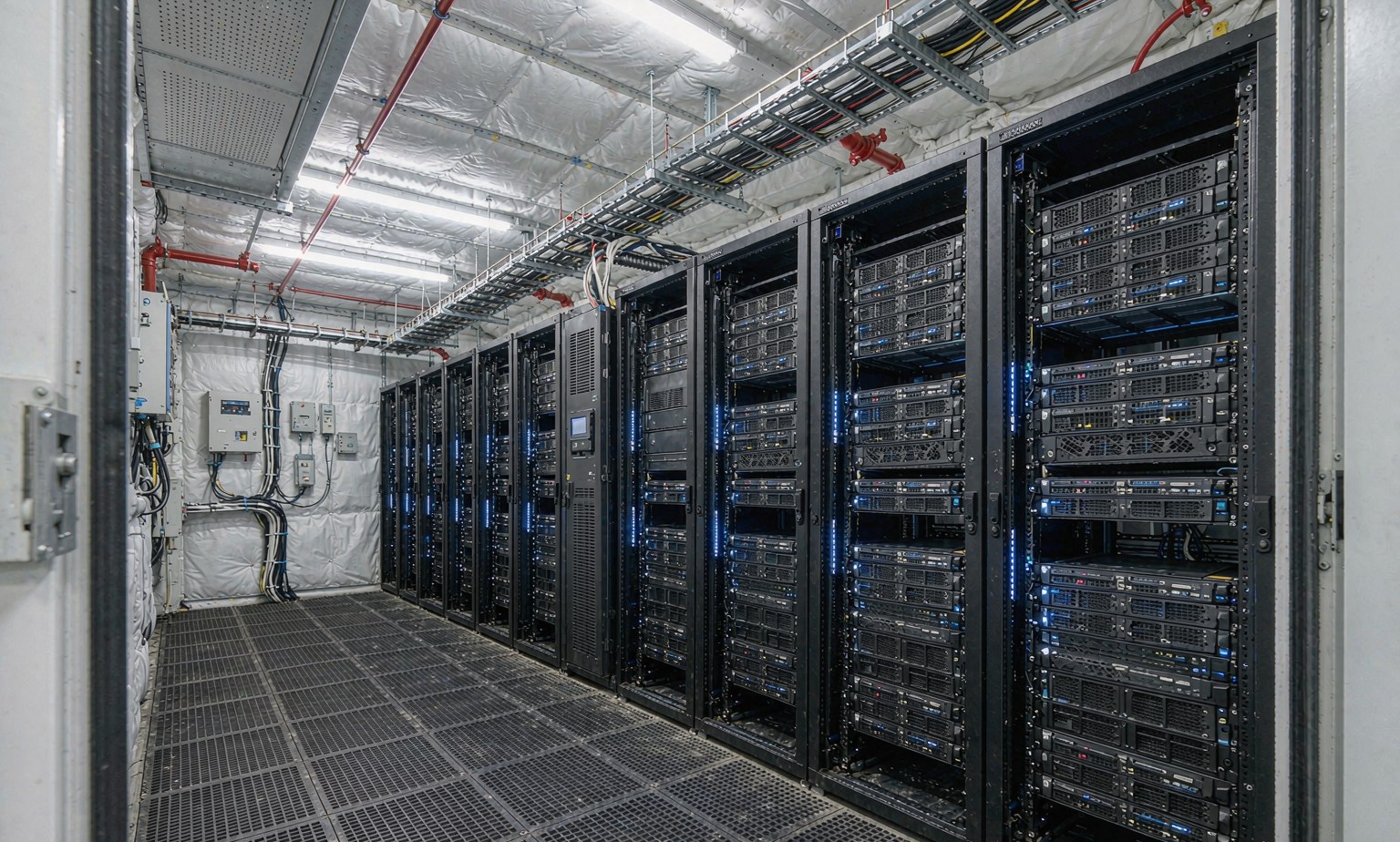
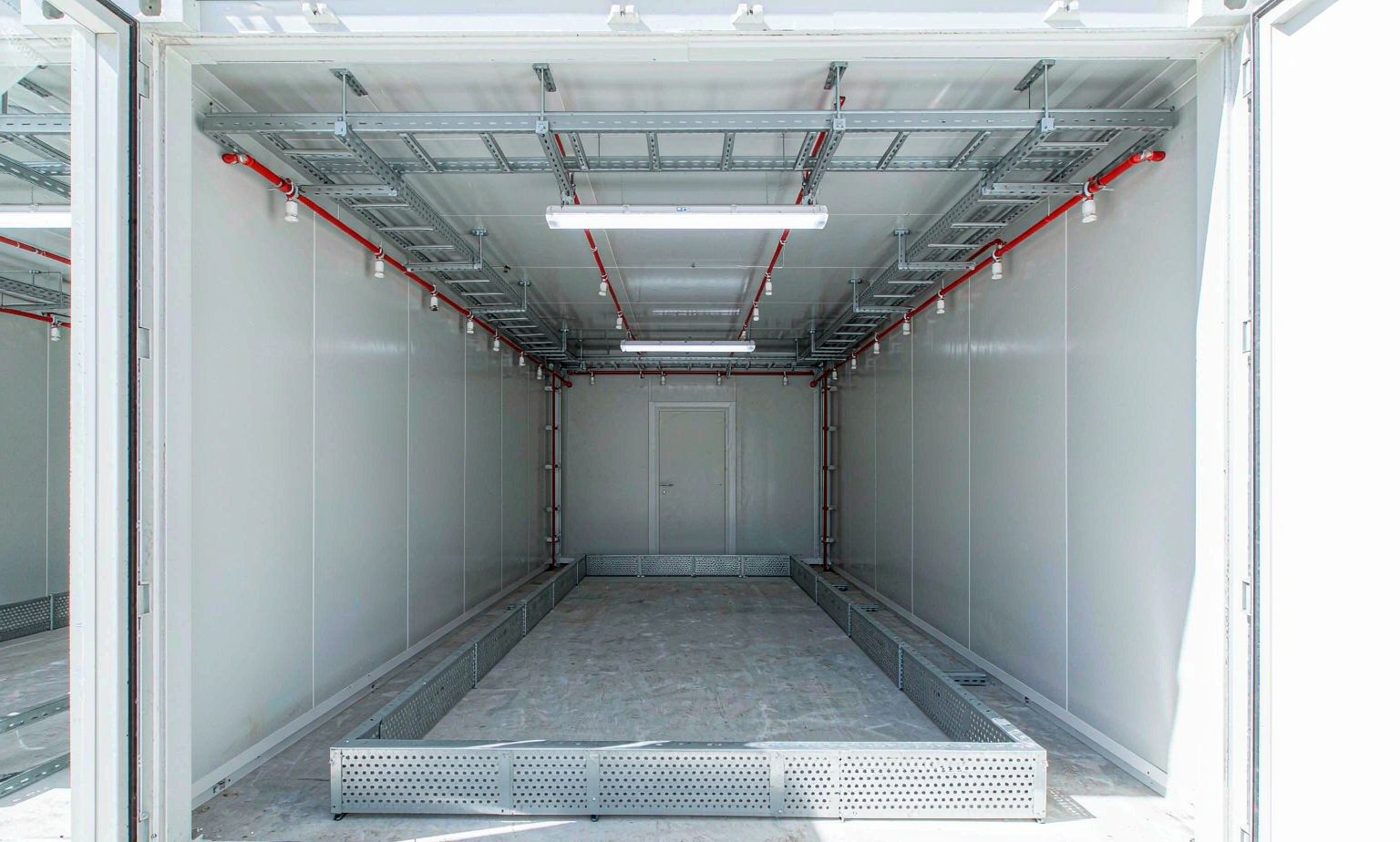
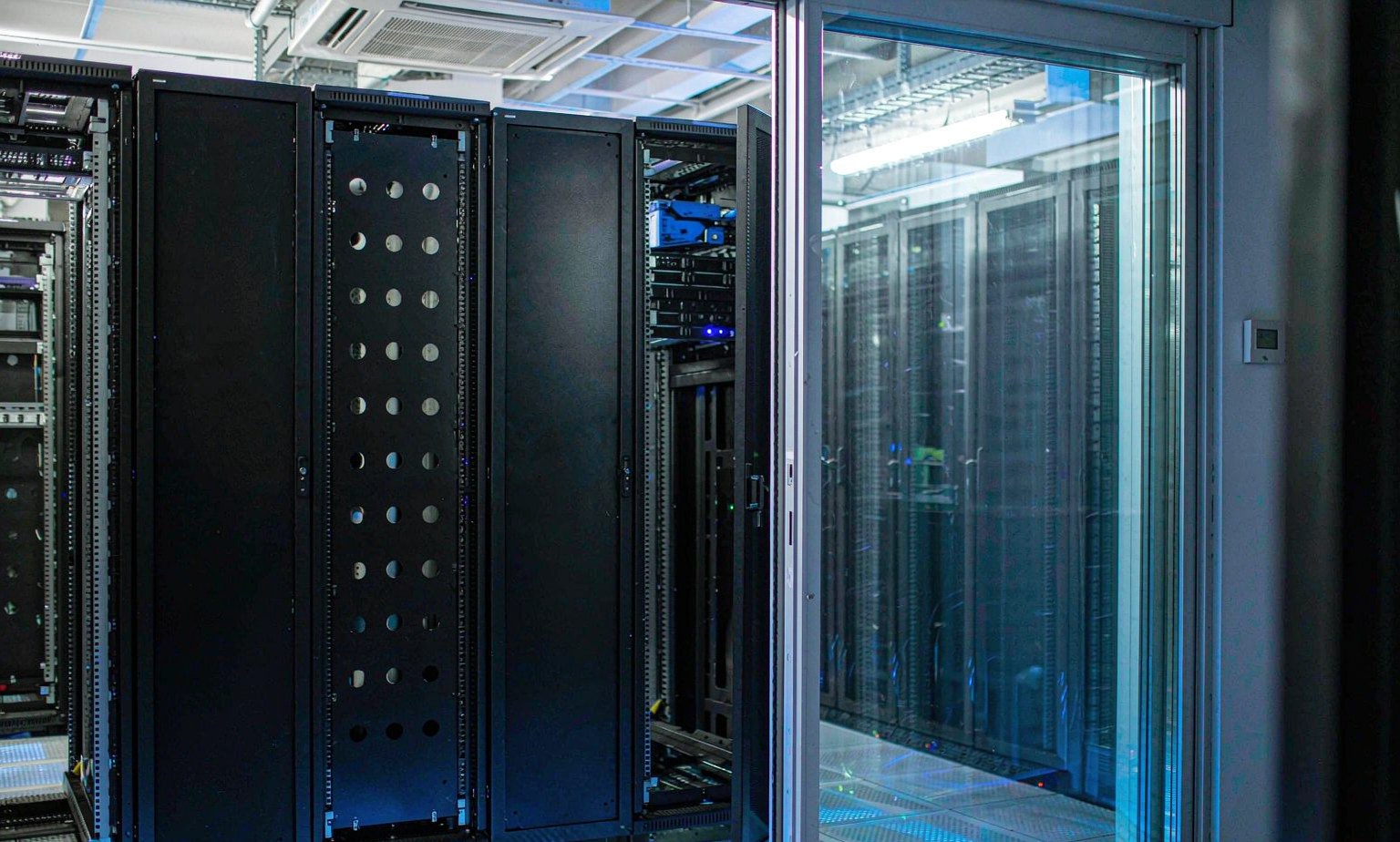

Some images are scheme illustrations and renders showing structure and layout. Final delivery follows the contract drawings.
What customers ask most
Can I supply my own racks?
Yes. We deliver an empty enclosure, but rack dimensions and fixing centres must be given in advance and the floor cut-outs aligned.
How much does liquid-ready add?
Cold-plate preparation (manifold position, quick couplings, leak detection) adds roughly 8%–12%. The full liquid system of CDU, pipework and cold plates is separate and usually comes with the server vendor.
Can a UPS go inside?
Yes, but it takes 1–1.5 rack positions and its heat has to be added to the cooling load. Where space allows, keep it separate.
How many racks fit in 10 ft?
Two, at 600 or 1200 mm deep. At 1200 mm deep the aisle shrinks to 0.9 m and trolleys become awkward.
How long does the enclosure last?
25 years structural, 15 years insulation, 8–10 years for door seals. Coastal sites should add a protective coating and inspect every five years.
Ask for a scheme for your site
Send the capacity, rack count, site conditions and local climate. You get a layout, a single-line diagram and a price, at no charge, revised until it works.