

What it is for
The best sites usually have the worst services. A ridge, a clearing, a beach with no road — the view that justifies the rate is often the reason there is no cable, no mains water and no sewer.
The off-grid version is a standard cabin with the energy and water systems designed into it: a PV array on a ground frame or on the roof, a lithium battery, an inverter sized from the cabin load schedule, a water tank and pump, and a waste system that suits the site.
It is the only product in the range where the electrical design comes first. Everything else can be connected later; here the load schedule decides the battery, the battery decides the price, and the price decides whether the site works at all.
Where it is typically used
Key specifications
| PV array | 3–6 kW ground frame or roof mounted, tilt set for the latitude |
| Battery | 10–20 kWh lithium, 48 V, with a BMS and a low-temperature cutoff |
| Inverter | 3–6 kW hybrid inverter, pure sine, with a generator input |
| Autonomy | Typically 7 days at 60 % depth of discharge; stated per load schedule |
| Load schedule | Issued per cabin: lights, sockets, fridge, hob, A/C, pump — each with a duty figure |
| Water | 1,000–2,000 L tank, 12 V or 230/110 V pump, filtration on request |
| Waste | Composting toilet, or a septic connection where the site allows it |
| Heating | Wood stove, or a heat pump on the larger arrays |
| Monitoring | State of charge, PV yield and tank level on a phone, with a low-level alarm |
| Structure | Standard cabin shell, 75–125 mm insulation depending on climate |
| Options | Wind turbine, backup generator, Starlink mast, extra tank, borehole pump |
| Not included | Ground frame installation, trenching and civil works unless quoted |
Figures are for the standard configuration and change with the project. Values are design values; acceptance follows the contract technical agreement.
What goes in the box
Installed, wired and tested before dispatch. On site the work is placement and external connections.
PV panels on a ground frame or the cabin roof, with the tilt set for the latitude rather than fixed at 30°.
Lithium battery and hybrid inverter in a ventilated cupboard, with a generator input for the worst week of the year.
Every circuit listed with its duty cycle, so the array and battery are sized from arithmetic rather than optimism.
Tank, pump, filtration and a level sensor wired to the same monitor as the battery.
Composting toilet as standard, or a septic connection where the ground and the permit allow it.
State of charge, PV yield and tank level on a phone, with an alarm that reaches the operator before the guest notices.
Which model to take
| Model | Array | Battery | Suits | Best for |
|---|---|---|---|---|
| CAB-OFF3 | 3 kW | 10 kWh | Lights, fridge, pump, no A/C | Mild climate, one or two guests |
| CAB-OFF4 | 4 kW | 15 kWh | Adds A/C or a heat pump | The standard off-grid couples cabin |
| CAB-OFF6 | 6 kW | 20 kWh | Adds hob, hot water, A/C | Year-round occupation |
| CAB-OFFH | 4 kW + grid | 15 kWh | Hybrid with a grid fallback | Unreliable grid rather than no grid |
Standard models are listed. Other capacities are built to order, with two to three weeks added to the standard lead time.
The load schedule is the product — everything else is a component
Where off-grid budgets actually go wrong
The classic failure is a system sized on connected load instead of energy. Lights and sockets are small; a hob, a kettle and an air conditioner are not, and a cabin that runs an air conditioner through a cloudy week needs either a much larger array or a different cooling strategy.
We issue a load schedule per cabin and we ask you to mark which appliances are essential. Then the array, the battery and the generator backup are all sized from the same table, and the numbers on the quotation can be checked against it.
Water and waste decide the site, not the cabin
A tank and a pump are straightforward. A composting toilet is straightforward. What is not straightforward is a site where the water has to be trucked in and the waste trucked out — that is a running cost that belongs in the business plan before the cabin is ordered.
Ask us for the consumption figures per cabin: litres per guest-night for shower and kitchen, and the toilet option that fits your ground conditions. It is the least glamorous page in the pack and the one that decides whether the site is viable.
When to use it, when not to
These come from projects rather than general advice. Match your case against them; it is more useful than reading the specification table.
This is the product it was built for.
The system travels with the unit.
No trench, no permanent connection.
Connect it; the package costs more than a meter.
Possible, but the array and battery grow and the payback rarely works.
From contract to the first guest
Appliance list, essential versus optional, latitude, shading, water source and waste plan. Sizing and price in 72 hours.
Array size, battery, inverter, water and waste option frozen on a signed drawing.
35–45 days from deposit and drawing approval; the electrical package is built and tested with the cabin.
The system is assembled and run on a bench before packing; the commissioning sheet travels with the unit.
Panels crated separately from the cabin; battery shipped as Class 9 dangerous goods with the paperwork prepared.
On site: array, battery, inverter, water and monitor. We can send a technician or commission remotely with your electrician.
On site and in detail
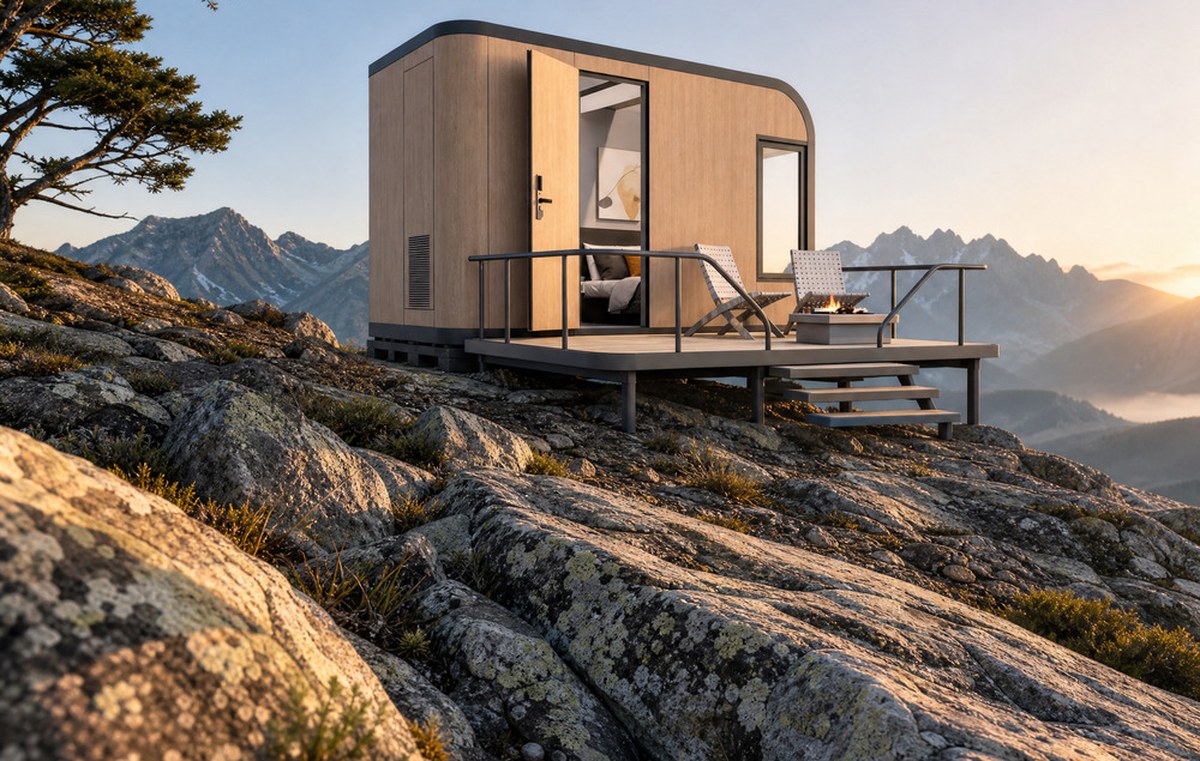
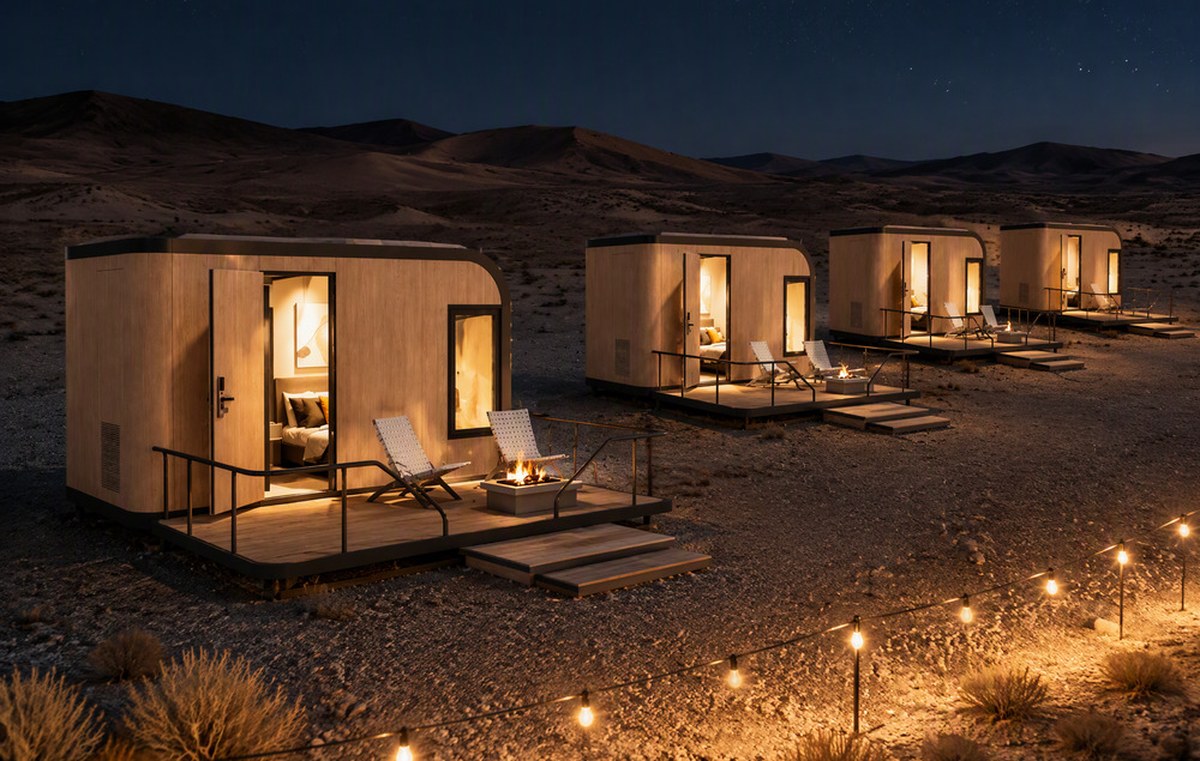
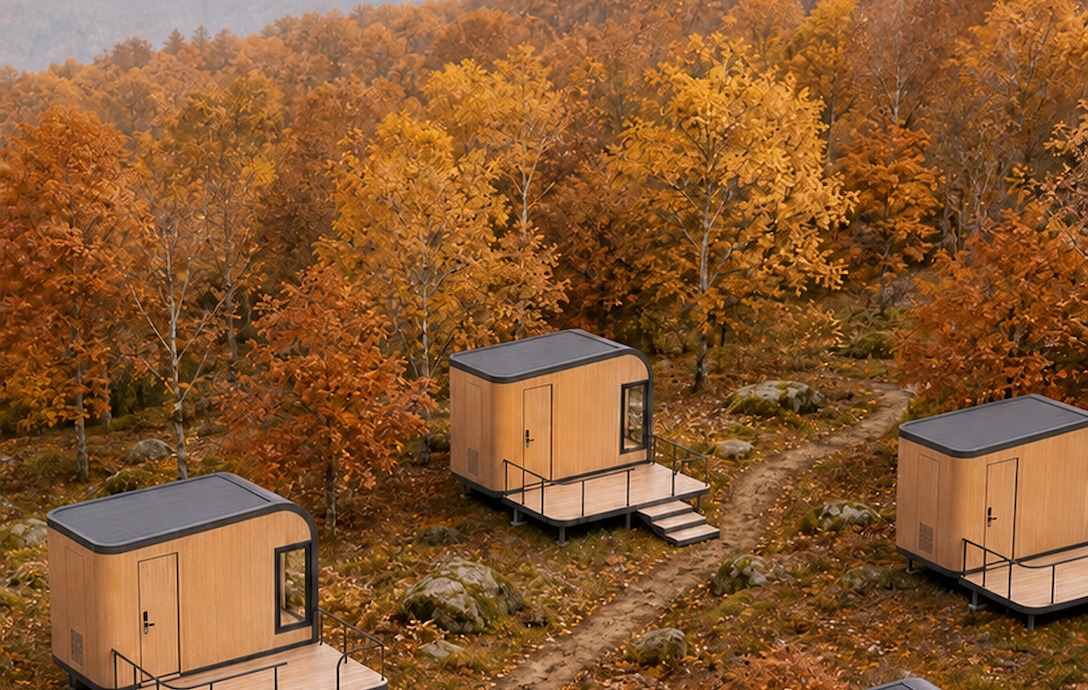
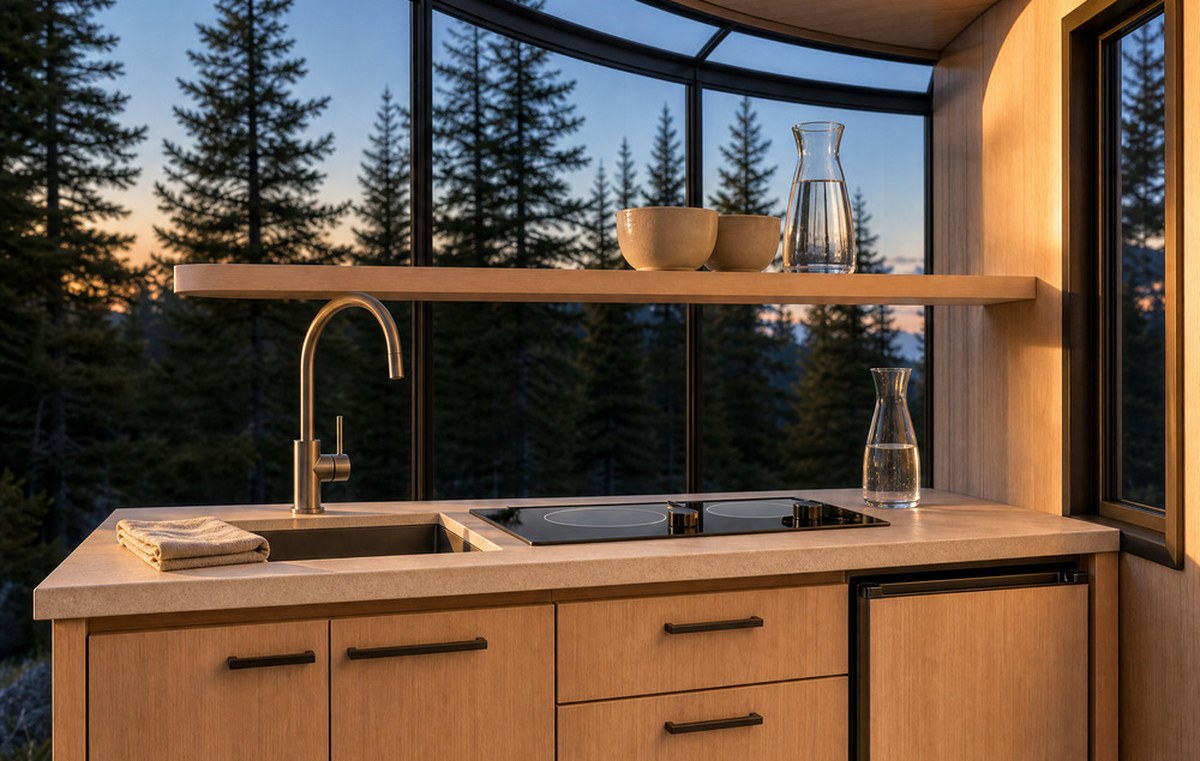
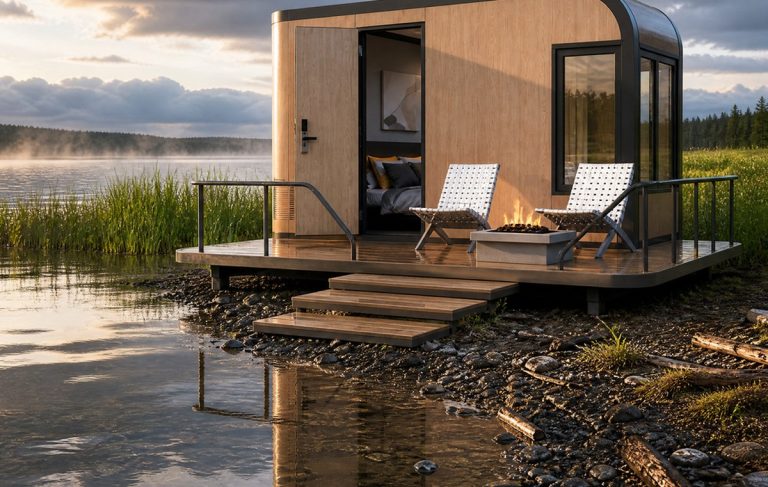
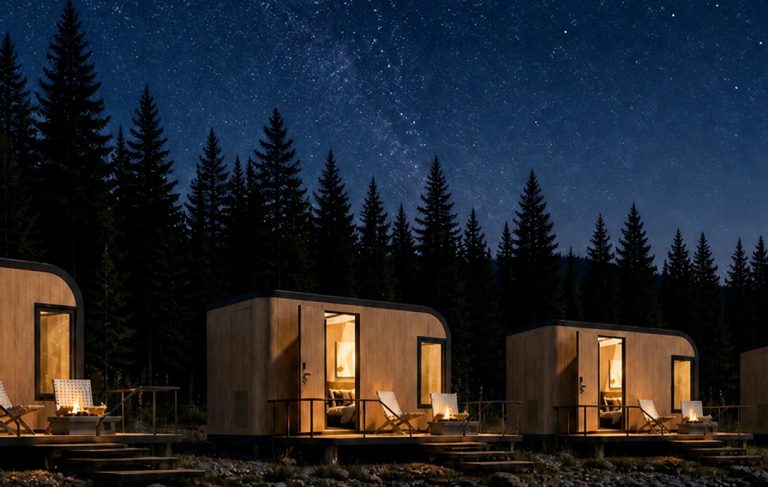
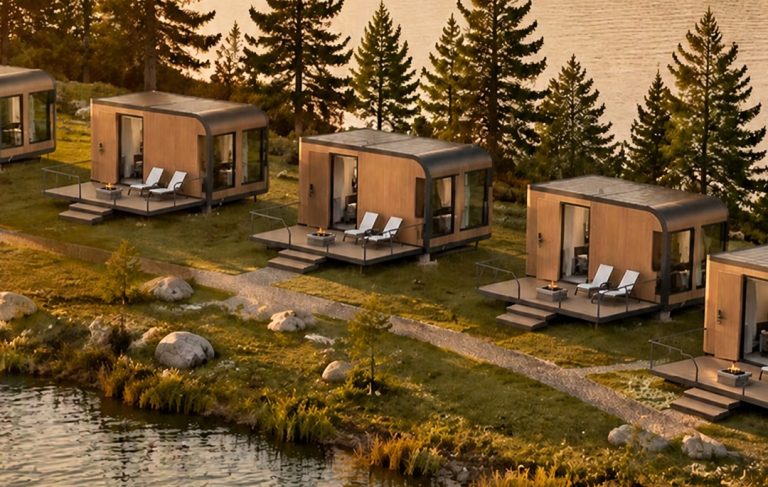
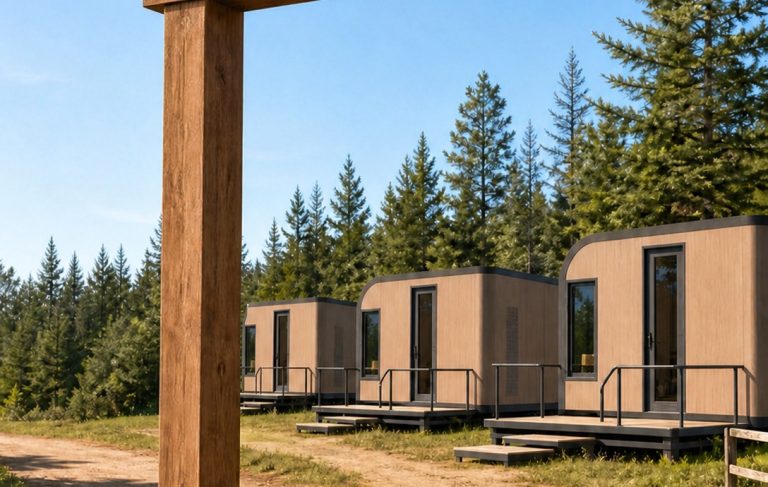
Some images are scheme illustrations and renders showing structure and layout. Final delivery follows the contract drawings.
What customers ask most
How much does an off-grid cabin cost on top of the standard unit?
Typically 30–60 % of the shell price depending on the array, the battery and whether there is air conditioning. We quote the electrical package as a separate line so you can see exactly what the energy independence costs.
How many days of autonomy do I get?
Seven days at 60 % depth of discharge is our standard design point for a temperate site. In a monsoon climate we would either add array or keep a small generator input — no honest supplier will promise a battery-only winter in a cloudy place.
Can I ship a lithium battery in the same container?
It ships as Class 9 dangerous goods with the correct paperwork and packing, usually in a separate crate rather than inside the cabin. Tell us the destination country before we book; some routes are easier than others.
What about hot water?
A heat-pump cylinder on the larger arrays, or a solar thermal panel, or a gas instantaneous heater as a backup. On a 3 kW system there is not enough surplus for an electric cylinder.
Can it be hybrid with a generator?
Yes, and it is what we recommend for sites with a wet season: the generator covers the worst fortnight and the array covers the other fifty weeks. The inverter has a generator input as standard.
Do I need to be there for commissioning?
Not necessarily. We commission remotely with your electrician on site and by video, then sign off on the readings. For a first off-grid site, a technician visit usually pays for itself.
Ask for a layout for your camp
Send the site photos, the coldest month, the electrical standard and how many keys you want to open with. You get a layout, a loading plan and a price, at no charge, revised until it works.