
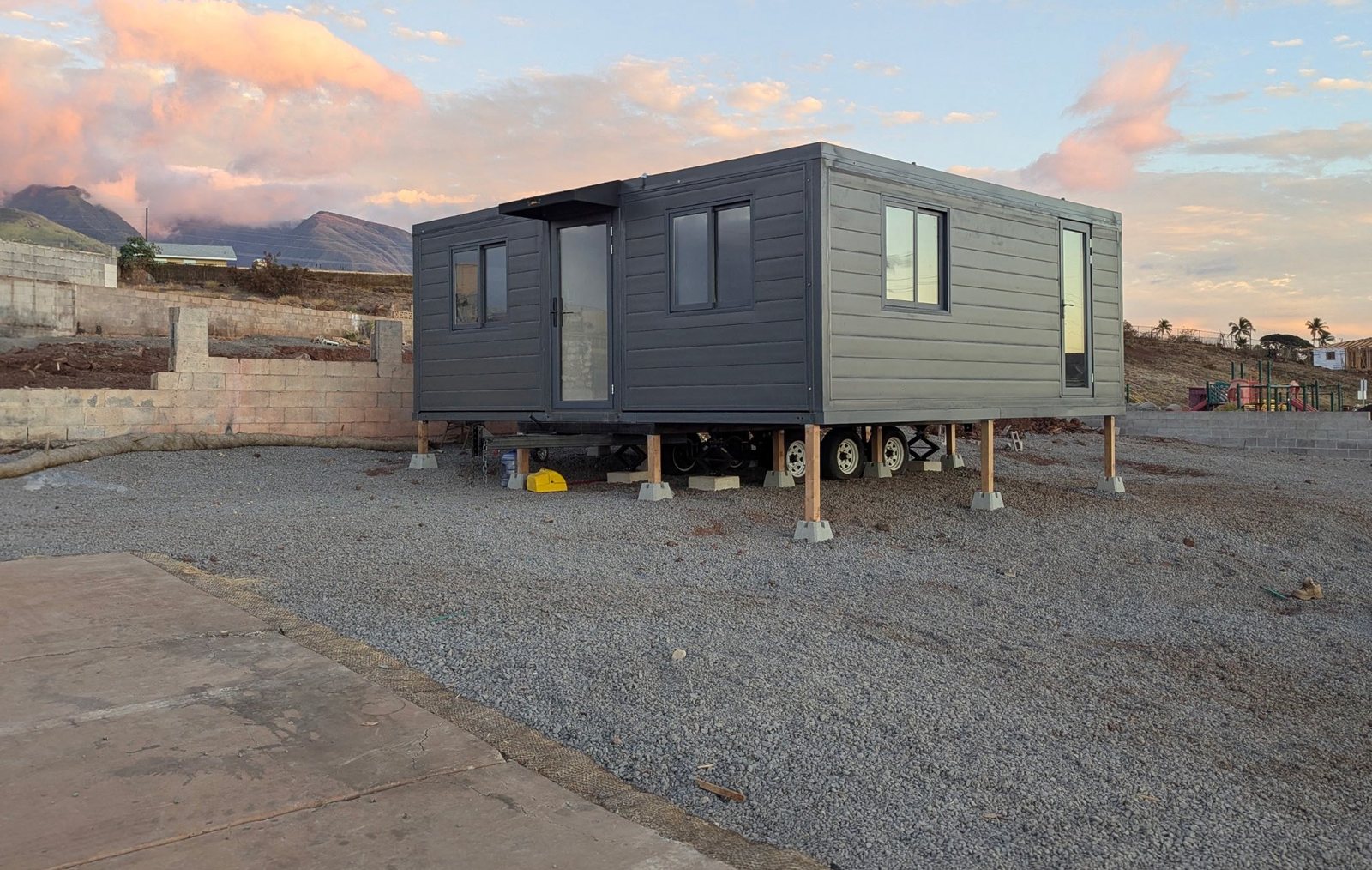
Fourteen expandable units for a Big Island site
Freight to the islands is charged by the cubic metre, and it is charged twice if the truck cannot reach the plot. Folding the units flat is what made the budget work. Standing them on timber piles is what made the site work.
The crossing decides the design
Why folding
An open expandable unit is roughly four times the footprint of the same unit folded. On a route that ends with a barge, that ratio is the whole commercial case: the folded units ship as freight, not as buildings.
The fold also protects the finish. Panels, glazing and joinery travel inside the envelope instead of on an open deck, which matters when the last leg is a barge and a flatbed on a road that was not built for wide loads.
Why piles
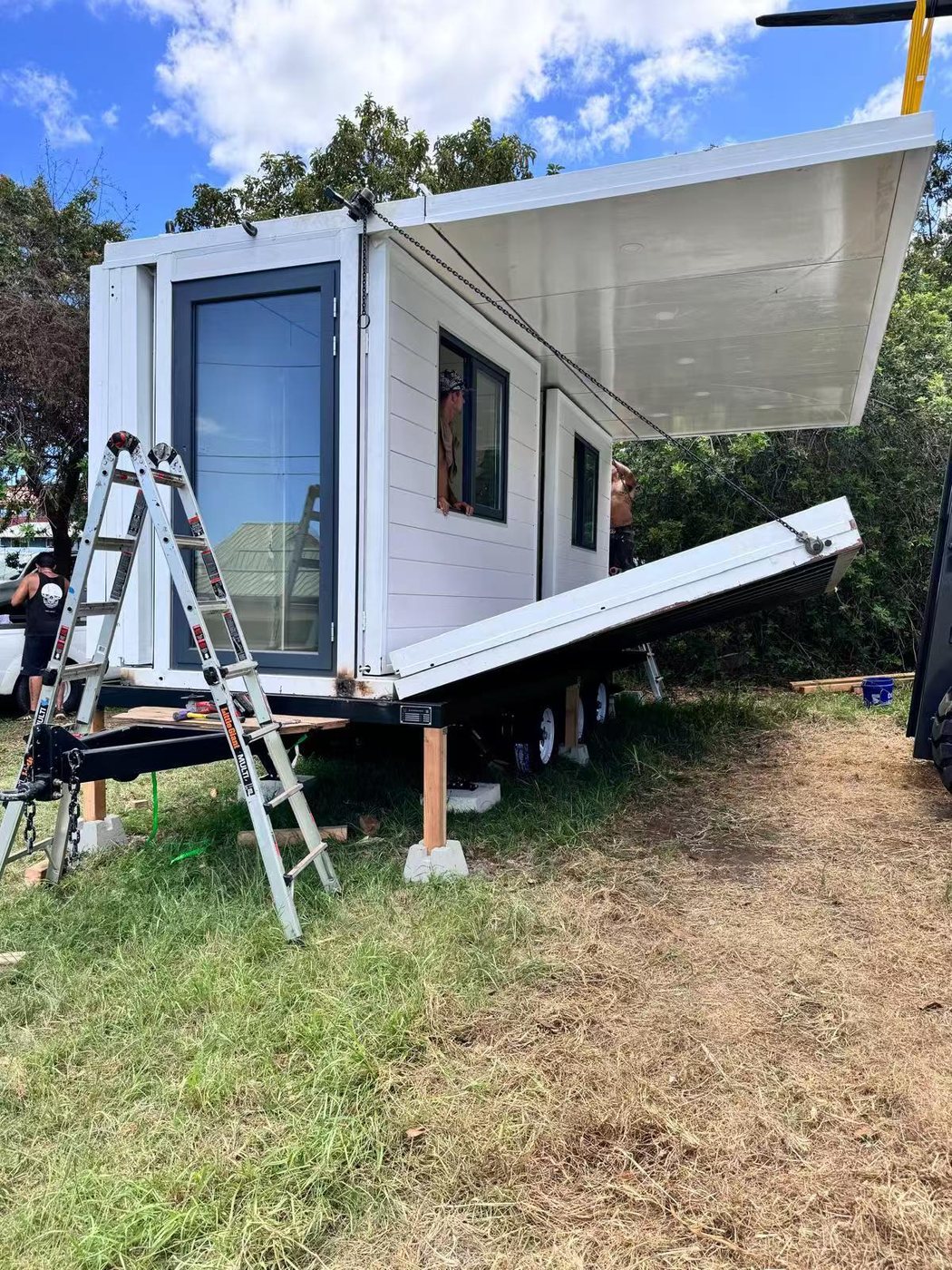
The plot came raw: no slab, no drainage, and a surface that turns to slurry in a heavy rain. Timber piles on isolated concrete pads let the units sit level without pouring concrete, keep the floor out of the standing water and leave the underside ventilated.
It also means the units can be re-levelled later without cutting anything. On ground like this, that is worth more than a hundred millimetres of extra concrete.
Three things the site fixed for us
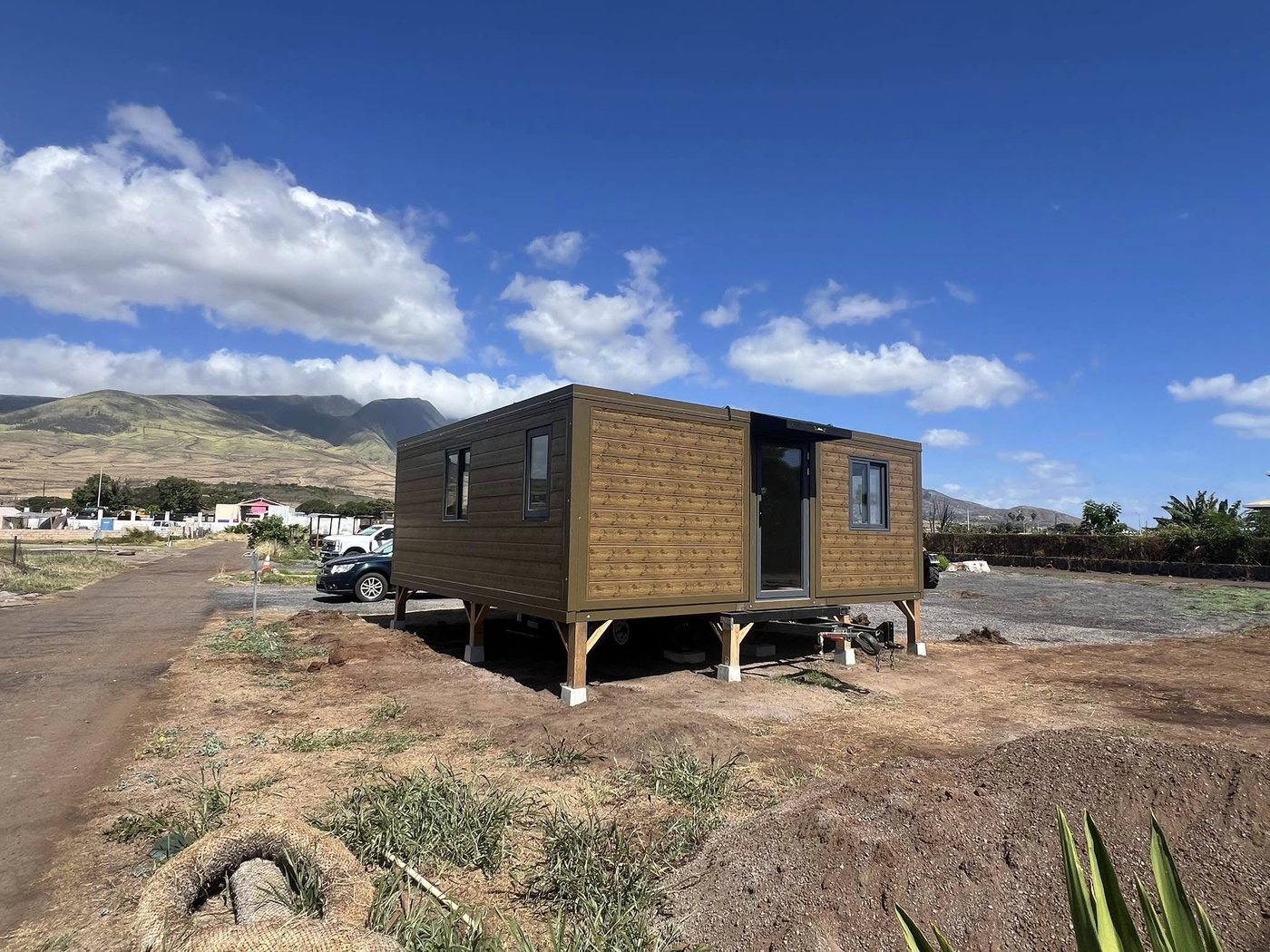
A unit on its timber piles, each pile on its own concrete pad, cut to level on site. The gap under the floor is a drainage path as much as a levelling device.
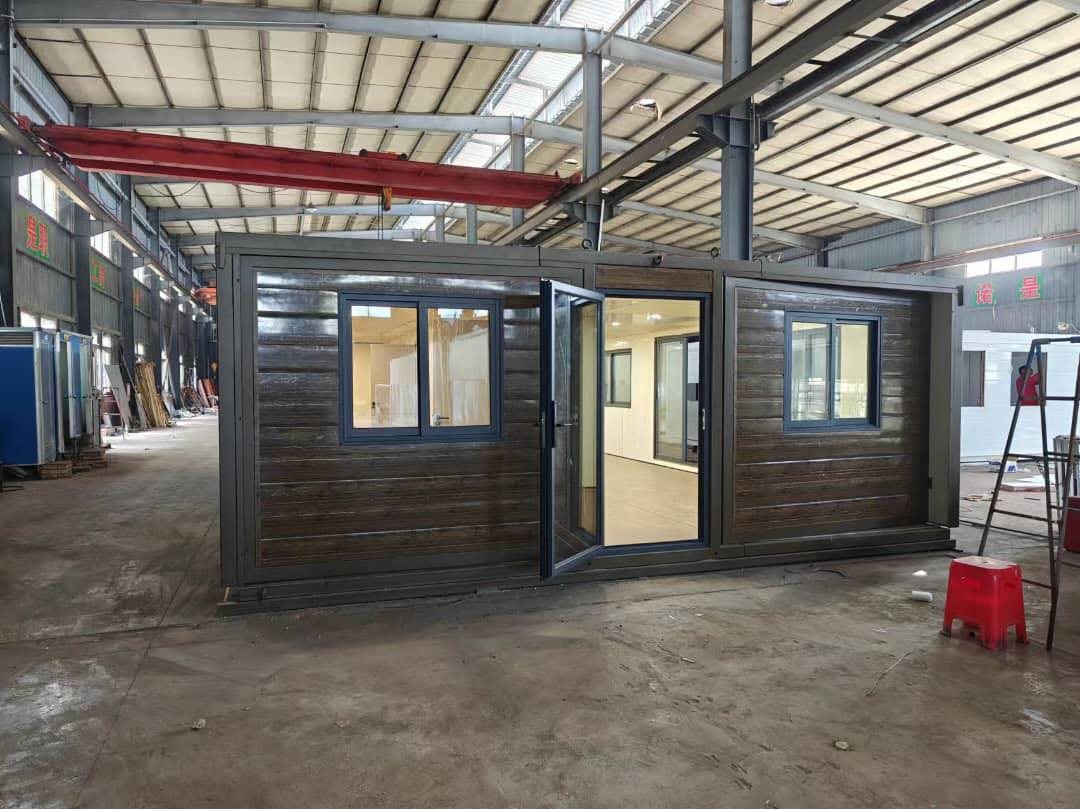
Timber-look sheeting on the units at the plot, dark grey on the ones behind them. Same fold, same frame, different sheet. Both were cut and folded on the same jig.
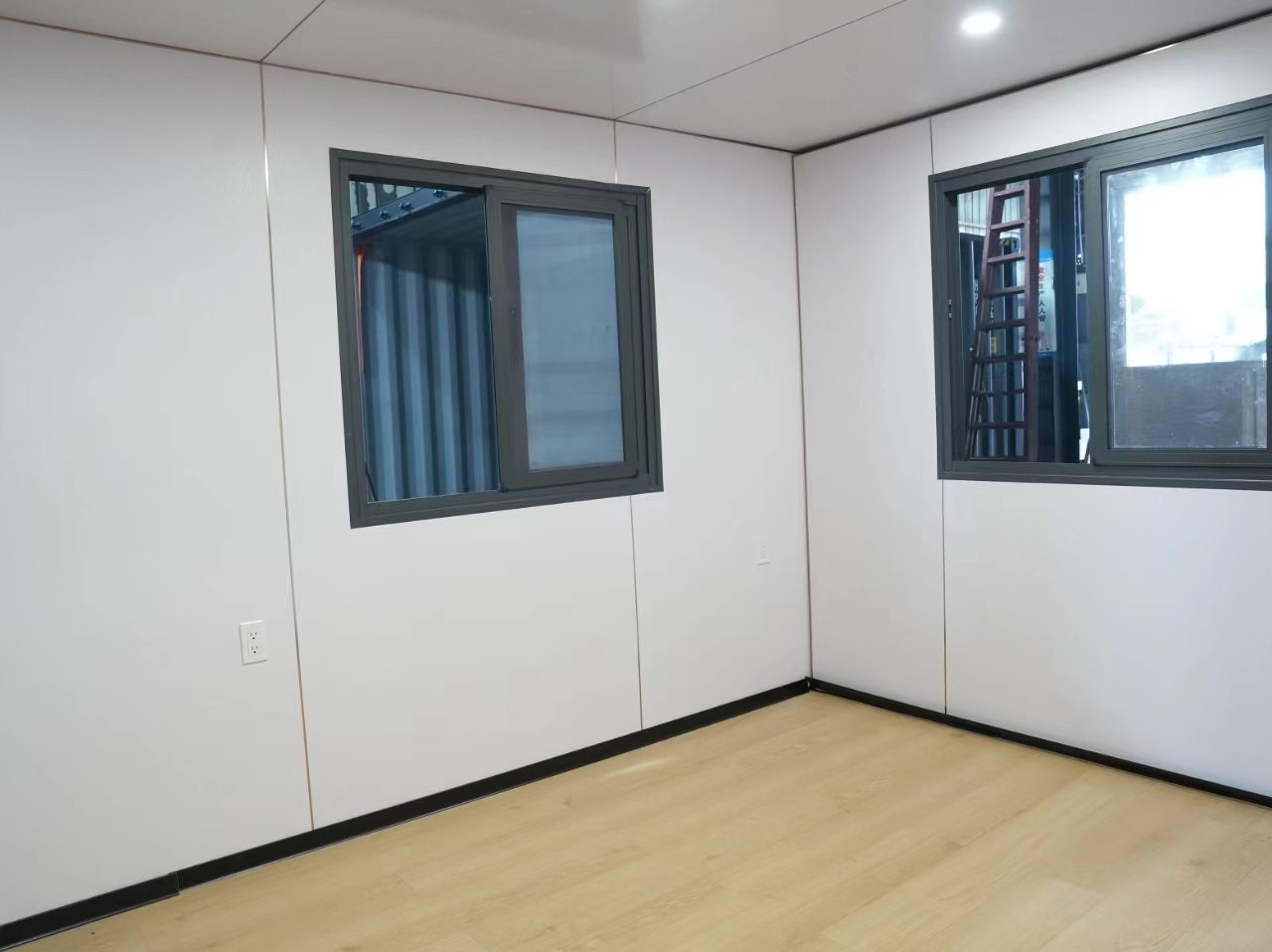
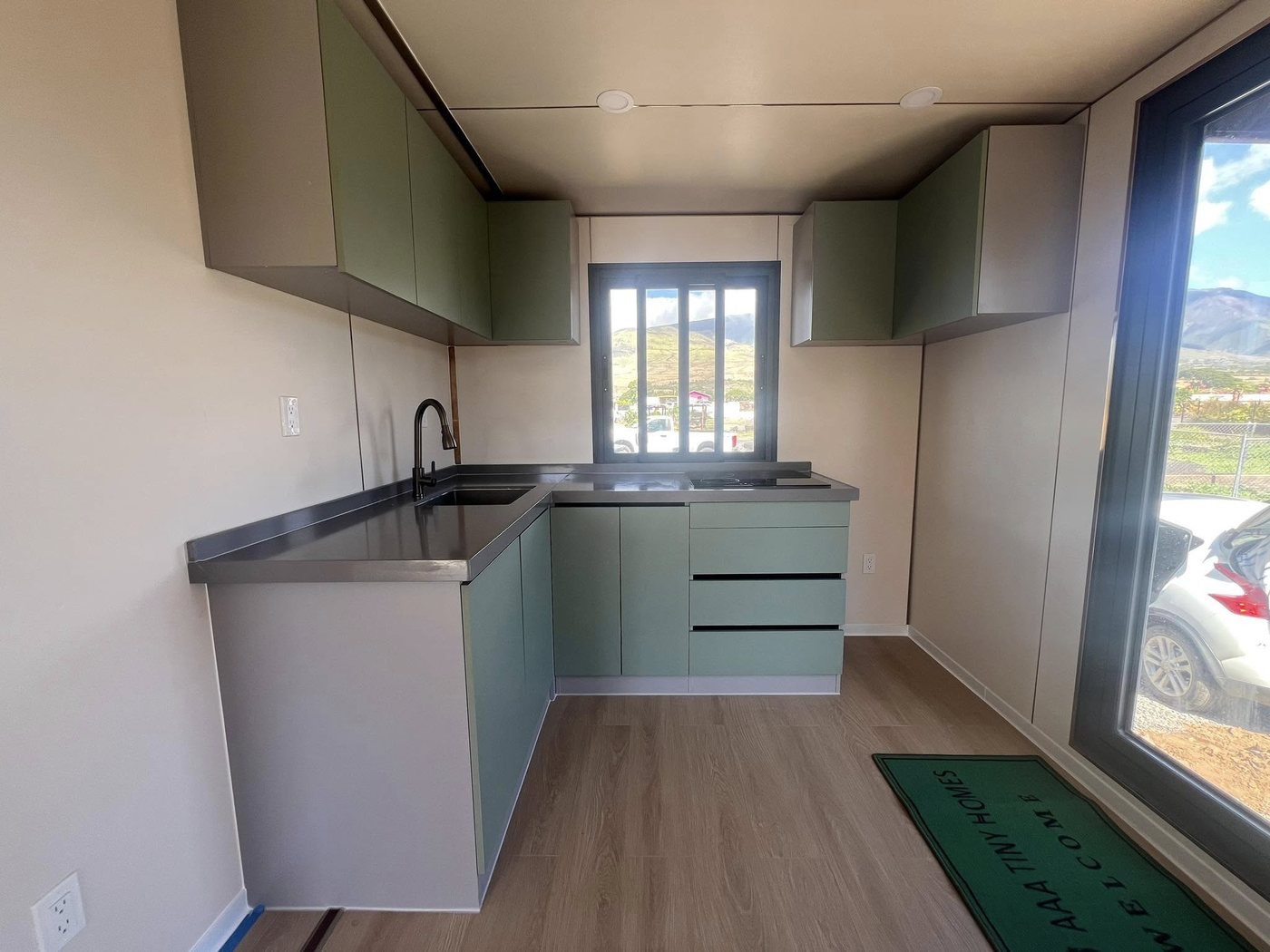
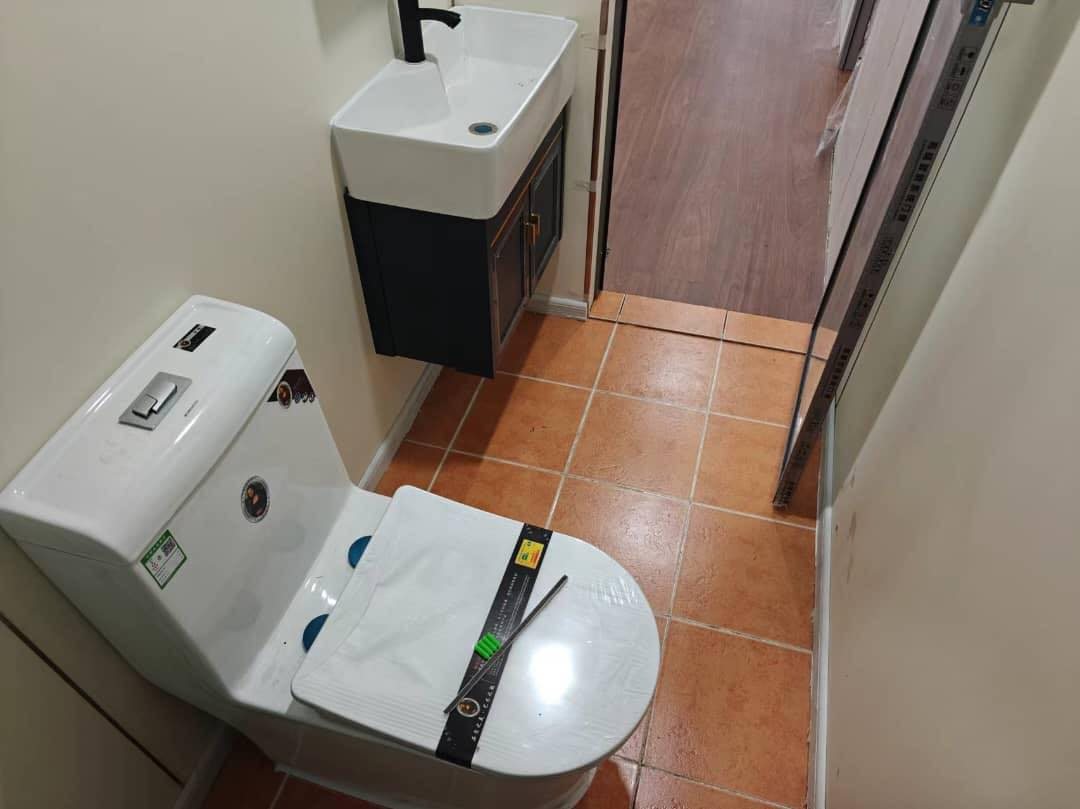
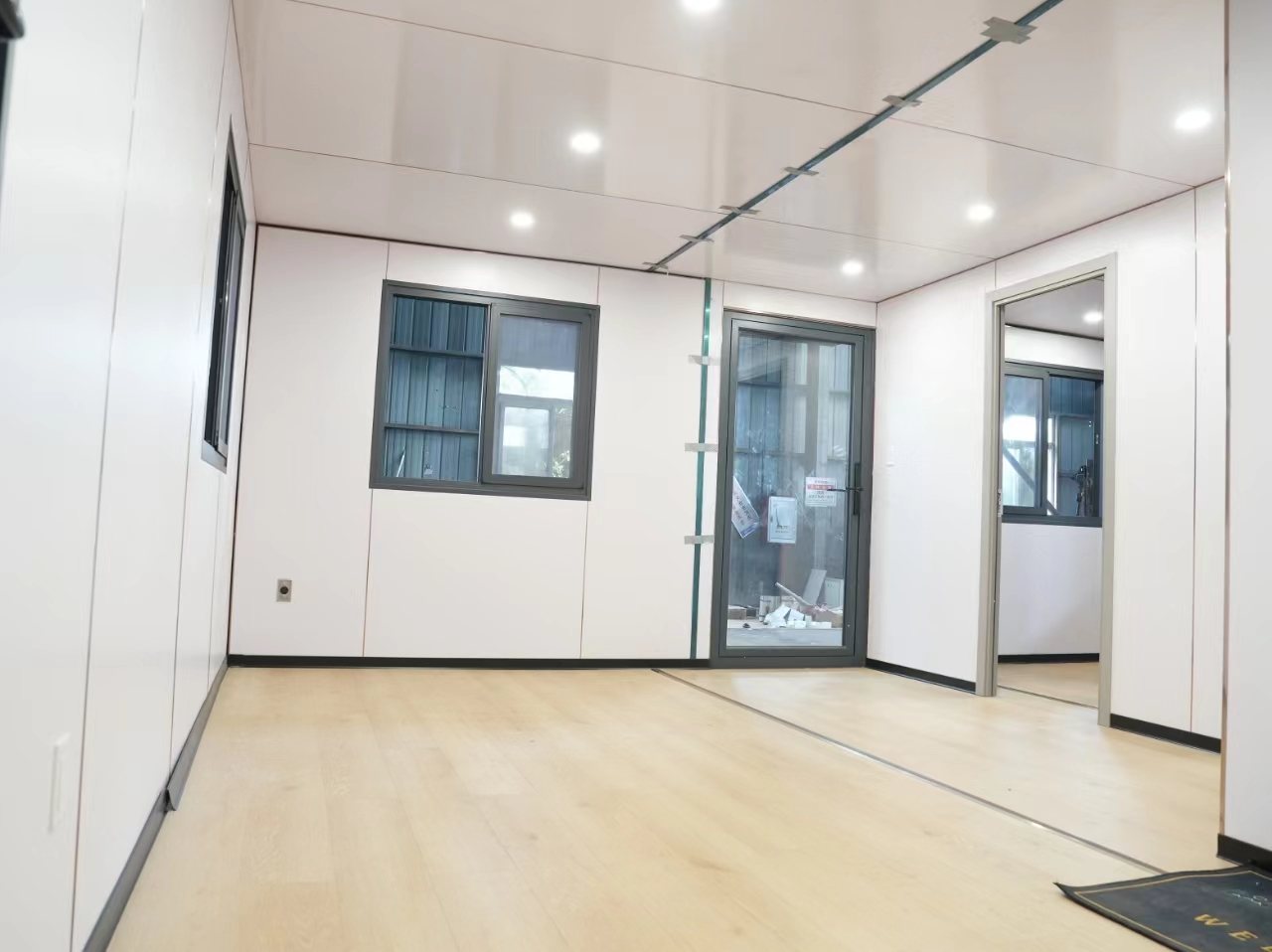
Floor, lining, joinery and services are installed in the factory. On site the unit opens and connects; it is not built.
From factory to plot
Fourteen units, one envelope system
Unit count and configuration as delivered. Commercial values are not disclosed.
The plot, and what is inside the units
The products this specification maps to
Photographs are from the delivered project. The client is not named. Commercial values are withheld; the figures describe the configuration as shipped.
Send the plot levels and the freight route.
Those two decide whether the units go on piles, on a slab or on a steel frame, and how many will fit in a container. A phone photo of the slope is enough to start.