
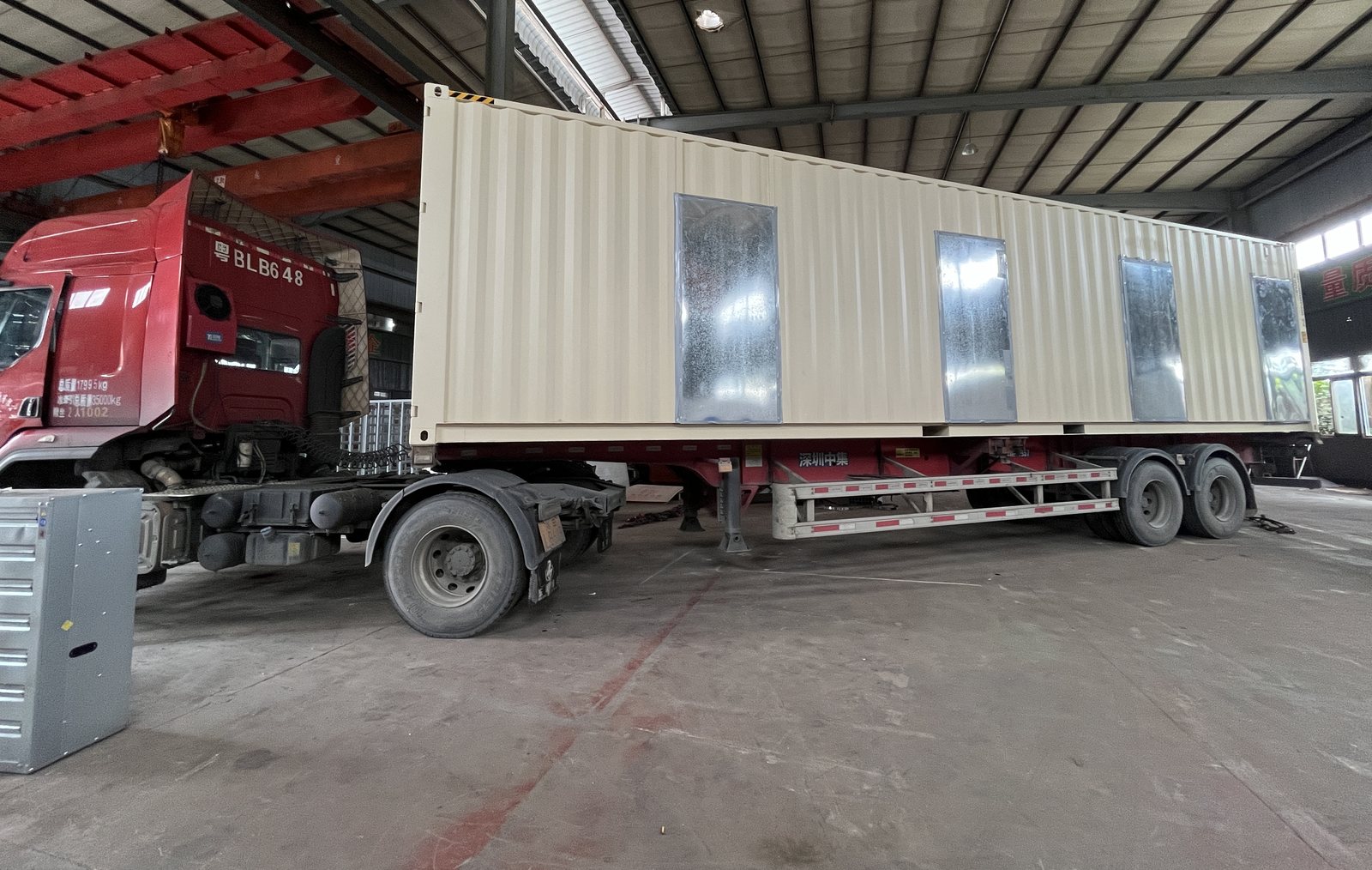
Five 40 ft containers cut and refitted for an Australian camp
These were not new shells. They were second-hand 40 ft boxes with a CSC plate and a history, cut open, framed, lined and turned into site accommodation and two kitchens. The plate stayed. That is the point.
Cutting a container is easy. Putting the strength back is not.
What was actually bought
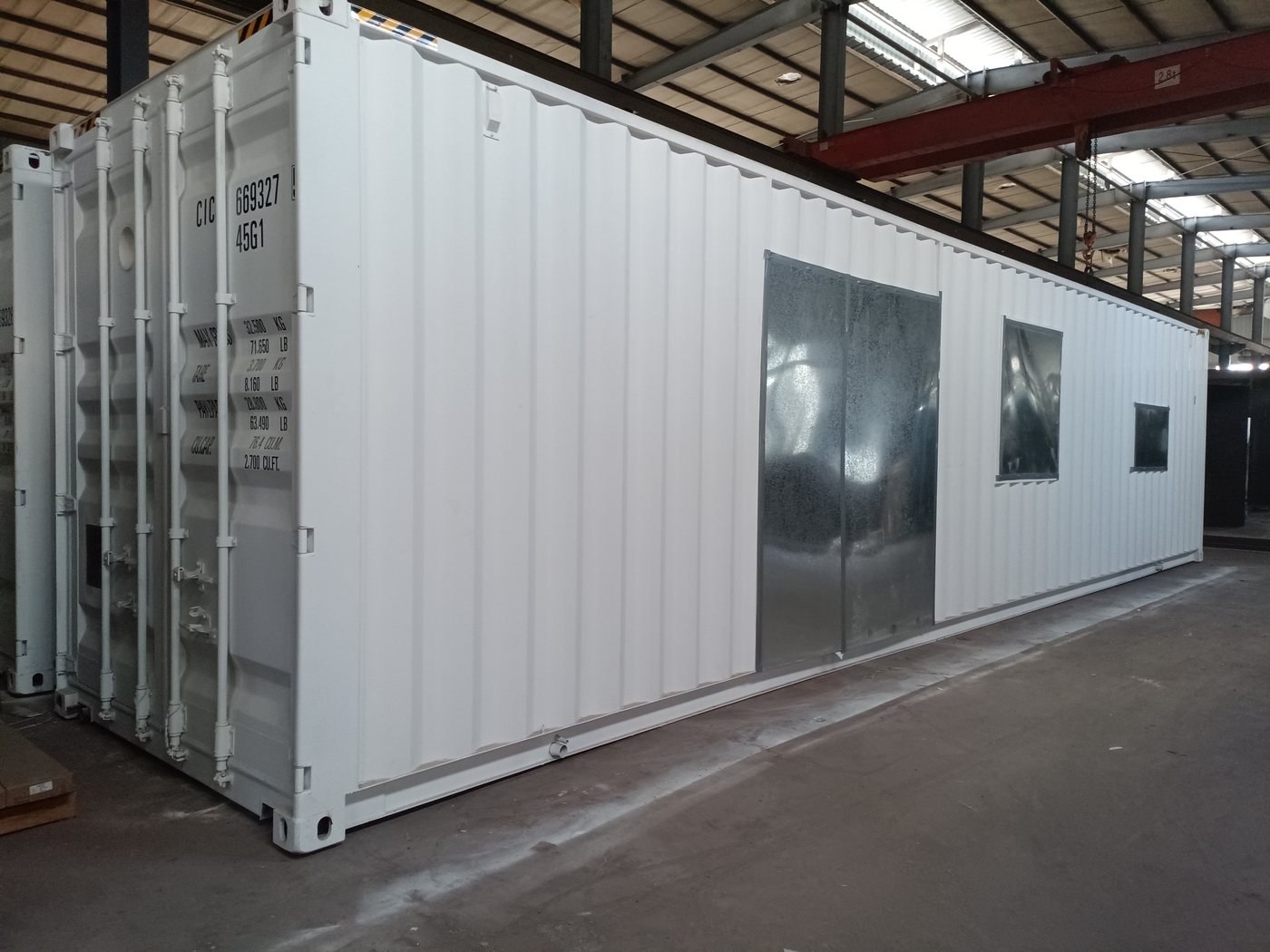
A 40 ft box gets its stiffness from the corrugated sides and the corner posts. Cut a window opening and you have removed a shear panel. Four windows and a door, and the box will still stand up, but it will not behave the same under lifting or on a trailer.
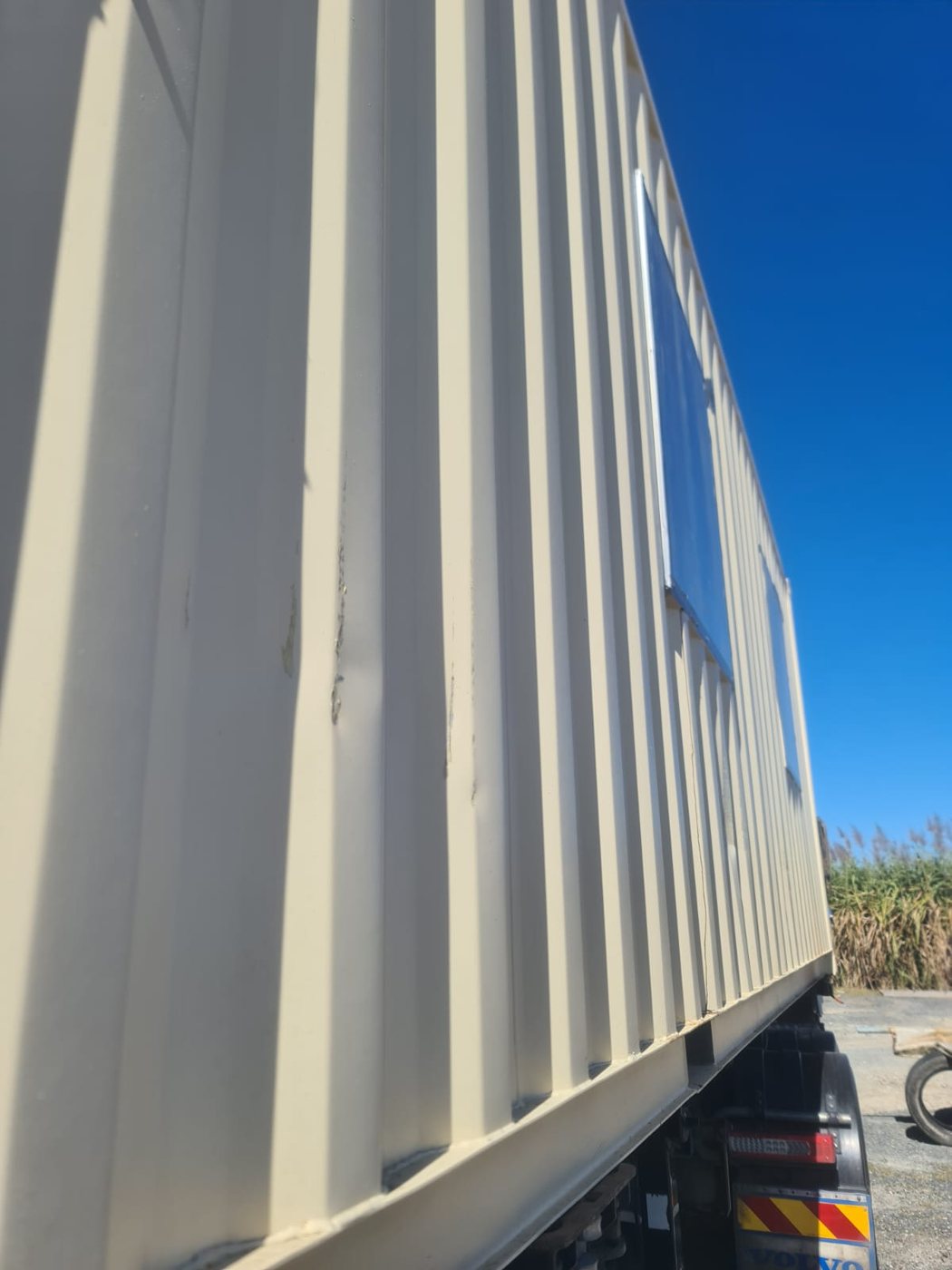
Every opening was framed with a welded steel surround tied back into the top and bottom rails. That is unglamorous work, and it is the reason the units can still be lifted by their corner castings and moved between camps.
Why keep the plate
The CSC plate is the safety approval for the container as a freight unit. Keeping it means the converted box is still a container: it can be shipped, lifted and stacked under the same rules as before, instead of needing a low-loader and an escort every time it moves.
For a camp that relocates every few years, that single decision is worth more than the interior finish.
Three parts of the job that decide the rest
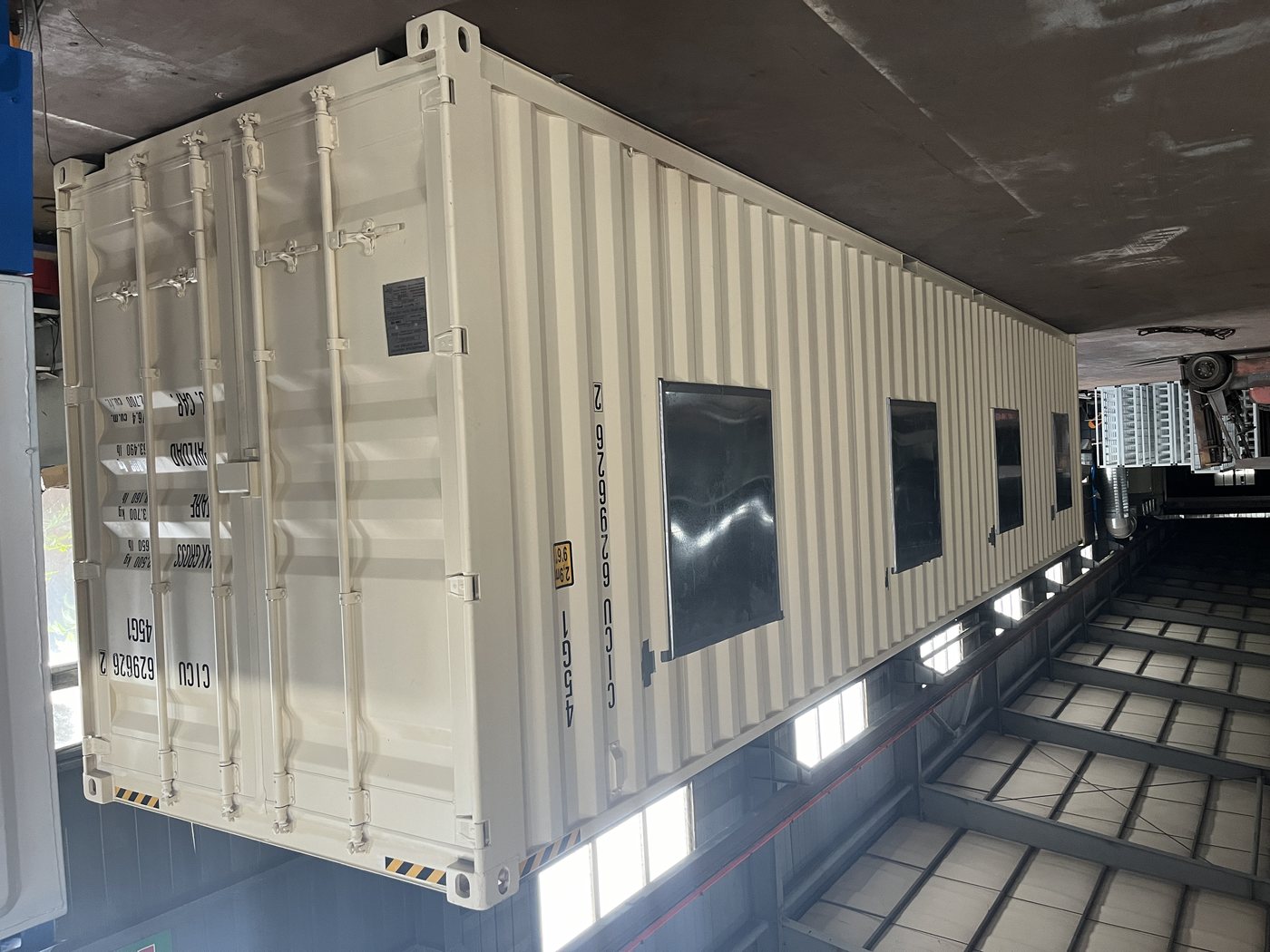
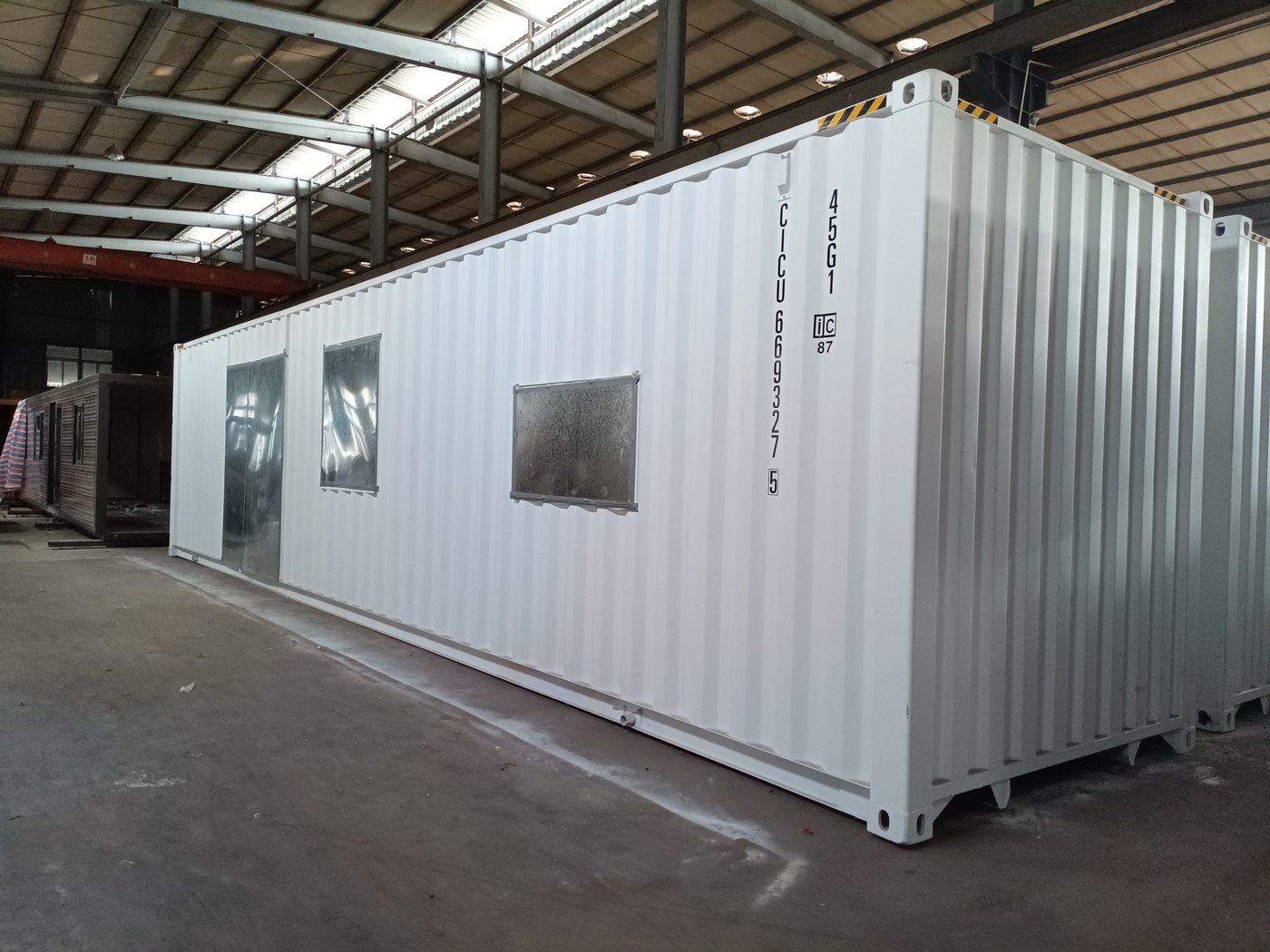
Four window openings in the long side, each with a welded surround. The CSC plate is visible between them, still legible.
Insulation, vapour barrier, lining and trim. From inside you would not know the wall was corrugated steel.
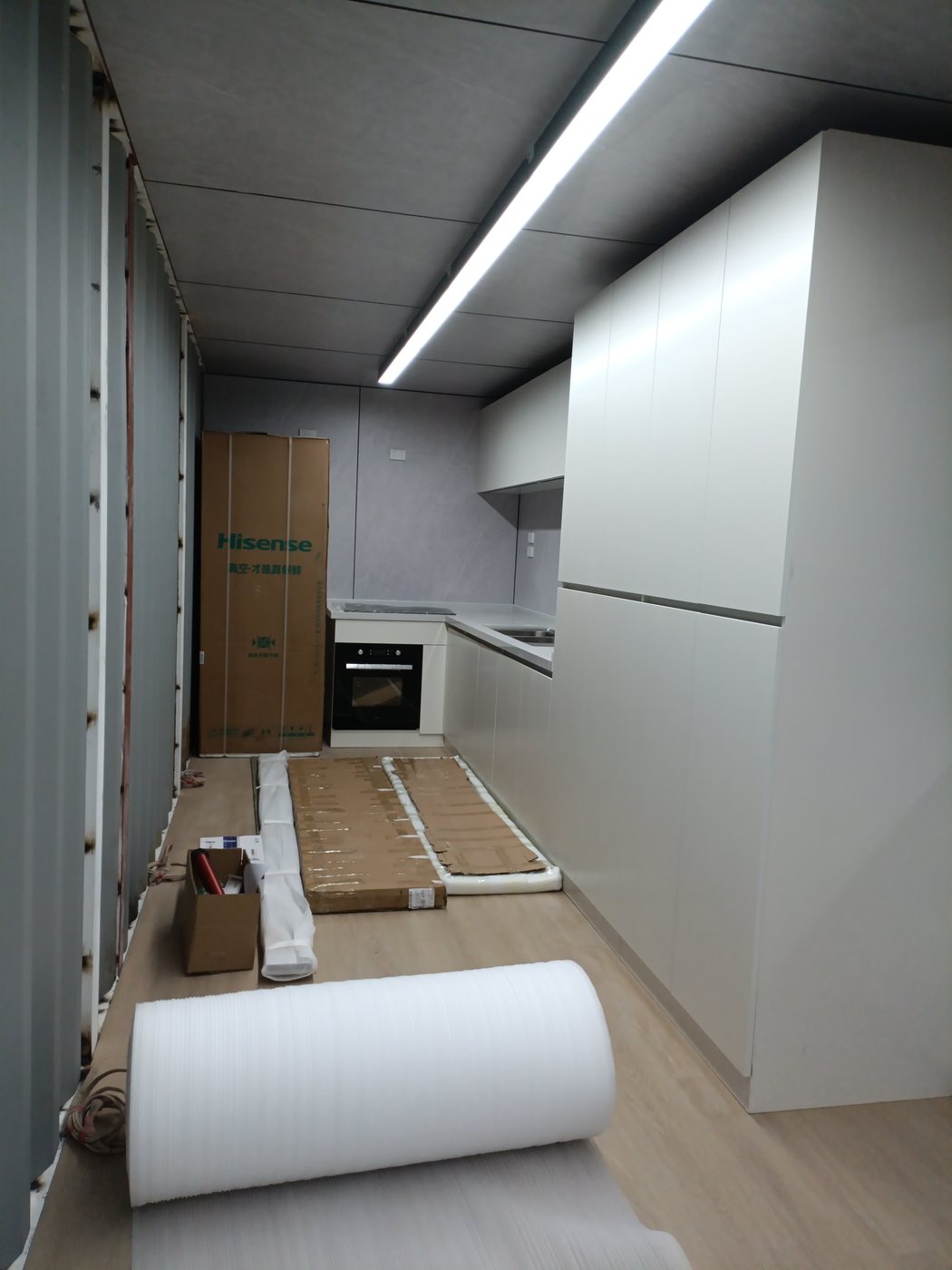
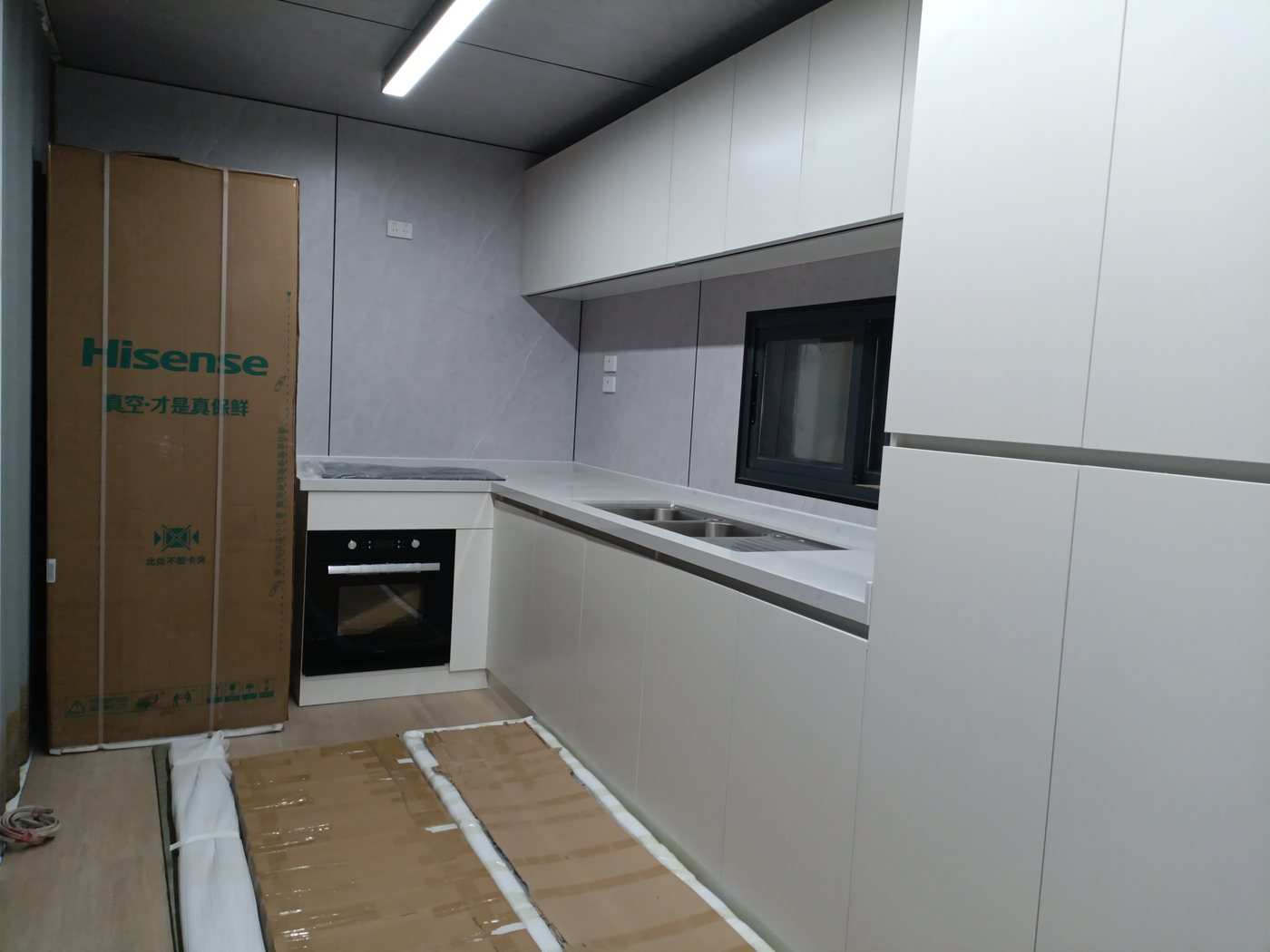
Bench, hob, sink and extractor on one wall, services in a duct behind. Two of these units went out as kitchens.
Cut, frame, line, fit, ship
What the conversion changed
Configuration as delivered. Commercial values are not disclosed.
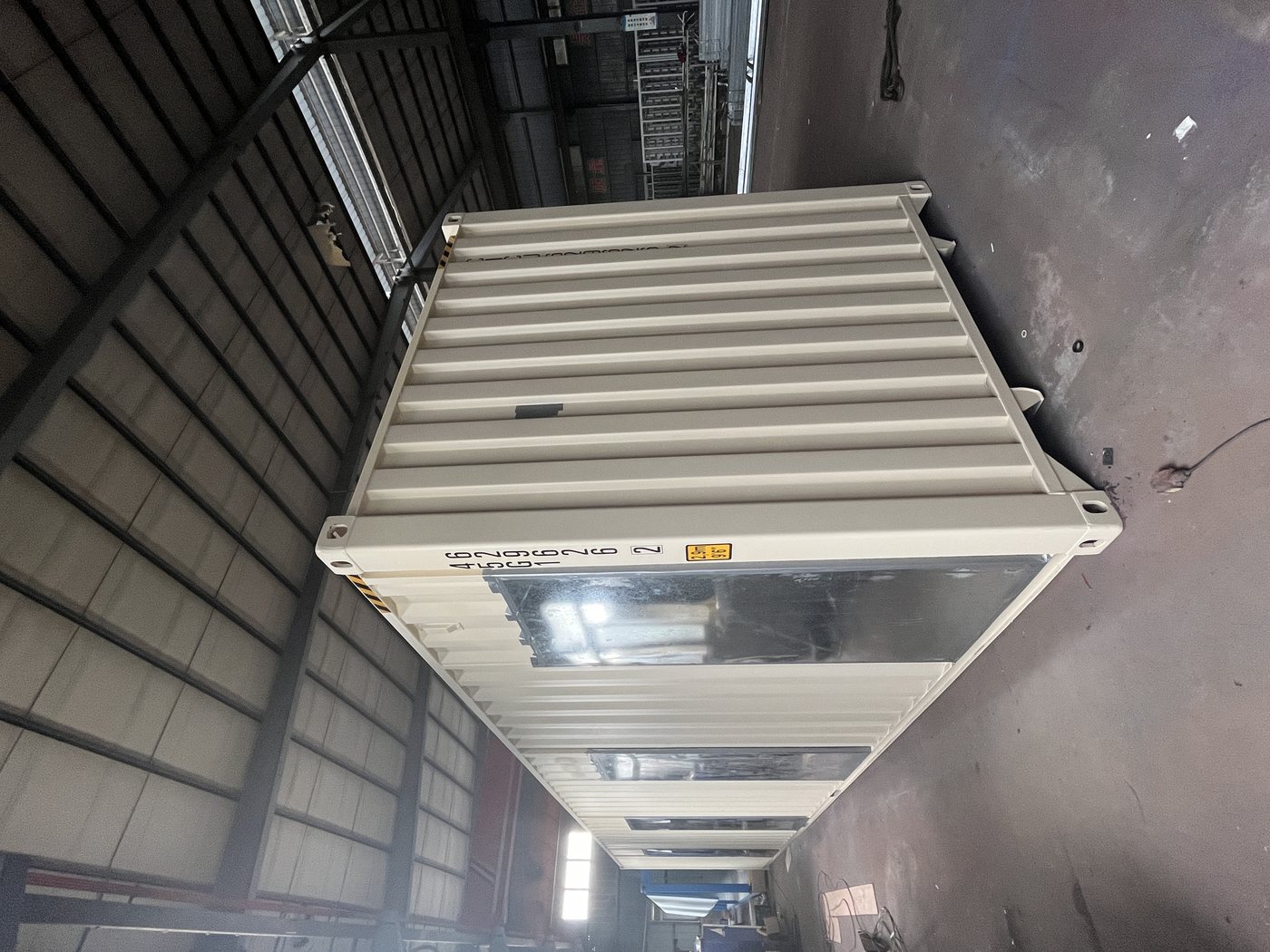
Inside the workshop, before shipping
The products this specification maps to
Photographs are from the delivered project. The client is not named. Commercial values are withheld; the figures describe the configuration as shipped.
Send the box numbers and photos of the four corners.
Whether a second-hand box is worth converting is decided by its corner castings and its floor, not by its paint. Send photos of both and we will tell you what the conversion will cost before you cut anything.