
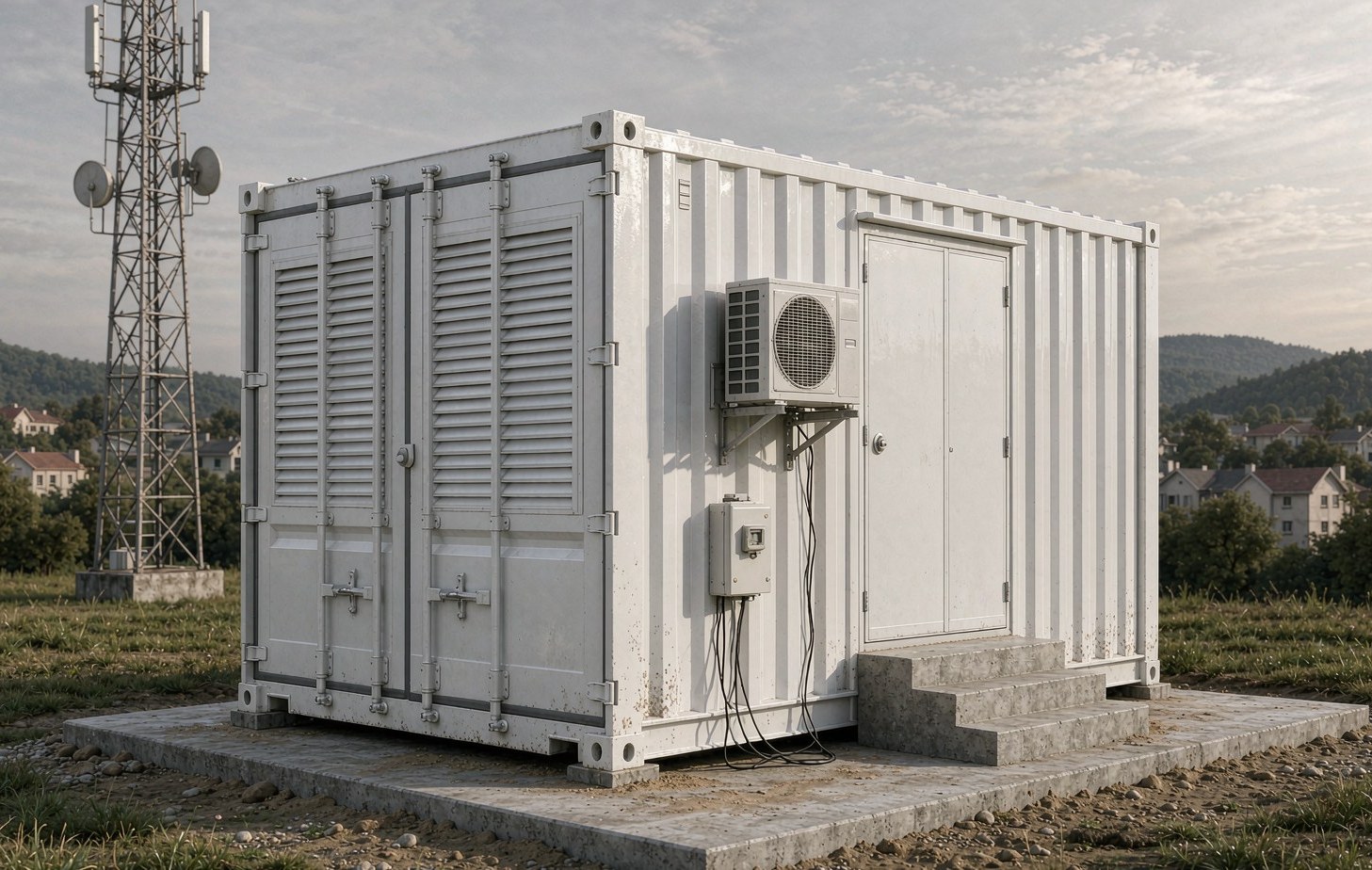
Twelve edge sites, one container each
A content delivery network needed capacity inside twelve secondary towns — places where a leased suite costs four times the national average, starts at 500 m² and takes nine months to commission. We stopped leasing rooms and started shipping them.
The suites were the wrong size, in the wrong towns, at the wrong price
What the client was up against
Latency budgets are set by distance and the operator’s traffic had moved out of the capitals. In the twelve towns where the caches were needed, commercially available colocation started at half a hall, was priced against a capital-city index, and queued behind other tenants for power and access.
The alternative on the table was a purpose-built edge building per town. Twelve sites at roughly nine months each, twelve planning applications, twelve sets of groundworks, and a capital line the board would not sign in one year.
What we proposed
A single 20 ft pod per town: eight racks, 60 kW of UPS, split DX cooling and a fire panel, all inside one ISO frame that lands on a pad and takes a cable trench, a fibre duct and a meter. Site works reduce to a level pad, a power connection and a duct — the kind of work a local contractor can finish in two weeks.
Because the pod is a product, the twelfth site costs what the first one did and commissions the same way. That is the point of the frame agreement: the design is frozen once, and each call-off is a shipping date rather than a project.
Three systems in a 20 ft footprint
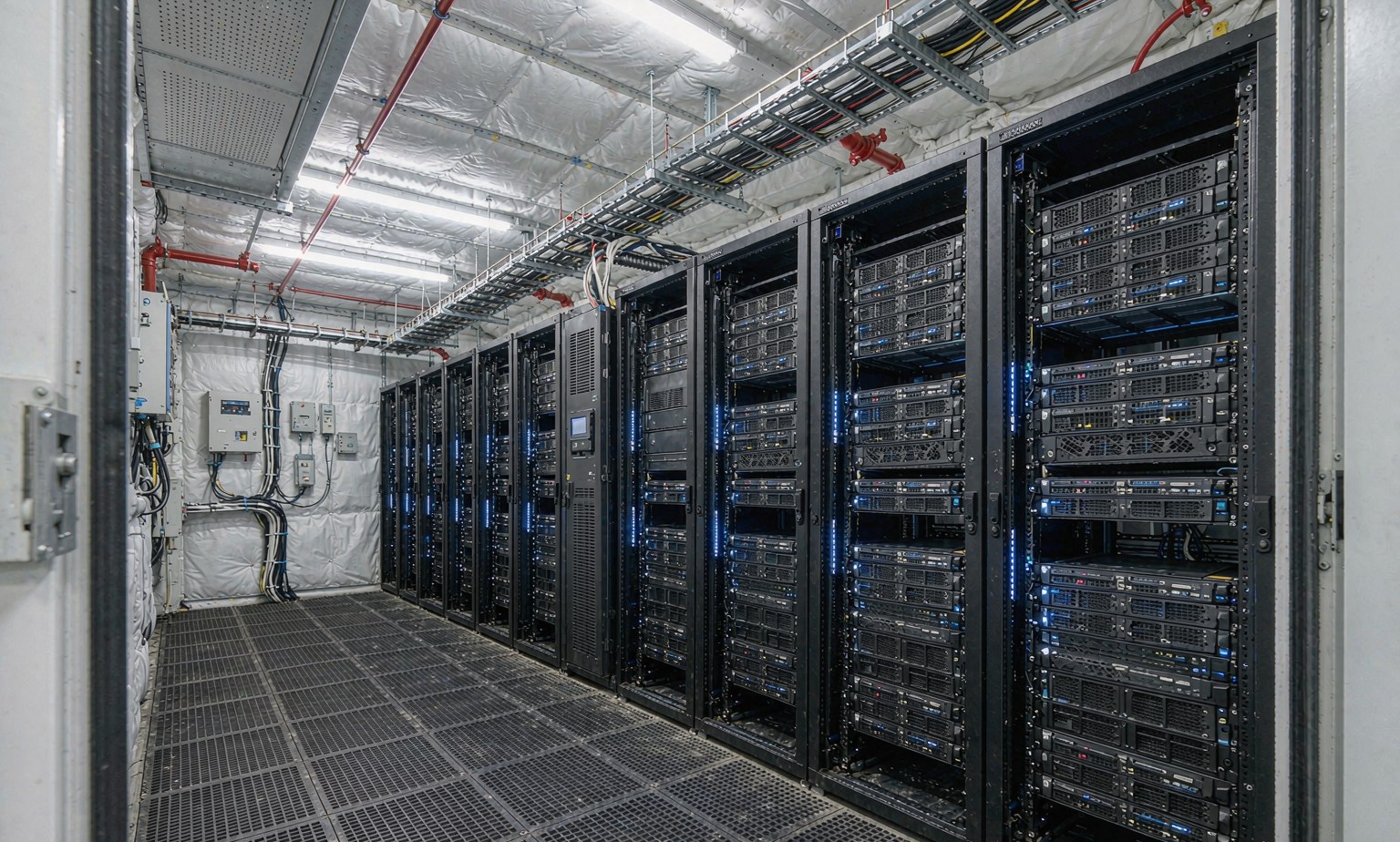
Eight 600 × 1,200 racks at 6 kW each, one row, cold aisle closed with roof panels and blanking. Cabling overhead in a single ladder, A and B separated.
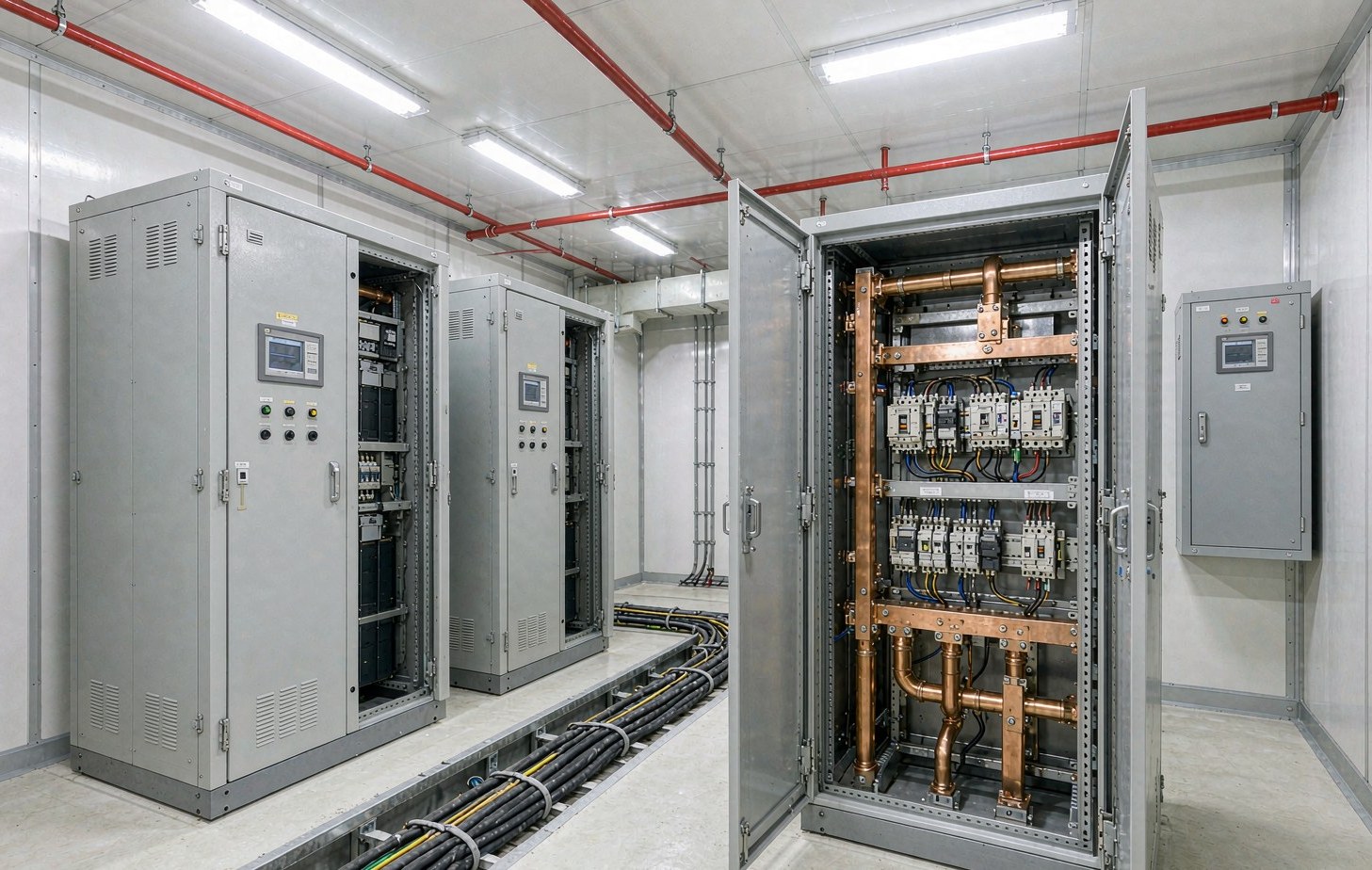
Two 30 kW modular UPS frames sharing the load, static transfer at the output, and metering per rack position. Generator provision kept outside the pod as a site option.
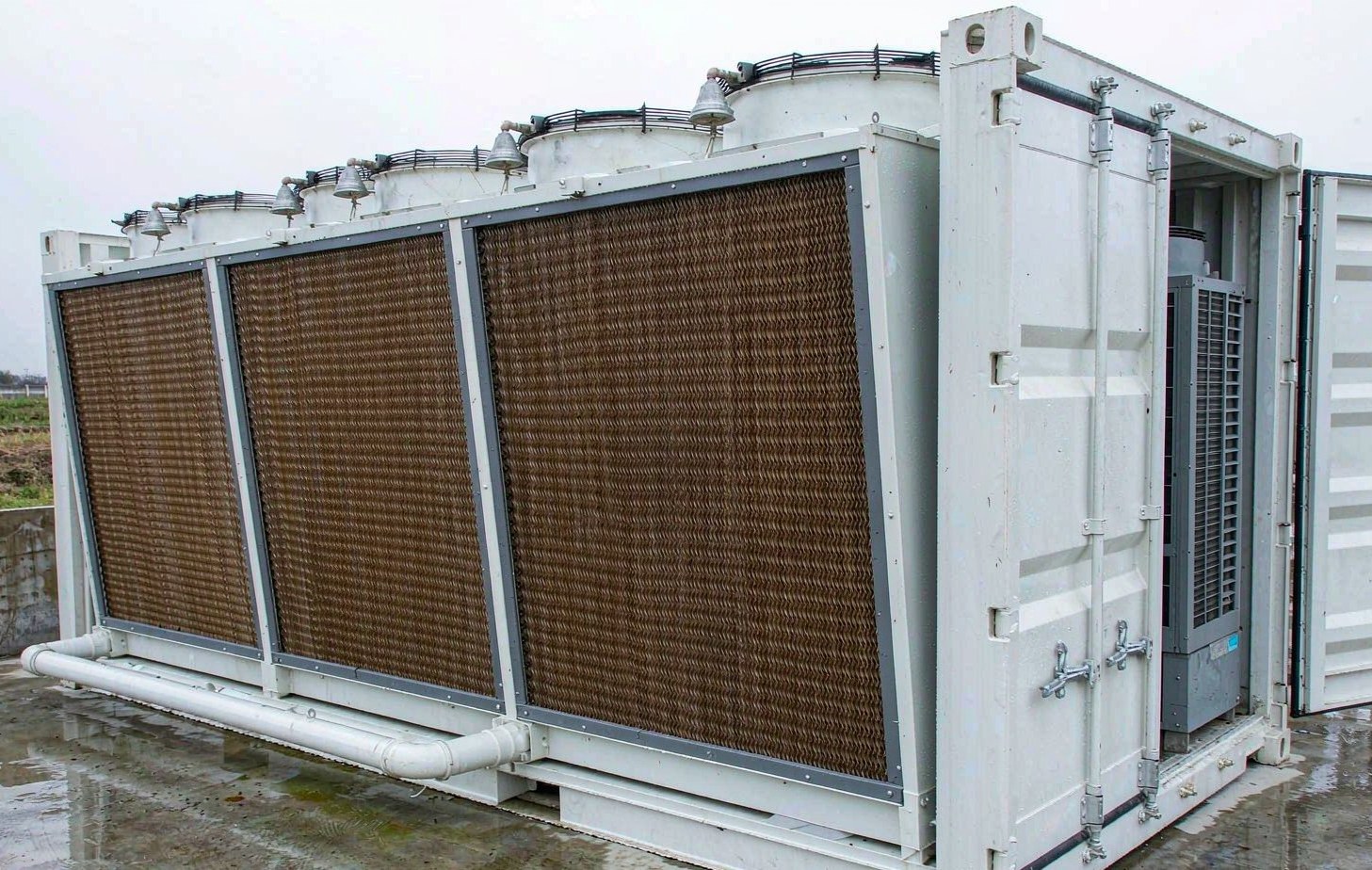
Two independent DX circuits, one running, one on standby, with an economiser coil for the 5,500 hours a year this latitude sits below 18 °C.
Thirty-eight days from call-off to live — on every one of the twelve
What twelve call-offs actually delivered
Averages across the twelve sites. Two sites ran longer because the local utility required a new transformer; the pod was on site and idle for 26 and 41 days respectively. Values rounded for confidentiality.
Site record — pads, pods and the rooms inside them
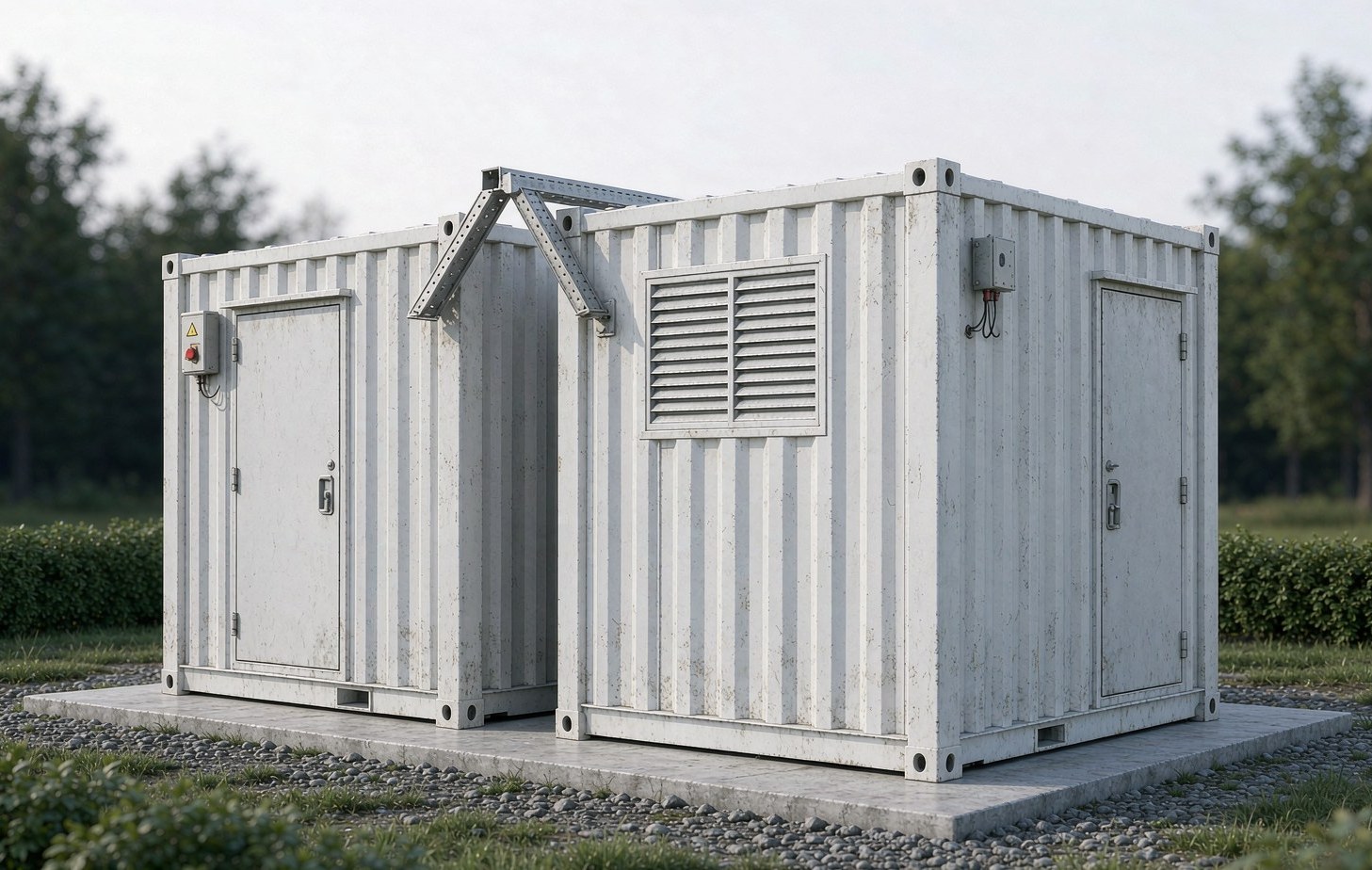
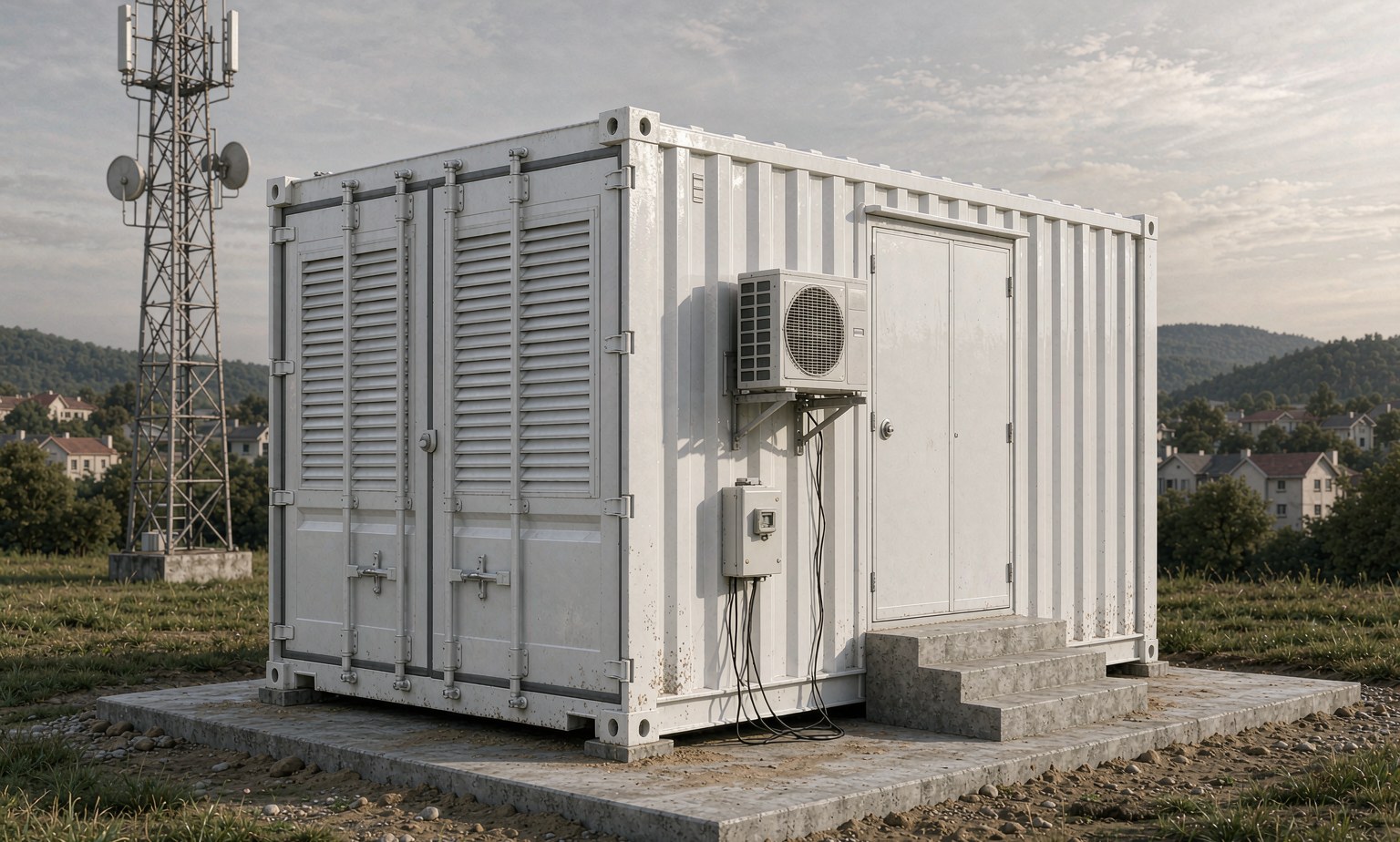
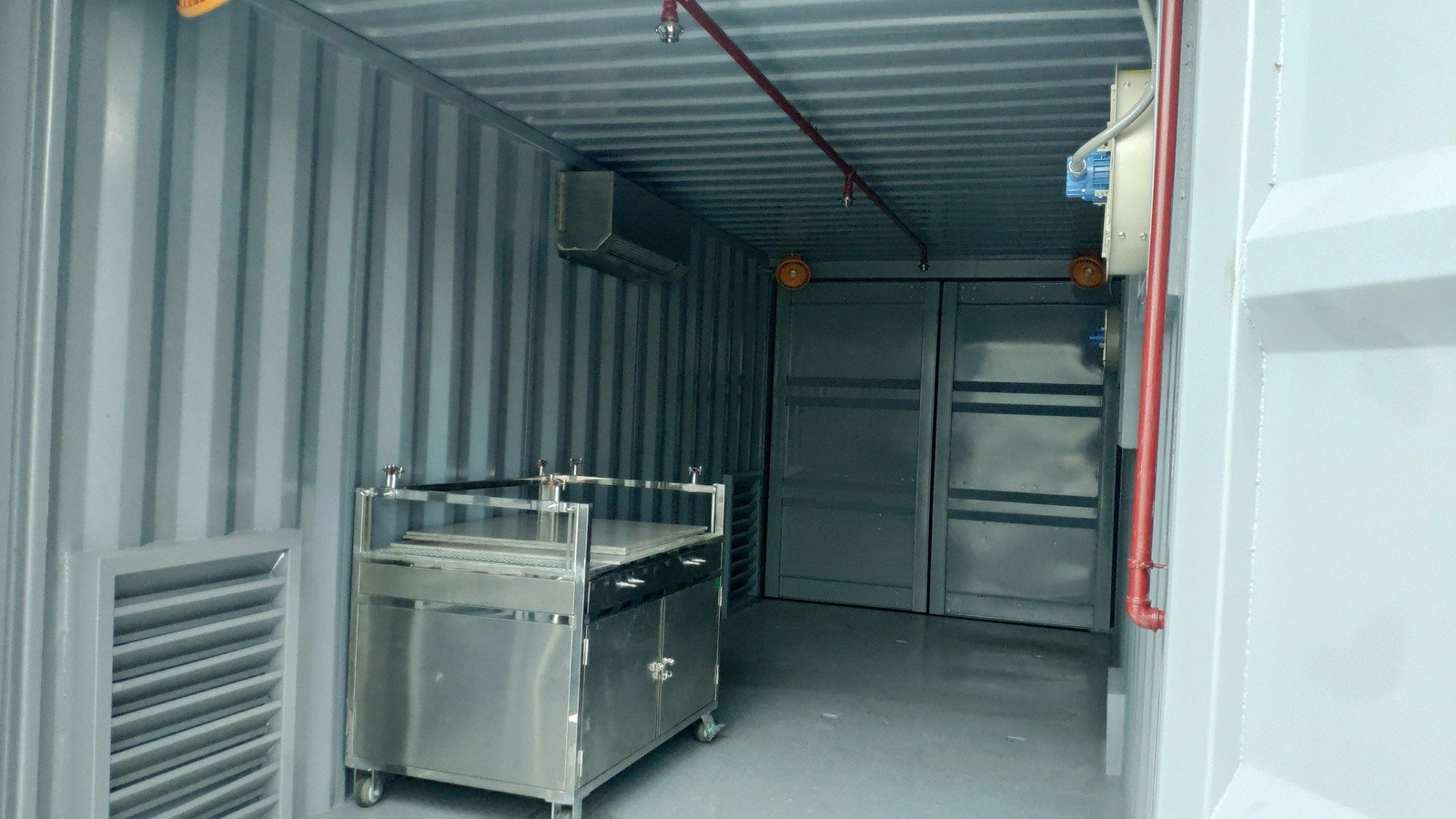
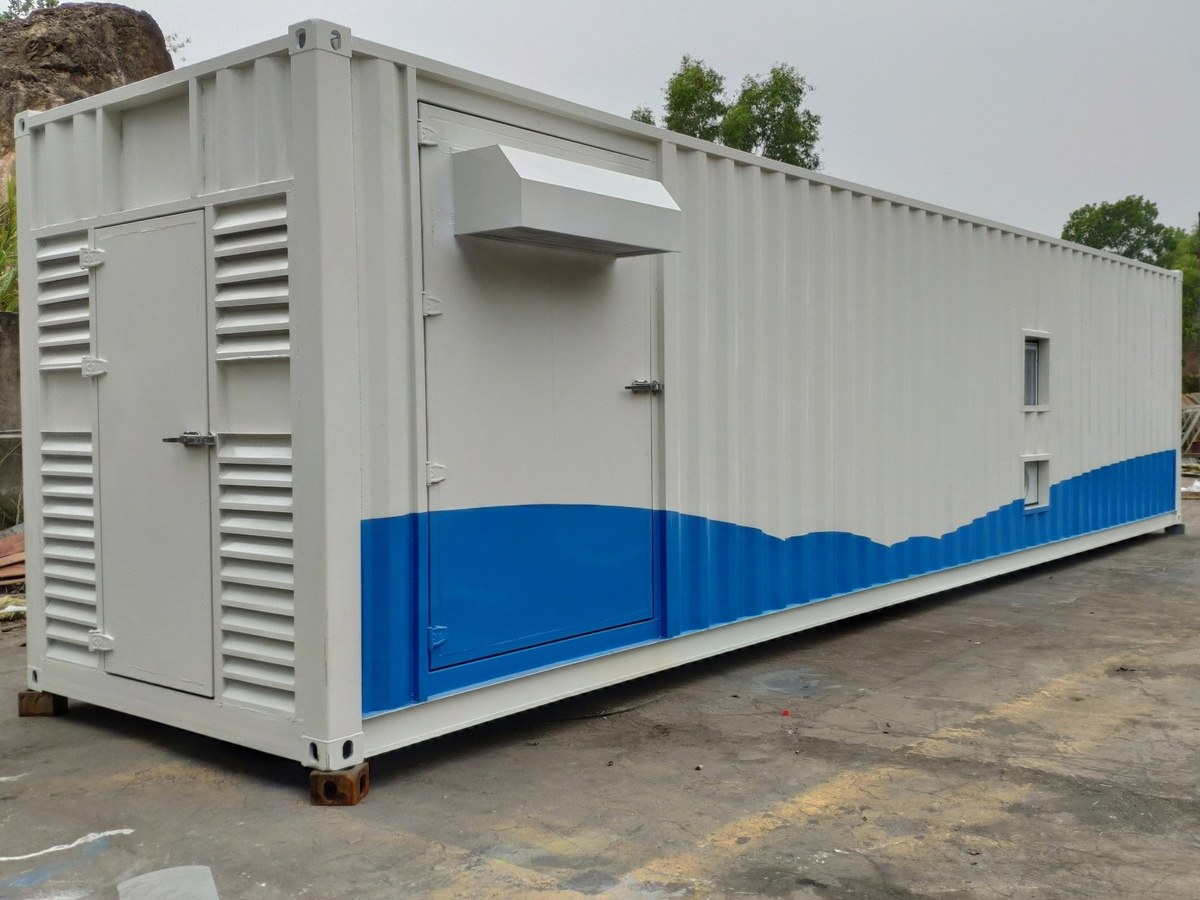
The three products this rollout is built from
Published as an anonymised reference. The client is not named and the site location is given only to region level. Commercial values (contract sum, unit price) are withheld; the technical figures describe the configuration as delivered. Where a number has been rounded or scaled for confidentiality it is stated in the note above.
How many sites, how far apart, and when does the first one need to be live?
Send the town list and a rack schedule. We will come back with a per-site bill of works, a shipping sequence and the same delivery date for site one and site twelve.