Cities across the globe face a tough space issue today. More people mean a higher demand for houses. However, these fresh neighborhoods also need grocery stores and cafés. They require pharmacies, service spots, and similar business sites. Normal building methods often fail to deliver these spots fast. This delay happens mostly in distant areas and rapidly expanding suburbs. It also affects zones bouncing back from natural disasters.
Expandable container shops present a highly useful answer. You can ship these adaptable commercial container buildings in a small size. Once they arrive, they unfold into much bigger rooms. Users can then set them up for many distinct tasks. They do not take the place of long-term housing plans. Rather, they back up home building efforts. They do this by putting key services right next to locals. Furthermore, they make smarter use of scarce ground.
Here at ACTBOXES, we build container solutions for business, home, office, and storage needs. Our main goal is clear. We want to help buyers set up handy areas at a much faster pace. At the same time, we cut down on hard manual work at the job site.
Why Housing Growth Requires More Than Residential Buildings?
A housing plan is never truly finished if folks just get a spot to sleep. Locals must have a way to reach food and medical care. They also need schools, jobs, and everyday services nearby. If these places sit too far away, travel expenses go up. As a result, the overall quality of neighborhood life drops.
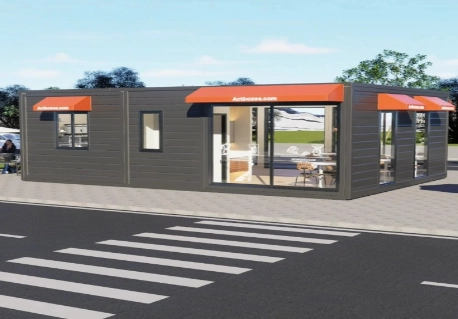
This exact gap is where expandable container shops make a huge difference. A single movable unit can easily turn into a corner store or a pharmacy. It might serve as a town office, a café, or a repair garage. Builders can drop it right next to fresh houses. They do not have to wait for a standard brick-and-mortar shop to finish construction.
For land developers, government groups, and town planners, this method brings out a few solid benefits:
- Crucial shops can launch during the very first phase of a housing plan.
- Business areas can expand smoothly as the nearby population goes up.
- Locals get a much simpler way to reach food and home services.
- Small brands can step into fresh towns with fewer starting building costs.
- Owners can shift or alter the units whenever local market trends shift.
Through these steps, modular retail spaces do something vital. They help change a basic group of houses into an active, working town.
How Expandable Container Shops Use Space More Efficiently?
A lack of open land hurts both home supplies and business growth. Inside packed cities, every single square meter counts. Out in distant zones, the core issue looks quite different. The ground might be entirely open and free. However, workers, building supplies, and travel routes remain scarce. Expandable container shops tackle both of these tough situations. They do so through tight shipping sizes and highly adaptable daily uses.
The true worth of these structures turns obvious rather quickly. You just need to look at their physical shape and their potential daily uses one by one.
Compact During Transport and Spacious After Expansion
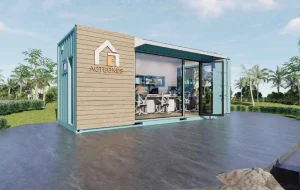
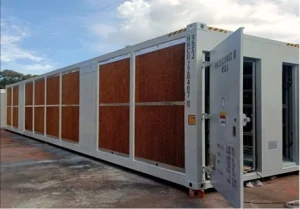
Our 20-foot container expansion model measures approximately 5.9 × 2.2 × 2.5 meters when folded. After expansion, it reaches about 5.9 × 6.58 × 2.5 meters. This creates roughly three times the transported floor area while maintaining a compact shipping form.
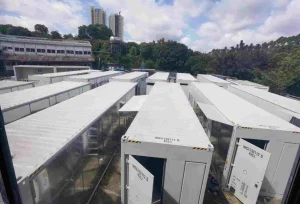
The structure weighs about 5,000 kilograms and uses high-strength steel with a one-piece welding process. Because each unit is prepared largely before delivery, less structural work is required at the destination. This can be valuable where construction labor is scarce or where long building programs would disturb nearby residents.
Expandable container shops also make phased development possible. A customer can begin with one portable container store and add more units as demand grows. This reduces the risk of constructing a large retail building before the community is ready to support it.
One Structure Can Serve Several Community Needs
Housing demand changes over time. A new settlement may first need an information center or temporary food store. Later, the same space may work better as a clinic, office, warehouse, or small shop.
Our expandable units support residential, office, shop, and warehouse applications. This flexibility gives planners more control over the life of each building. Instead of removing an unused structure, they can adjust its interior purpose.
Possible uses include:
- Neighborhood grocery stores
- Pharmacies and health supply points
- Community information centers
- Small cafés and food-service spaces
- Mobile sales offices
- Temporary relief distribution centers
- Storage rooms for local businesses
Customers can explore these and other applications through our wider range of commercial container buildings.
How Commercial Container Buildings Support Faster Community Development?
Conventional shops may require lengthy foundation work, repeated material deliveries, and several groups of on-site workers. These demands can slow commercial development beside urgently needed housing. Factory-prepared commercial container buildings move much of the work away from the final site.
Speed, however, should not mean ignoring durability or user safety. A useful modular building needs a strong frame, suitable electrical components, weather resistance, and an interior plan that matches the intended business.
Factory Preparation Reduces On-Site Work
With industrial production, major structural and interior tasks can be completed in a controlled environment. The finished unit is then transported to the project site for placement, connection, and final inspection. This method can create a more predictable construction process, particularly when poor weather or limited labor would delay traditional work.
Our portable container stores are designed for convenient sea and land transportation. Their folded form helps use transport space more efficiently, while the expanded form provides a practical customer area after arrival.
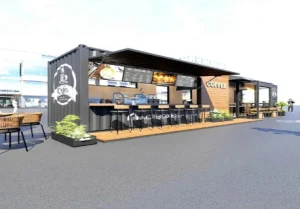
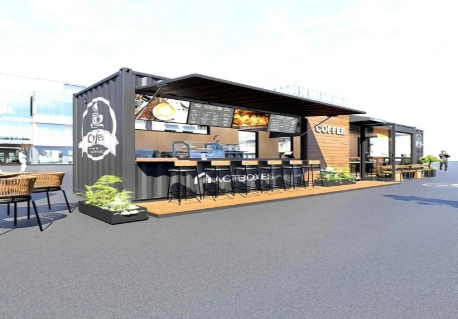
For larger commercial needs, ACTBOXES also supplies a 40-foot standard container café. Its factory prefabrication rate can reach 95%, and the model is designed for rapid on-site assembly. Such options allow customers to choose a building size that suits expected traffic, available land, and business type.
Structural and Electrical Features Matter
Shops serving housing communities may operate every day and hold valuable equipment, food, or supplies. Their structure must therefore be assessed for local wind, earthquake, fire, and electrical requirements.
Our 20-foot expandable model uses a high-strength steel frame and includes Class A fire performance, sound insulation above 40 dB, and thermal insulation intended for temperatures from approximately −30°C to 50°C. The listed design also provides resistance specifications for earthquakes and strong winds.
The electrical system is designed around the U.S. National Electrical Code, while switches, outlets, and distribution boxes are available with UL-certified components. Local authorities and qualified professionals should still review the building, foundation, connections, and permits before opening any shop.
Why Sustainable Modular Construction Matters for Housing Supply?
The housing shortage is closely connected to material use, construction waste, and carbon emissions. Building faster is not enough if the process places greater pressure on land and natural resources. Sustainable modular construction offers a different path by using factory-controlled production and structures that can serve more than one purpose.
ACTBOXES has focused on container houses and related modular spaces since 2013. Our goal is to create environmentally responsible buildings that remain practical for real users. More information about our experience and values is available on the ACTBOXES company page.
Expandable container shops can support sustainability in several ways:
- Factory cutting and assembly can reduce uncontrolled material waste.
- A unit may be reused rather than demolished when a project changes.
- Compact transport can simplify delivery to distant locations.
- Commercial services placed near homes can reduce some routine travel.
- Flexible interiors can extend the useful life of the building.
- Phased installation helps prevent unnecessary construction.
These benefits depend on thoughtful planning. Buyers should consider insulation, energy use, water management, local climate, and end-of-life reuse before selecting a modular solution.
Who Can Benefit from Portable Container Stores?
Portable container stores are suitable for more than property developers. They can support organizations that need reliable commercial or public-service space without committing immediately to a large fixed building.
The best results come from matching the structure to the people who will use it. Location, customer flow, storage, accessibility, ventilation, utilities, and local rules should all shape the final design.
Developers and Community Planners
Housing developers can place modular retail spaces near newly completed homes while permanent commercial districts are still being planned. The units may provide sales services at first and later become neighborhood stores or management offices.
Public planners may also use them in temporary settlements, rural service networks, or post-disaster communities. A single structure can be reassigned as local needs change, which is valuable when future population levels are uncertain.
Small Businesses and Local Entrepreneurs
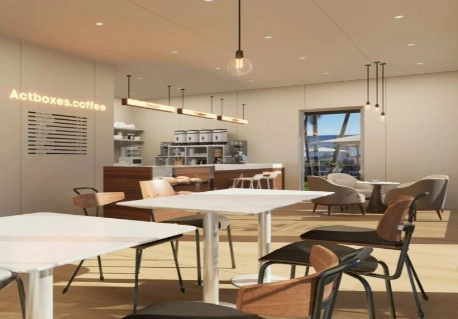
A traditional retail building may be beyond the reach of a new business. An expandable container shop provides a smaller and more flexible entry point. Owners can select interior and exterior colors, furniture arrangements, appliances, service counters, and room divisions according to their operations.
At ACTBOXES, we provide personalized container solutions supported by design and production services. Customers can review our broader product range or contact us to discuss dimensions, climate conditions, intended use, and delivery requirements.
Conclusion
Expandable container shops address global housing demands by supporting the communities that grow around new homes. They bring shops, service points, workplaces, and storage facilities closer to residents without depending on long conventional construction programs. Their compact transport form, expanded floor area, adaptable interiors, and reusable structure make them especially useful for phased projects and locations with limited building resources.
At ACTBOXES, we design commercial container buildings for practical use across different climates and business settings. Each project should still be reviewed for local permits, foundations, utilities, and safety rules. When carefully planned, expandable container shops become more than temporary retail units. They help create active, connected neighborhoods where housing and essential services can develop together.
FAQs
Q: How large is an ACTBOXES expandable container shop?
A: It expands from 5.9 × 2.2 × 2.5 m to 5.9 × 6.58 × 2.5 m.
Q: How much does the 20-foot expandable container shop weigh?
A: The overall structural load is approximately 5,000 kg.
Q: Can expandable container shops be used for purposes other than retail?
A: Yes. They can serve as offices, warehouses, emergency cabins, or residential spaces.