Shipping container data centers are changing how companies plan IT infrastructure. Instead of building a fixed facility from the ground up, businesses can place computing power inside a strong, movable container with power distribution, cooling, monitoring, and safety systems already built in. For mining operators, energy companies, remote projects, and fast-growing digital teams, this model offers a practical path to faster deployment and easier growth.
At ACTBOXES, we design container solutions for housing, offices, commercial spaces, and data container centers. Our Bitcoin Zone focuses on container-based infrastructure for high-density digital operations. These products help users build reliable computing space without depending only on permanent buildings.
Why Shipping Container Data Centers Matter Today
Modern IT projects need speed, power, and flexibility. Traditional data centers can take a long time to plan, approve, build, and test. A containerized data center shortens that path because the core systems can be prepared in advance and moved to the site when needed.
This is especially useful when a project is tied to energy availability, land access, or changing business demand. A container can be placed near power resources, relocated if conditions change, and expanded in phases as more capacity is required.
Faster Deployment Than Fixed Buildings
A shipping container data center arrives as a more complete technical unit. The structure, electrical distribution, airflow design, cable planning, and equipment zones are prepared before delivery. On site, teams mainly focus on foundation, power connection, network access, grounding, and final inspection.
For mining projects, speed can affect revenue. A shipping container ASIC mining operation may need to start quickly when power pricing, equipment availability, and market timing are favorable. A modular container gives the operator a faster route than building a full facility first.
This does not mean planning becomes simple. Power load, ventilation, local climate, fire protection, and service access still matter. But the project starts from a more organized foundation.
Easier Expansion in Stages
A fixed data center often requires a large upfront commitment. Container data centers allow a phased plan. One unit can start operation first. More units can be added later when the site proves stable and demand grows.
This staged approach helps buyers manage risk. It also makes mining container setup cost easier to control because investment can be tied to real capacity needs rather than guesswork. ACTBOXES presents modular product categories that support this type of flexible planning.
What Makes a Containerized Data Center Work
A containerized data center is not only a steel box with machines inside. It is a coordinated system. Structure, power, cooling, monitoring, safety, and maintenance access all influence performance. If one part is weak, the whole project can suffer.
The best container infrastructure is designed around daily operation. Workers must be able to inspect systems, replace parts, control airflow, and respond quickly when equipment needs attention.
Strong Container Structure
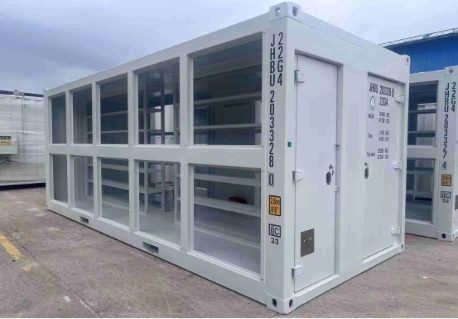
ACTBOXES Container Data Center uses a sea container body with a CSC certificate. A single box can hold 336 S19 and S21 miners, and the box body load-bearing capacity reaches up to 20,000 kg. The structure uses high-strength galvanized steel plate and insulated sandwich panels to resist moisture, heat, and dust.
This matters in real sites. Many container data centers work outdoors or near industrial areas. They may face desert heat, coastal humidity, dust, vibration, and heavy electrical loads. A strong frame protects the machines and supports safe transport.
Power Distribution and Control
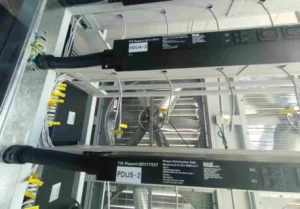
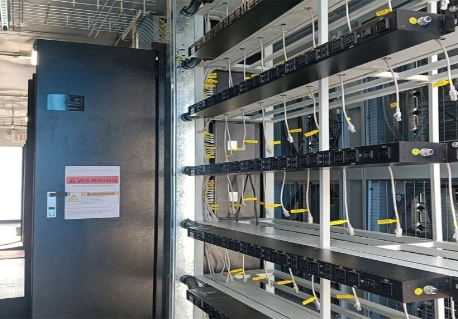
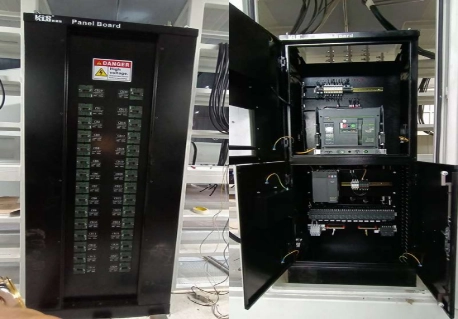
Power is the heart of any mining or IT container. ACTBOXES uses PDU modules controlled individually by one controller. Each module controls 14 miners, while the main power cabinet circuit breaker is 1200A and the PDU control circuit breaker is 80A.
This structure makes operation clearer. If one module needs attention, the whole container does not have to become confusing. Maintenance teams can identify circuits, check loads, and manage power flow with better order.
For buyers comparing mining container cost, this part deserves serious attention. A low-price shell without strong power design can lead to unstable operation, difficult service, and higher long-term cost.
Cooling and Environmental Control
Heat is one of the biggest challenges in container-based IT infrastructure. Mining machines and servers generate constant heat. If hot air remains trapped inside the unit, equipment may slow down, shut off, or wear out faster.
A containerized data center must move air in a controlled way. Intake, exhaust, fan power, dust filtering, and temperature monitoring need to match the machine load and local climate.
Airflow for Mining Operations
ACTBOXES data center containers include independent temperature control features, with low-temperature preheating and high-temperature exhaust air compensation. The product also supports IP54 protection, helping resist dust and splash water in demanding environments.
For a shipping container GPU mining farm, airflow needs may differ from ASIC mining. GPU equipment can require different rack layouts, heat paths, and maintenance zones. A good container plan should match the type of equipment, not force every project into the same design.
Practical cooling questions include:
- What is the highest local temperature?
- Is the site dusty, coastal, dry, or humid?
- How many machines will run at full load?
- Where will hot air discharge?
- Can filters be cleaned easily?
- Is noise control required?
- Will the container run all year?
These questions shape real operating value more than the outside appearance of the container.
Monitoring for Stable Operation
Monitoring helps operators see problems before they become failures. ACTBOXES integrates Modbus RTU protocol control, with real-time monitoring of voltage, current, and power factor for each PDU. Dual communication through RS485 and Ethernet supports SCADA system docking.
For a high-density container, this visibility is important. Operators need to know whether power is stable, whether cooling is working, and whether one section is carrying more load than expected.
How Container Data Centers Support Flexible IT Growth
Shipping container data centers redefine IT infrastructure by making it less fixed. The unit can be placed where business conditions make sense. It can also be moved, expanded, or adjusted as needs change.
This is valuable for energy-linked projects, mining farms, temporary computing work, and remote industrial operations. Instead of waiting for a permanent data hall, teams can build capacity closer to power and demand.
Mobility Near Power Resources
Mining operations often follow energy availability. Some sites have surplus power, renewable power, or lower-cost electricity, but they may not have a traditional data center nearby. A containerized data center can bring computing capacity to those areas.
This is one reason ACTBOXES has experience with digital currency container projects. In the Global Digital Currency Container Data Center System, we deployed 13 data center container houses in Texas. These units used cooling systems, redundant power supplies, and security measures to support stable operation and fast response to business growth.
Cost Planning Beyond the Container Shell
Mining container cost includes more than steel, doors, and shelves. Buyers should consider power cabinets, PDUs, fans, certification, cooling design, monitoring, fire protection, shipping, installation, and climate conditions.
Mining container setup cost may also include:
- Foundation preparation
- Transformer and power access
- Grounding system
- Network connection
- Local permits
- Crane and unloading
- Fire and safety equipment
- Drainage and road access
- Maintenance tools and spare parts
A stronger container may cost more at first, but it can reduce downtime and support safer long-term operation.
ACTBOXES Products Beyond Data Centers
ACTBOXES works across several container product directions. This gives customers more ways to combine infrastructure, workspace, and accommodation on one project site.
A mining or energy project may need more than a data container. It may also need a 20-foot sea container office for site management, a staff room, or a control office. A 20′ container office can provide a practical workspace close to the operation area.
Some projects may also use an expandable system for living, office, shop, or storage space. For remote sites, a container home with solar panels or a solar container house may support accommodation where grid access is limited. These products are different from a data container, but they share the same modular thinking: factory production, transportable structure, and flexible use.
What Buyers Should Check Before Choosing a Container Data Center
Before buying a shipping container data center, buyers should look beyond the listed machine capacity. A container must fit the site, power source, local weather, safety rules, and maintenance plan.
Important checks include:
- Miner or server type
- Total power load
- Voltage standard
- Cooling method
- Local temperature range
- Dust and humidity level
- Fire protection needs
- Electrical certification requirements
- Monitoring system
- Maintenance access
- Transport route
- Future expansion plan
For more selection guidance, ACTBOXES also shares practical advice in How to Choose the Perfect Crypto Mining Container for Your Operation.
Conclusion
Shipping container data centers redefine IT infrastructure by making computing space faster to deploy, easier to move, and simpler to expand in stages. For mining and digital operations, a containerized data center can place power, cooling, monitoring, and safety inside one transportable unit. ACTBOXES designs container data centers for high-density use, with strong structure, controlled power distribution, environmental protection, and intelligent monitoring. Buyers should compare more than machine capacity or mining container cost. The right choice depends on site power, climate, cooling needs, safety rules, service access, and long-term growth. When planned well, container infrastructure can become a practical bridge between today’s demand and tomorrow’s expansion.
FAQs
Q:How much weight can an ACTBOXES container data center carry?
A:Up to 20,000 kg.
Q:How many miners fit in one ACTBOXES containerized data center?
A:Up to 336 S19/S21 miners.
Q:How much liquid coolant does an air-cooled mining container need?
A:0 L for standard air-cooled designs.