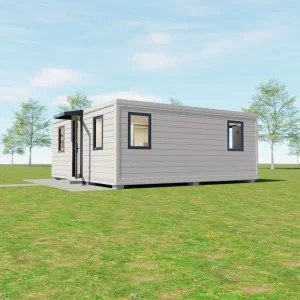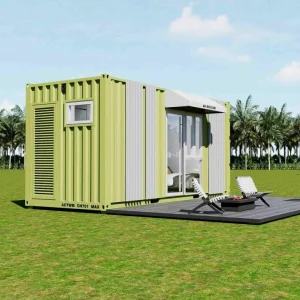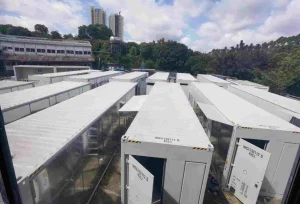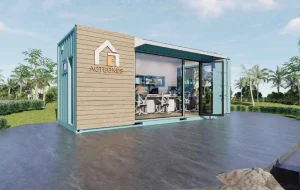
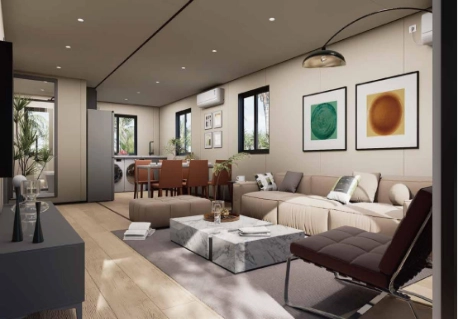
Expandable container houses are no longer a small niche. Buyers now compare them with apartments, vacation rentals, site offices, and compact family homes. At ACTBOXES, we see the sale of an expandable container house as a value equation, not just a price tag. Shoppers look at transport cost, local approval, build quality, comfort, and long-term use. That is why the strongest products sell on both practicality and trust. If you are comparing options, start with our ACTBOXES homepage and the Residential Scene collection, where the product range is built for real living needs.
Factory Cost Sets the Floor
The first economic factor is the cost of making the unit. Every expandable container house begins with steel, structure, insulation, electrical parts, windows, doors, and interior finish. When those parts are upgraded, the selling price usually rises. But higher quality also helps the unit sell faster, because buyers feel the difference in safety, comfort, and durability.
Structural quality changes buyer confidence
A strong frame is not a luxury. It is the base of the whole product. At ACTBOXES, our residential container house models use high-strength steel structure, one-piece welding, and certified electrical systems. Our 20-foot units also support demanding use, with Class A fire performance, thermal insulation from -22 to 122F, soundproofing above 40db, and wind resistance up to 50m/s.
These details matter economically because they change how buyers judge risk. A unit that feels more secure, better insulated, and easier to trust can command a better price. In the expandable container house market, quality is part of the sale story, not only part of the product story.
Customization directly affects the quote
The next price driver is customization. Buyers do not all want the same room layout, bathroom position, furniture package, or exterior look. Some want a compact family unit. Others want a rental cabin or a mobile business space. The more the design changes, the more labor and material planning are required.
That is one reason our 20-foot Container Extension Room and our 40ft Expandable Container House attract different buyers. One group wants speed and compact living. Another wants more room for a larger household or a higher-value rental. In both cases, the final expandable container house price reflects the level of personalization.
Logistics and Installation Can Quietly Raise or Lower the Price
A unit may look affordable on paper, but the total sale value changes once transport and installation enter the picture. This is one of the biggest reasons buyers need to compare more than the showroom number. The good news is that an expandable container house has a natural shipping advantage. Its folded form is compact, which can reduce freight pressure and simplify movement.
Compact transport supports better economics
The transport footprint of a modular home matters a great deal. A unit that ships in a smaller shape uses less space, can be moved more efficiently, and is easier to handle across sea or land routes. For example, our 20-foot model expands from 5.9 x 2.2 x 2.5m to 5.9 x 6.58 x 2.5m, which gives buyers far more usable space after delivery.
That expansion ratio is a strong selling point because it turns transport savings into living space. In other words, the buyer pays for a compact shipment first, then receives a much larger residential container house after installation. That balance is a major reason expandable container houses remain competitive in the housing market.
Site conditions still shape the final cost
Even when transport is efficient, the site can add cost. A flat, ready plot is easier to work with than a narrow, remote, or uneven site. Buyers need to consider foundation work, lifting equipment, utility hookups, access roads, and local installation labor. These items can change the final sale price and the speed of delivery.
Typical site factors include:
- foundation type
- road access
- electrical and water connection
- drainage planning
- crane or lifting needs
- local weather conditions
At ACTBOXES, we design for faster deployment, but we also know the site is part of the economic equation. A better-prepared site usually helps the buyer move from order to use much faster.
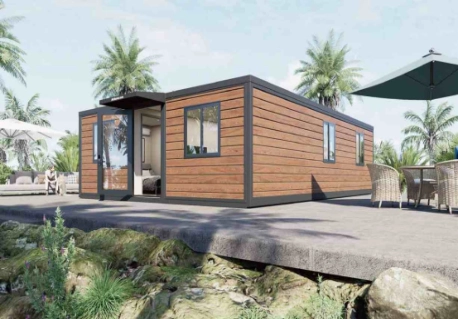
Market Demand and Regulation Shape Sales Speed
The sale of expandable container houses is not driven by price alone. It is also shaped by where the buyer lives, what the local market needs, and how quickly a project can get approved. In some regions, these homes are seen as fast housing solutions. In others, they are attractive for tourism, rentals, worker housing, or temporary office use. That flexibility helps demand stay broad.
Different end uses create different buying behavior
A residential container house can serve many markets. Some buyers want a personal home. Others want a guest unit, a holiday rental, or a project cabin. Commercial buyers may also look at the same product as a revenue tool, not only a place to live. We see this across our wider ACTBOXES product range, which includes residential, office, and multi-use container solutions.
The market often moves faster when the unit can be used in more than one way. A house that can later become a rental room, a staff unit, or even a work space feels less risky to the buyer. That flexibility improves resale logic and supports stronger sales.
Approval speed affects buyer demand
Local regulations also matter. Buyers want to know whether the structure can meet local codes, electrical needs, and safety expectations. When a product is easier to approve, it becomes easier to sell. That is why certification, clear specifications, and real project examples carry economic weight.
ACTBOXES builds with practical use in mind. Our 40-foot sea container office shows how the same build logic can work across residential and business settings. For many customers, that cross-use potential is part of the purchase decision. They are not only buying a house. They are buying flexibility.
Operating Cost and Resale Value Matter More Than Buyers Expect
The smartest buyers look beyond the first quote. They ask what the home will cost to run, maintain, and resell. That is where expandable container houses can stand out. If the unit keeps heat in, stays stable in strong weather, and needs less upkeep, the owner saves money over time. That lower lifetime cost often helps the product sell.
Comfort and efficiency support value
Good insulation, sound control, and weather resistance do more than improve comfort. They help the buyer feel safe about long-term use. Our ACTBOXES designs include features such as thermal insulation, fire performance, seismic resistance, and typhoon resistance. Those features matter economically because they reduce worry, and worry often slows a sale.
A unit that performs well in different climates is easier to market. Buyers in hot, cold, windy, or noisy areas all ask the same thing in different words: will this home stay comfortable and hold up over time? When the answer is yes, the sales process becomes smoother.
Long service life improves return on investment
A longer service life changes the financial picture. Buyers are more willing to pay for a home that can be used for years, relocated if needed, and adapted to another purpose later. That is especially true for a modular container housing product. The structure is not locked into one narrow use.
For ACTBOXES customers, this means a residential container house can be a home today and an income asset tomorrow. That kind of flexibility is one of the strongest economic reasons people choose container homes for sale instead of more fixed housing options.
Conclusion
The sale of expandable container houses depends on more than the visible price. Buyers weigh structure quality, customization, transport, installation, local demand, approval speed, operating cost, and future resale value. At ACTBOXES, we build around those realities. A strong residential container house must be practical, comfortable, and easy to deploy, but it also needs to make sense financially over time. When those parts come together, the product becomes easier to sell and easier to trust. That is why the best expandable container house is not simply the cheapest one. It is the one that gives the clearest return for the buyer’s budget, site, and long-term plan.
FAQs
Q: What affects expandable container house price the most?
A: Steel quality, customization, freight, and installation are the main cost drivers.
Q: Why do buyers choose ACTBOXES residential container house models?
A: They ship compactly, expand quickly, and support flexible layouts.
Q: How much space does a 20-foot ACTBOXES unit gain?
A: It expands from 5.9 x 2.2 x 2.5m to 5.9 x 6.58 x 2.5m.