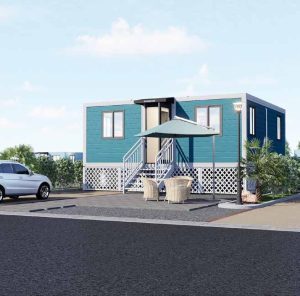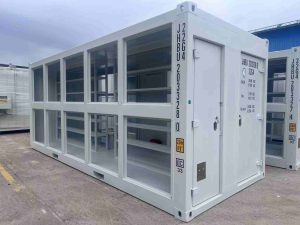
What Is a Shipping Container Data Center and Why Is It Used in Crypto Mining?
How Does a Shipping Container Become a Functional Data Center?
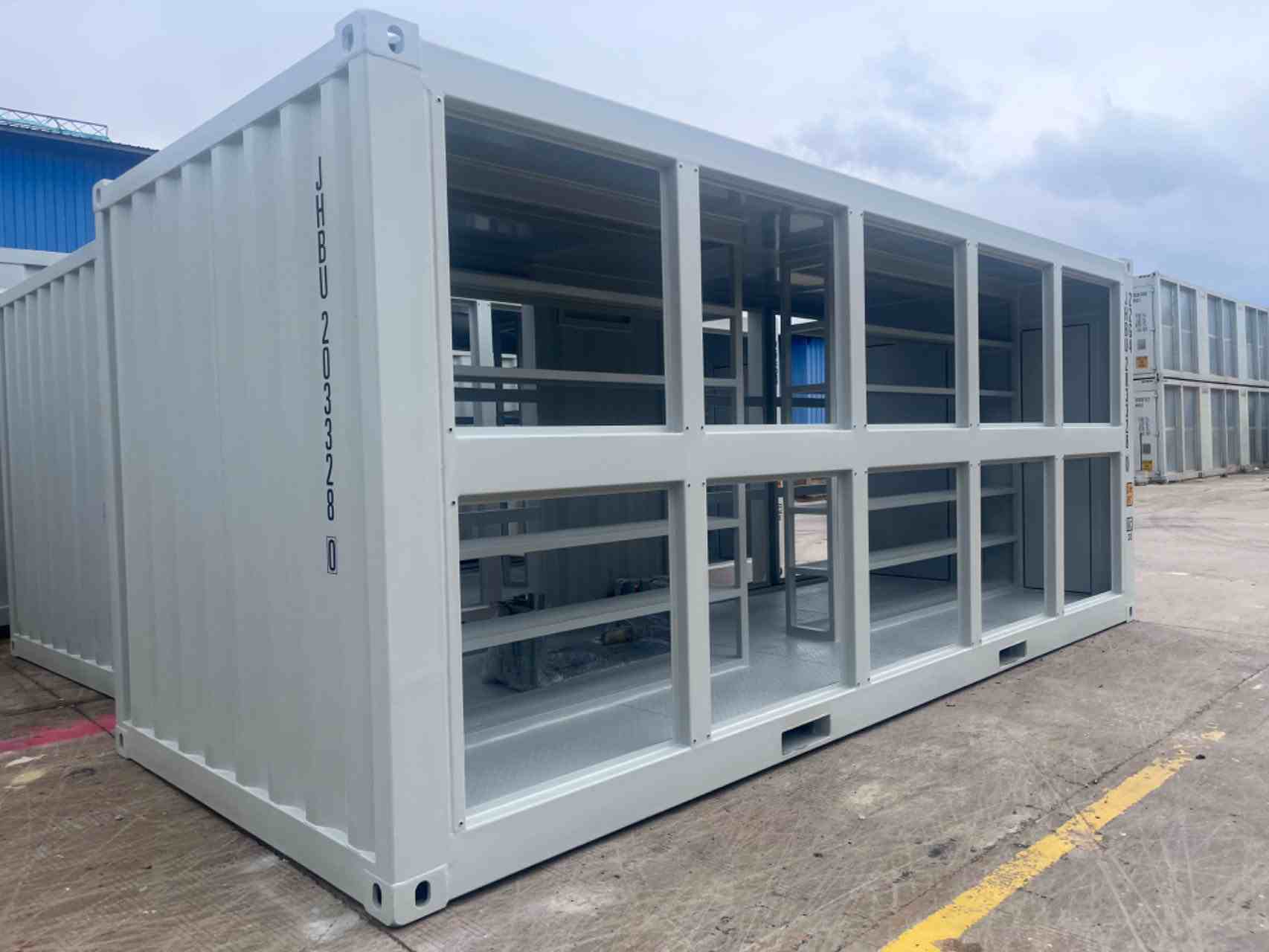
A shipping container data center is a ready-made modular setup made from standard ISO sea containers. These containers get sturdy reinforcement. Then, they receive upgrades with IT equipment like servers, power distribution units (PDUs), and sophisticated cooling setups. The container’s tough steel build offers toughness and protection. Meanwhile, inside changes allow it to work as a packed computing space.
Workers build these units away from the site in managed settings. This lets them do full checks before setup. As a result, it cuts down setup time and skips expensive building holdups. Crypto mining containers stay movable. Miners can shift them to new spots without hassle. This gives miners options to adjust to shifting market situations or grab better energy prices in various areas.
Why Are Shipping Container Data Centers Ideal for Crypto Mining?
Cryptocurrency mining needs nonstop operation, dense computing power, and heavy electricity use. These factors make shipping container data centers a great match. Crypto mining containers create a fine-tuned space for mining equipment. They include strong cooling and air flow systems. These keep hardware at the best running temperature. Their modular design aids simple growth. Operators just add extra containers as needs increase.
Portability stands out as a key plus. These data centers move to spots with cheaper power or helpful rules. They often go to out-of-the-way places where electricity runs low-cost. Or, they tap into plenty of green energy. This helps miners cut running expenses and boost earnings.
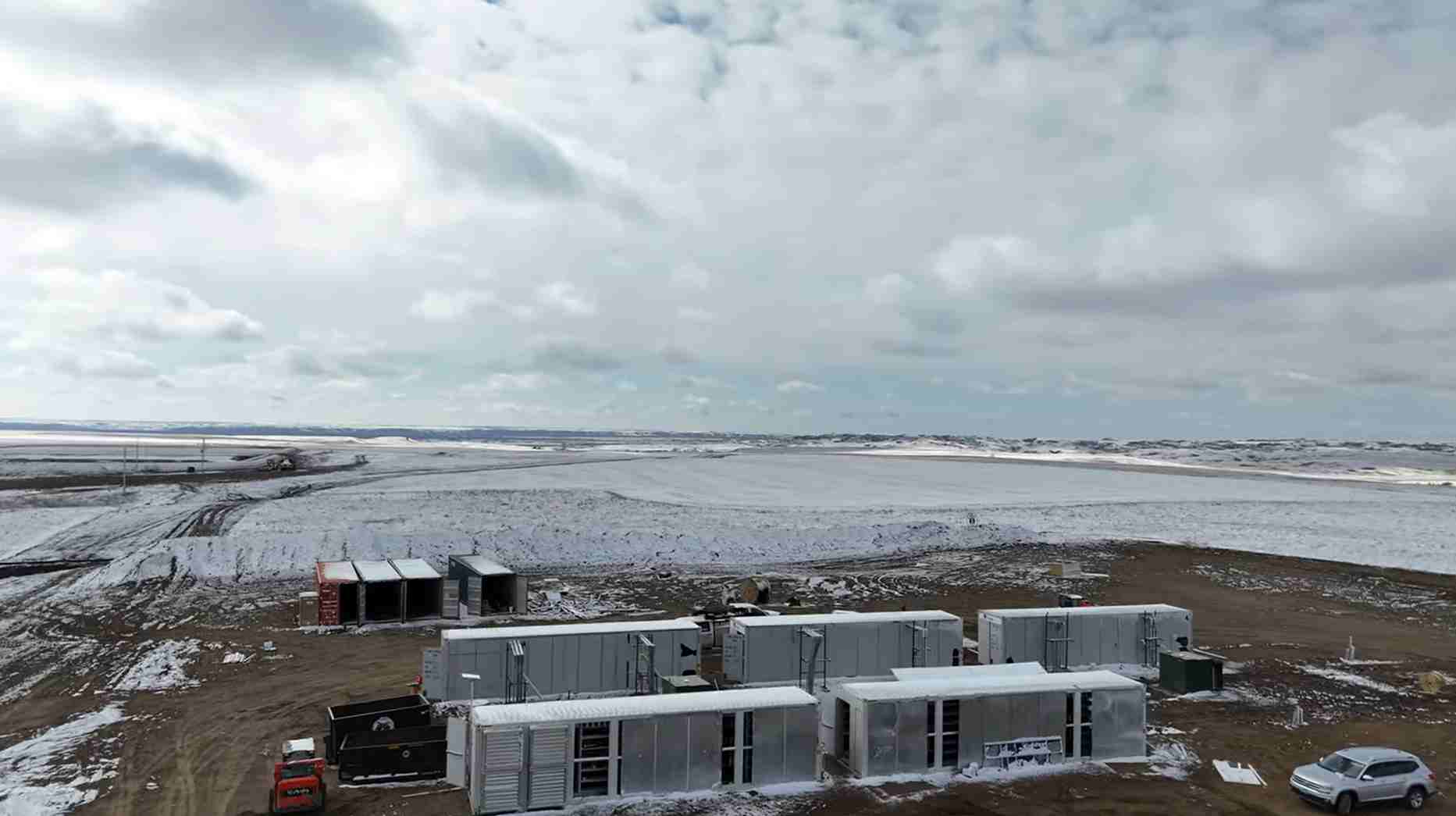
How Are Power and Cooling Systems Optimized for Crypto Mining in Containerized Data Centers?
What Power Infrastructure Is Required for Efficient Crypto Mining?
Smooth crypto mining depends on solid electrical setups. For insatance, our primary power cabinet circuit breaker handles 1200A. The PDU control circuit breaker manages 80A. Each PDU module oversees a group of mining machines on its own. This setup delivers steady and error-resistant power.
For unbroken work, these setups have backup power sources and spike guards. Our dynamic load balancing keeps power swings within ±2%. Plus, many units work well with green energy to lower ongoing power bills.
How Is Cooling Managed in Such Compact Spaces?
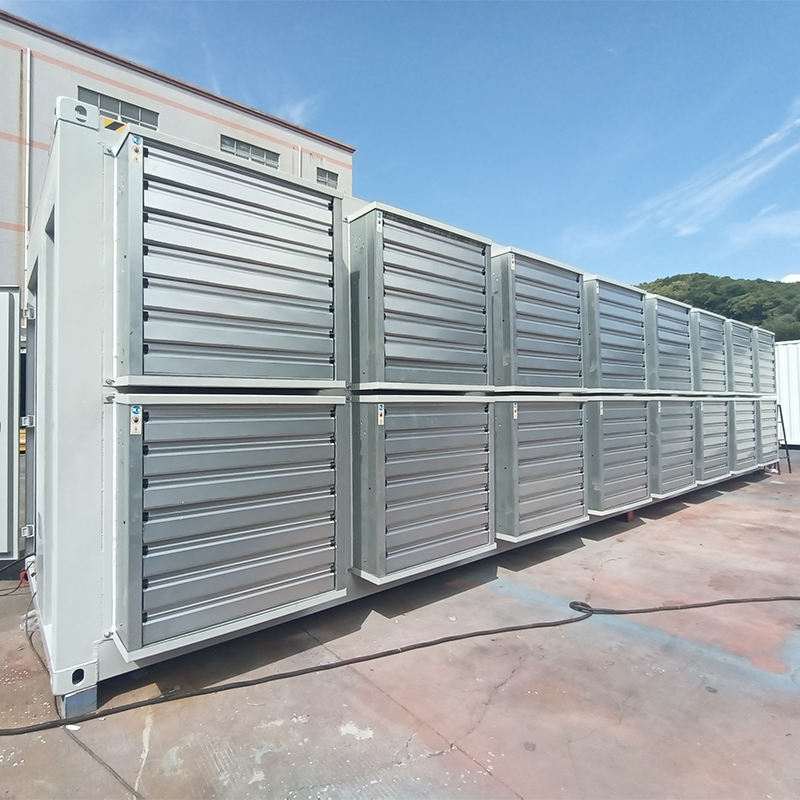
Crypto mining produces a lot of heat, particularly in tight setups. Our containers use hot and cold aisle setups to boost air flow. They have a built-in standalone temperature system (-40℃ low temperature preheating module + 55℃ high temperature exhaust air compensation). This keeps ideal temperatures no matter the outside conditions.
Modern techniques such as liquid cooling or immersion cooling support top-tier rigs. Sensors watch inside factors like heat and moisture. They allow automatic tweaks to fan rates and cooling efforts.
What Are the Key Benefits of Using Shipping Container Data Centers for Crypto Operations?
How Do They Enhance Scalability and Flexibility?
Scalability ranks as a top draw. Operators grow bit by bit by linking more containers. They avoid overhauling the whole setup. Crypto mining containers stay modular. Miners add or take out rigs as required. These units need little ground work. They run in far-off or odd spots.
Such adaptability lets mining teams react fast to market changes or rule updates. They skip long waits or big-money builds.
What Cost Advantages Do They Offer Over Traditional Data Centers?
Cost savings make another strong point. Shipping container data centers skip fixed buildings and trim land costs. Crypto mining containers set up fast in short-term sites. Then, they move or clear out after the job ends. Their easy-connect design speeds rollout. This shortens launch time and speeds up returns.
Makers prefabricate to smooth out making while holding quality. This brings steady prices and fewer build snags.
What Security Measures Are Implemented in Shipping Container Data Centers?
How Is Physical Security Ensured in Portable Units?
To guard costly gear, containers use tough materials like 12-gauge galvanized steel plates. They include break-resistant locks, watch cameras and break-in alerts.
Containers also follow global safety rules for build strength and weather toughness. This suits them for rough spots like deserts or shore areas.
How Is Network Security Maintained in Remote Deployments?
For far-off setups, secure links use VPN-encrypted paths to main control servers. Firewalls, device guards, and break-in software block unwanted entry.
Central handling of security fixes and software updates cuts weak points in spread-out networks. Thus, crypto holdings stay safe even in lonely spots.
What Role Does Environmental Monitoring Play in Optimizing Performance?
Why Is Real-Time Monitoring Critical for Crypto Mining Efficiency?
Live tracking proves vital to stop overheating and cut idle time. Sensors check main factors like heat, dampness, air movement, and power draw.
Auto notices warn teams of issues like fan breakdowns or heat spikes. This lets fixes happen before limits hit.
How Can Data Analytics Improve Operational Decision-Making?
Gathered info shows patterns in system output over periods. Past records aid in fine-tuning task spread across units. They also predict upkeep needs.
Forecast tools warn of gear risks. This allows early fixes that trim idle spells and fix bills.
How Does ACTBOXES Offer Solutions for Container-Based Crypto Mining Infrastructure?
What Features Distinguish ACTBOXES Shipping Container Data Centers?
At ACTBOXES, we provide complete setups made just for dense computing tasks like crypto mining. We offer turnkey solutions with integrated power systems, advanced cooling modules, and smart monitoring tools tailored for high-density computing environments like crypto mining.
Our container data centers come fully integrated with intelligent PDUs, CSA/UL-certified components, advanced environmental controls, and SCADA-ready interfaces for centralized management.
Their container data centers are customizable based on client requirements including size (20ft/40ft), power density, and environmental conditions. Whether you require a 20-foot mobile unit or a 40-foot high-capacity module, we can tailor solutions to your specific site constraints and performance needs.
Why Choose ACTBOXES Products for Your Mining Operation?
Key Advantages of ACTBOXES Solutions:
We pride ourselves on delivering durable solutions with exceptional adaptability:
- Rapid deployment enabled by plug-and-play architecture.
- Support for both air-cooled and liquid-cooled configurations.
- Structural integrity tested to withstand seismic activity up to class 8.
- Remote monitoring via RS485/Ethernet dual-channel controllers integrated with Modbus RTU protocol.
- CSA-certified enclosures meeting North American Electrical Code standards.
- Dust/water-resistant design compliant with IP54 protection levels.
FAQ
Q: Can shipping container data centers be relocated easily if energy prices change?
A: Yes. Crypto mining containers are designed to be portable and can be easily transported to different locations, allowing operators to shift operations based on electricity rates or regulation changes.
Q: Are shipping container data centers scalable as crypto operations grow?
A: Absolutely. Crypto mining containers are modular, allowing miners to add or remove mining rigs as needed.
Q: What is the typical lifespan of a shipping container data center used in crypto mining?
A: With proper maintenance and environmental adaptation, these units can last 10–15 years or more depending on usage patterns and upgrades.